
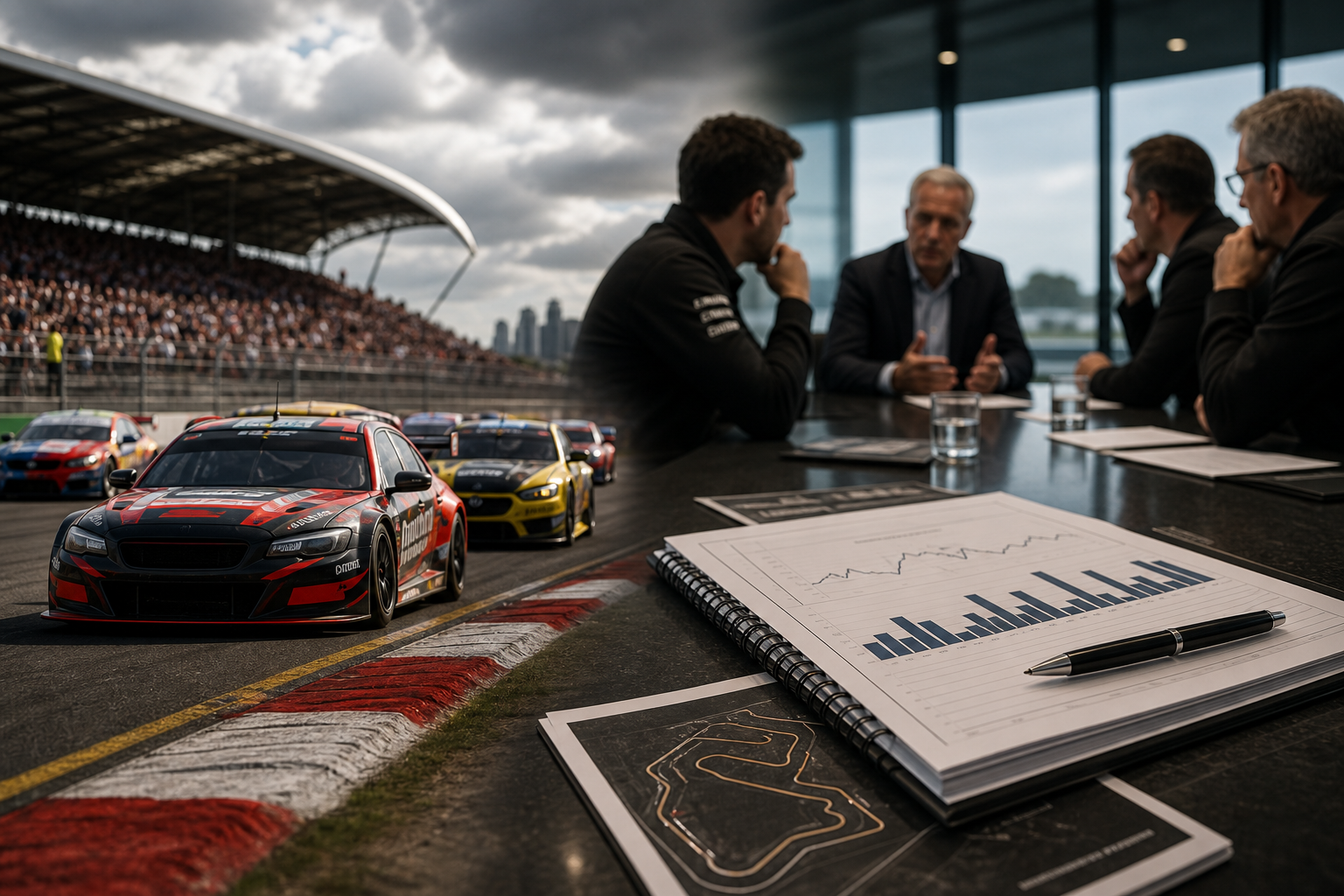

The Supercars championship could be heading for a leaner 2027 season, with the calendar potentially trimmed to 12 rounds if negotiations over the Teams Racing Charter do not land cleanly. That’s the sort of development that sends a shiver through anyone who enjoys a properly packed touring car season, because the calendar is not just a list of dates — it is the business model, the show, and the battleground all rolled into one.
The immediate issue is not simply how many rounds Supercars wants to run. It is what comes attached to those rounds, who pays for what, and how much control the teams are willing to cede or retain in the process. When the Teams Racing Charter enters the picture, the conversation stops being about a nice neat fixture list and starts becoming a fight over governance, commercial terms and the future shape of the category. Motorsport rarely makes life simple when there are contracts involved. Astonishing, really.
Why the calendar matters so much
On the face of it, reducing the championship to 12 rounds sounds like a straightforward administrative decision. In reality, it would affect nearly every part of the Supercars machine: team budgets, sponsor activation, promoter commitments, logistics and the rhythm of the season itself. Fewer events mean fewer opportunities to race, fewer hospitality activations, fewer chances to generate content, and fewer weekends where the paddock can keep the commercial wheels turning.
That is why the calendar discussion is tied so tightly to the Teams Racing Charter. The charter is not just paperwork for the filing cabinet. It sits at the centre of how the series is run, and any friction there can quickly spill into decisions about how many rounds are viable, who signs off on them, and which parties are asked to shoulder the cost of keeping the show on the road.
If a 12-round season does emerge, it would represent a noticeable tightening of the schedule. Supercars has long relied on a substantial domestic footprint to maintain momentum across Australia, and trimming events would alter that cadence. Fans might welcome a more concentrated championship; teams, meanwhile, are more likely to see a question mark where the rest of us see a neat calendar on the wall. Racing teams, rather annoyingly, have a habit of noticing overheads.
The charter battle underneath the surface
The current uncertainty is being driven by negotiations around the Teams Racing Charter, which has become the key point of contention. That is the sort of phrase that sounds dry until you realise it governs a great deal of the sport’s future direction. In categories like Supercars, the racing itself may be what sells the tickets, but the commercial and structural arrangements are what decide whether the whole operation remains sustainable.
Supercars has spent years trying to keep the balance right between sporting ambition and commercial reality. That balancing act is never elegant. Teams want certainty, proper returns and a clear say in how the championship is shaped. The category wants flexibility, growth and a product attractive enough to keep promoters, broadcasters and sponsors interested. Put those two wishes in the same room and you will usually hear raised voices before long.
The suggestion that next season’s schedule could be cut back underlines just how closely linked those negotiations are to the practical running of the series. A calendar isn’t just a calendar in motorsport. It is leverage. It is bargaining power. It is also a very expensive spreadsheet with tyres.
What a reduced season would mean on the ground
A move to 12 rounds would ripple through the championship in a very immediate way. Teams would have to reshape race preparation, freight plans and staffing around a shorter year. Sponsors would be forced to rethink how they value exposure across the season. Broadcasters and promoters would need to adapt to a different tempo. Even the fan experience changes, because a shorter calendar can make each event feel more concentrated — or more precious, depending on how you look at it.
There is also the question of how a reduced schedule would sit with the broader identity of Supercars. This is a series built on long-haul national competition, on the notion that the championship should visit enough venues to feel properly Australian in scope. Cut too deeply and you risk turning the series into something leaner but less expansive. Leave it too bloated and the commercial strain grows teeth. The trick, as ever, is not being gobbled by either side of the argument.
For teams, fewer rounds could reduce some running costs, but it would also reduce opportunities to earn. That is the crux of it. Motorsport budgets do not politely shrink in line with event counts; they tend to stick around like damp in an old garage. The pressure, therefore, is not just on how many events are run, but on whether the charter settlement gives teams enough confidence to keep investing.
Supercars at a crossroads
The fact that the series is even discussing the possibility of a 12-round calendar tells you this is a serious moment. Supercars has been through plenty of resets, restructures and commercial wrangling over the years, but calendar size is one of the most visible signals of where the championship thinks it can realistically operate. Too many rounds and the strain shows. Too few and the series risks losing the scale that has helped define it.
That is why the coming negotiations matter beyond the boardroom. They will shape not only how the championship is funded and governed, but also how it feels to follow across a season. For supporters, a compact schedule might sharpen the drama. For the teams, it has to make sense on the ledger as well as the timing screen. And if there is one thing motorsport is very good at, it is reminding everyone that the romantic bit and the accountant bit are permanently sharing a desk.
With talks now at a critical stage, the possibility of a reduced 2027 calendar is no longer some abstract talking point. It is a live option, and the outcome will tell us plenty about the direction Supercars intends to take. The racing may still be the headline act, but as always in this business, the real drama often unfolds somewhere between the paddock and the conference room.


0 Comments