
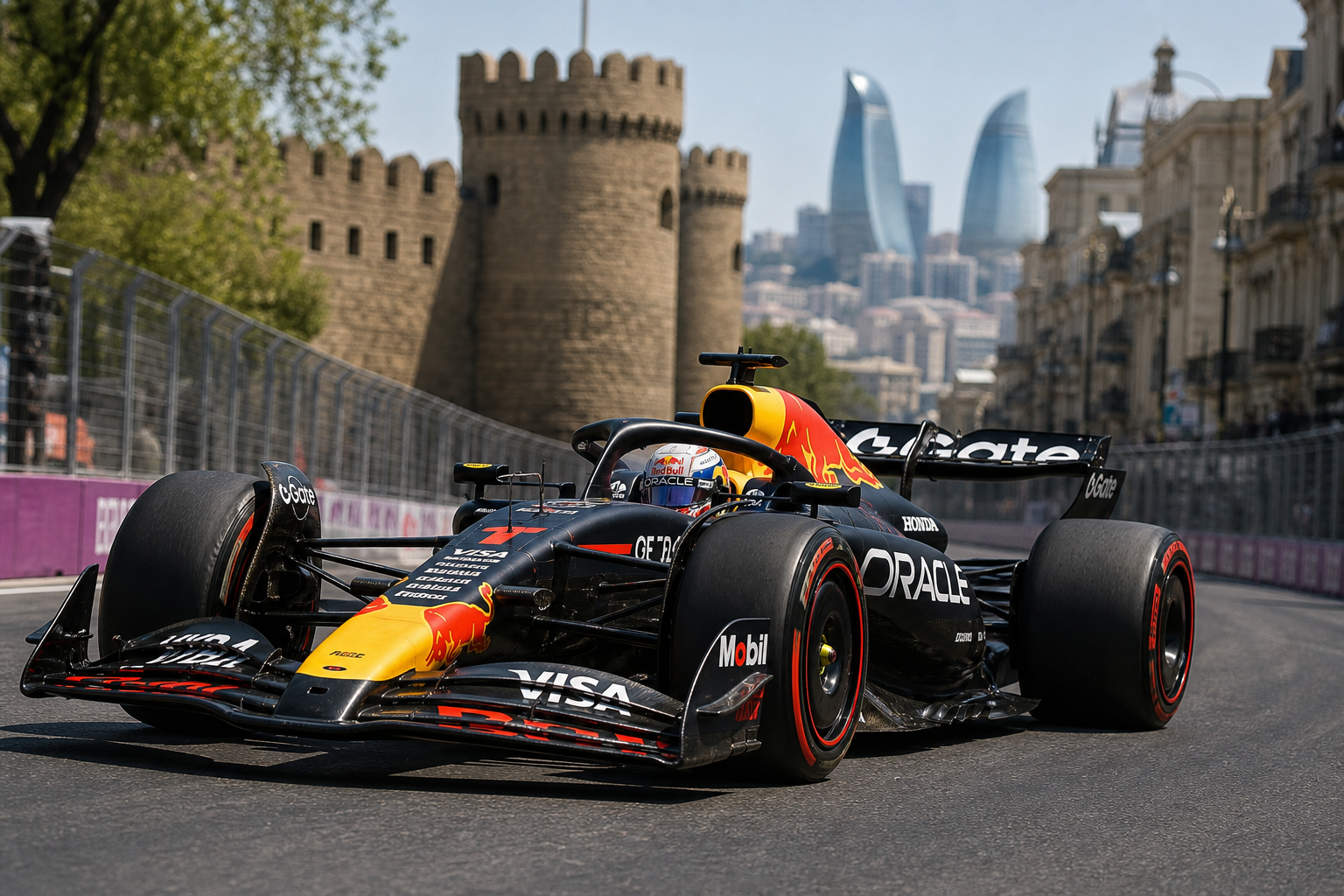

Red Bull has chosen the Azerbaijan Grand Prix as the launch point for what it describes as its final major Formula 1 upgrade package of 2026, with Max Verstappen and Isack Hadjar set to receive the revised machinery at Baku City Circuit.
The FIA’s technical documentation lists five Red Bull developments for the race weekend. The headline change is a new floor featuring what the document describes as “subtle” alterations. That wording sounds almost apologetic, as if Red Bull has fitted a new coffee machine rather than modified one of the most sensitive and consequential areas of a modern F1 car.
In reality, floor changes are rarely trivial. With the current generation of ground-effect cars, the floor manages the airflow beneath the car and helps create the low-pressure area that generates downforce. A change that looks visually modest can alter aerodynamic load, balance, ride-height sensitivity, tire behavior, and the way the car responds through an entire lap.
Why Red Bull Is Upgrading in Baku
Baku is a slightly odd place to introduce a major aerodynamic package. The circuit combines a long, flat-out blast through the city with slow, angular corners and heavy braking zones. A car needs low drag for the long straight, but it also needs enough stability and traction to survive the slow sections without becoming a nervous, expensive-looking sculpture.
That mixture makes the Azerbaijan Grand Prix a useful test of whether an upgrade genuinely improves the car or merely makes one narrow corner of its behavior look tidier. A package that adds downforce but creates too much drag will punish Red Bull along Baku’s lengthy straight. A package that improves efficiency but compromises low-speed grip will leave the drivers wrestling with the car where confidence matters most.
The circuit also leaves little room for casual experimentation. Its walls sit close enough to make “let’s see what happens” a rather poor engineering philosophy. Red Bull will therefore be looking for a package that produces a predictable gain rather than a spectacular number on one aerodynamic chart.
The Floor Is the Important Part
Formula 1 teams can spend months refining a floor because its performance depends on far more than its visible shape. The tunnels, edges, fences, diffuser interaction, and the car’s ride-height window all have to work together. Change one area and the airflow may behave differently under braking, over curbs, or when the car pitches and rolls through a corner.
That is especially relevant under the ground-effect regulations. The aerodynamic platform has to remain stable close to the track without forcing the team into an unusably stiff suspension setup. Get the relationship wrong and the drivers may face bouncing, inconsistent grip, or a car that is quick in qualifying but unpleasant over a race distance. The stopwatch, as ever, is a ruthless quality-control department.
Red Bull’s description of the floor changes as subtle is therefore worth reading carefully. It does not mean unimportant. It suggests a refinement intended to improve the existing aerodynamic concept rather than a wholesale departure from it. The value may appear in a wider operating window, a cleaner balance between high- and low-speed corners, or better consistency as fuel load and tire condition change.
Five Developments, One Main Objective
The FIA document identifies five Red Bull upgrades for Baku, although the available information singles out the floor as the most significant. That combination tells us something about the nature of modern F1 development: the visible headline component is only one part of the package.
Teams often introduce supporting changes around a primary aerodynamic development. Those revisions may help the car feed cleaner airflow toward the floor, manage cooling, reduce drag, or align the suspension and bodywork with the new aerodynamic demands. Without the full technical description, it would be foolish to pretend every change has been revealed in detail. What is clear is that Red Bull has not treated the floor as an isolated bolt-on experiment.
The timing matters, too. Calling this the team’s final major upgrade of 2026 indicates that Red Bull is reaching the point where resources must be directed elsewhere. In Formula 1, a development program never truly stops, but the emphasis can shift from large parts to smaller refinements, setup work, reliability, and preparation for the next technical phase.
That makes the Baku package a strategic statement as much as a collection of carbon-fiber components. Red Bull believes this is the right moment to spend development capacity on one substantial push, then extract as much performance as possible from the car it has.
Verstappen and Hadjar Face the Same Test
Both Max Verstappen and Isack Hadjar will have to establish quickly whether the upgrade delivers what the simulations promised. A package can look excellent in computational models and still require careful setup work once it meets the bumps, curbs, wind, and peculiar airflow of a real circuit.
Verstappen’s feedback will be particularly valuable because he has long been known for identifying small changes in balance and behavior. But the second car matters just as much. Hadjar’s experience with the revised package can help Red Bull determine whether the gain is broad and repeatable or dependent on one driver’s preferred balance.
The two cars do not need to produce identical impressions for the upgrade to be successful. Drivers have different preferences and may describe the same aerodynamic shift in different ways. The useful question is whether both cars can access more performance with fewer compromises.
Red Bull Is Not Alone in Bringing New Hardware
Red Bull’s package arrives during a busy Baku development weekend. Williams had identified the Azerbaijan Grand Prix as an important target well in advance, while McLaren brought significantly revised sidepods alongside other changes.
That context matters because upgrades are judged relative to the field, not in isolation. A team can improve its own car and still lose ground if a rival produces a larger or more effective gain. McLaren’s sidepod revisions point to the way airflow management remains a central battleground, while Williams’ focus on Baku suggests the circuit may offer a particularly useful opportunity for its own technical direction.
The upgrade race also creates a delicate calculation for Red Bull. Baku’s layout can expose weaknesses that remain hidden at more conventional circuits, but its unusual demands may not provide a perfect laboratory for every future race. A useful gain here will need to translate into a broader improvement rather than become a one-weekend specialty, like a tuxedo designed specifically for escaping through a narrow window.
What to Watch When the Cars Hit the Track
The most revealing evidence will not necessarily be a single lap-time headline. Red Bull will be watching the car’s behavior across different track conditions and fuel loads, while rivals will be studying whether the new floor changes the team’s ride height, wing levels, or cornering approach.
- High-speed efficiency: Baku’s long straight will show whether the package produces useful downforce without demanding excessive drag.
- Low-speed balance: The slow corners will reveal whether the car can generate traction and confidence after heavy braking.
- Consistency: A wider aerodynamic operating window may be more valuable than a single spectacular qualifying gain.
- Tire behavior: Any improvement that helps Red Bull manage tire performance over a race distance could matter more than raw peak pace.
Red Bull’s final major upgrade of 2026 is therefore less about dramatic visual change than engineering precision. The floor may look only subtly different. That is rather the point. Formula 1’s biggest gains often arrive disguised as small alterations, then reveal their worth through a car that is easier to tune, less temperamental, and quicker in more places.
Baku will provide the first proper verdict. If the package works, Red Bull will have bought itself a stronger platform for the remainder of the season. If it does not, the team will have very little appetite for another grand aerodynamic rethink. The carbon-fiber cavalry is, apparently, nearing the end of its campaign.

0 Comments