
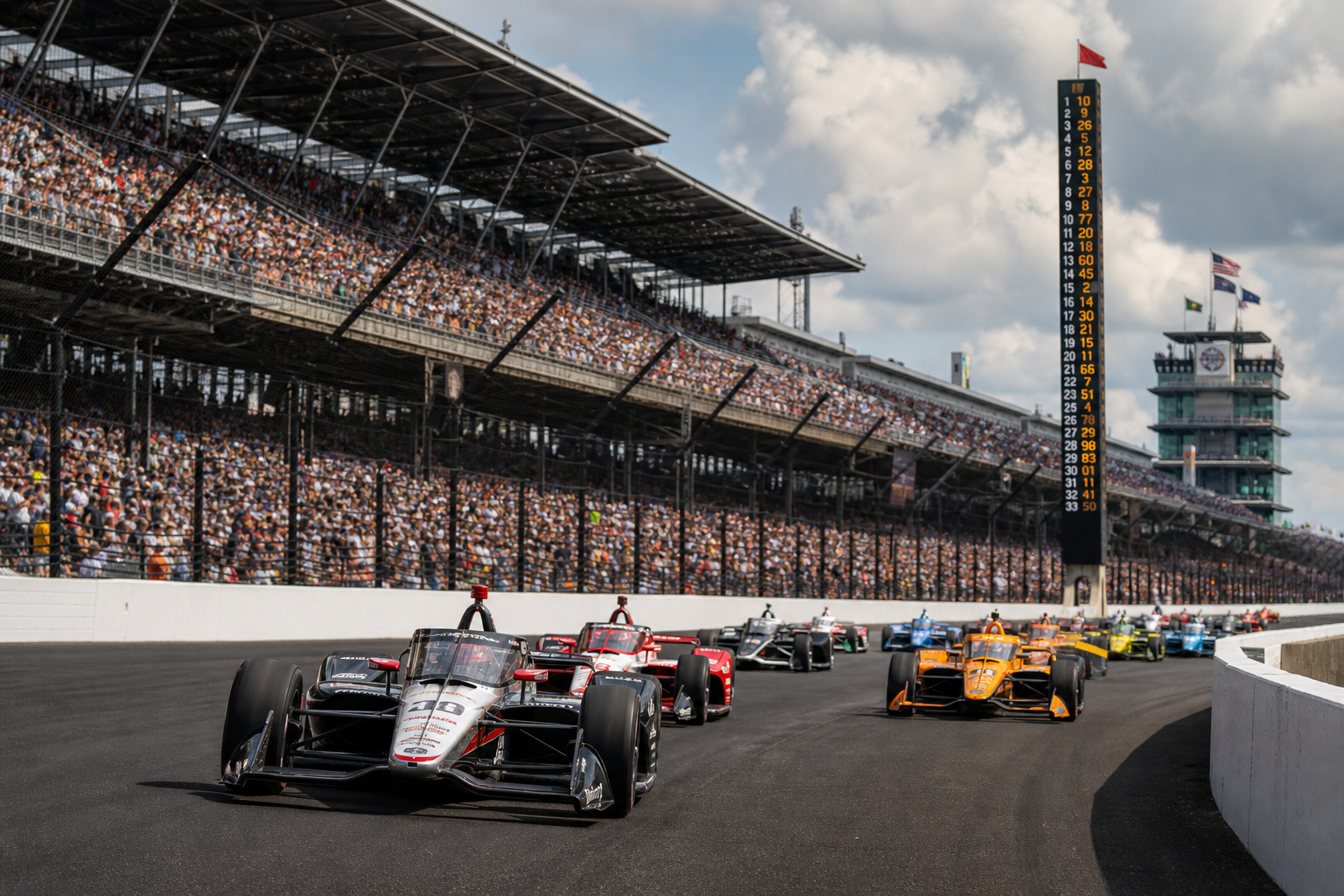

IndyCar’s 2026 season appears to have achieved something racing series spend years chasing: growth in several directions at once. The championship is reporting record performance across broadcast viewing, digital engagement, and attendance at live events, suggesting that interest was not confined to a single platform or a handful of headline moments.
That matters because a racing series can produce a terrific sporting product and still struggle to reach people. Strong television numbers without fuller grandstands may indicate a broadcast success but a weak event business. Packed venues without digital momentum can point to a loyal local audience rather than broader expansion. IndyCar’s reported results cover all three areas, which gives the 2026 campaign a rather more substantial shape than a good weekend at the gate or a temporary spike on social media.
A Broader Audience for IndyCar
The series describes the 2026 campaign as a record-setting season for broadcast viewership. The supplied announcement does not include the underlying audience figures, percentage increases, network breakdowns, or comparisons with previous seasons, so the scale of that gain cannot be judged numerically here. The direction, however, is clear: IndyCar says more people watched its races through broadcast coverage than in any earlier season measured by the series.
Broadcast reach remains especially important for a championship built around live competition. Unlike short-form digital clips, a race broadcast gives viewers the full arc of an event: strategy developing over a long stint, tire and fuel decisions, changing track conditions, pit-lane drama, and the occasional moment when a perfectly sensible race plan collapses in spectacular fashion. That context is difficult to compress into a few seconds of online video, however effective those clips may be at attracting new fans.
Higher viewership also gives IndyCar stronger evidence when negotiating with broadcasters, sponsors, and commercial partners. Audience size is not the only measure of value, but it remains one of the easiest for a business department to place on a spreadsheet without requiring an interpretive dance from the marketing team.
Digital Engagement Adds a Second Layer
IndyCar also reported record digital engagement during the season. Again, the announcement available here does not identify the platforms involved or define the specific measures behind that claim. “Digital engagement” can include a wide range of activity, from video consumption and website traffic to social interactions, app usage, and other forms of online participation. Without those details, the result should be read as a broad statement of increased online attention rather than a precise measurement of one particular audience.
Even so, digital performance is increasingly useful for a racing series because it reaches people who may not sit down for an entire race. A fan might watch qualifying highlights, follow timing updates, view a driver interview, or see a dramatic restart on social media before deciding to watch the next event in full. That journey is not as tidy as the old model of “advertisement, television audience, ticket sale,” but it is how a large portion of sports attention now behaves.
Digital channels also allow IndyCar to keep the championship visible between races. That is a practical advantage in a series where the events are separated by travel, preparation, and the usual motorsport assortment of freight schedules, engineering meetings, and people pretending not to be nervous. Regular online material can maintain interest when cars are not on track and help turn occasional viewers into followers of the season.
Live Attendance Gives the Numbers a Physical Shape
The 2026 season reportedly produced record attendance at live events as well. This is the most tangible part of the announcement. Viewers and online users can be counted in a variety of ways, but a full grandstand is difficult to misunderstand. People have bought tickets, traveled to the venue, found parking, endured the weather, and committed several hours of their weekend to watching Indy cars at speed.
Attendance is also valuable because it affects more than the race promoter. It supports local spending, gives sponsors a visible presence, and helps demonstrate that the championship can create an event rather than merely supply television content. The sound, speed, and physical scale of an IndyCar race still do things in person that a screen cannot quite replicate. A broadcast can show a car passing at high speed; it cannot make your chest vibrate as the field goes by.
The announcement does not specify which venues drove the attendance record, nor does it provide individual event totals. That missing detail matters. A series-wide record could come from broad improvement across the calendar, exceptional turnout at particular races, or a mixture of both. The available information does not allow those possibilities to be separated, so it would be premature to claim that every event experienced the same level of growth.
Why a Multi-Platform Result Matters
The most interesting feature of IndyCar’s report is the combination of metrics. Broadcast, digital, and live attendance measure different types of commitment.
- Broadcast viewership shows how many people watched the competition through formal coverage.
- Digital engagement indicates how successfully the series remained present on phones, computers, and social platforms.
- Live attendance demonstrates that fans were willing to turn interest into a physical event visit.
None of these measures is perfect on its own. A digital interaction may last seconds, while a race-day ticket represents a far larger investment of time and money. Television data can vary according to distribution and measurement methods. Attendance figures can also be affected by venue capacity, weather, scheduling, and local conditions. Put together, though, they offer a more useful picture of a championship’s health than any single headline number.
For IndyCar, that breadth is particularly relevant. The series occupies a distinctive position in North American racing, with a calendar that includes permanent road courses, temporary street circuits, and oval racing. That variety is one of its greatest sporting strengths, but it also makes the championship a complicated product to market. The audience must be persuaded to follow different types of races, different venues, and a long season rather than a single annual spectacle.
The Commercial Value of Momentum
Record performance across several channels gives IndyCar a stronger platform for future commercial conversations. Sponsors can see evidence of visibility on television, interaction online, and physical presence at events. Promoters can point to increased interest when building the case for future races. Broadcasters can argue that the series is attracting a larger audience. Those interests overlap, but they are not identical, which is why a broad set of positive metrics is useful.
It also gives the series a foundation for continued growth rather than a reason to declare victory and wander off to lunch. The announcement describes the 2026 season as the beginning of a bold new era, but the meaningful test will be whether the gains hold over time. One record year is encouraging. Repeating that performance, while maintaining competitive racing and a compelling schedule, is considerably harder.
The next step should be greater transparency around the numbers themselves. Detailed audience totals, year-over-year comparisons, digital platform results, and event-by-event attendance would show where the growth occurred and how durable it may be. Without that information, the announcement remains a strong directional signal rather than a complete statistical report.
A Promising Season, With the Detail Still to Come
IndyCar’s 2026 message is nevertheless a positive one. The series says the season reached record levels across the three places modern racing must succeed: on the screen, online, and at the track. That combination suggests broader interest rather than a narrow gain in one corner of the business.
The figures will determine how large the achievement really was. For now, the important point is that IndyCar is reporting momentum across its entire public-facing operation. In motorsport, where success is often judged by a checkered flag and a trophy cabinet, filling the grandstands, attracting viewers, and keeping fans engaged between races is the less glamorous work that keeps the whole machine running.
0 Comments