
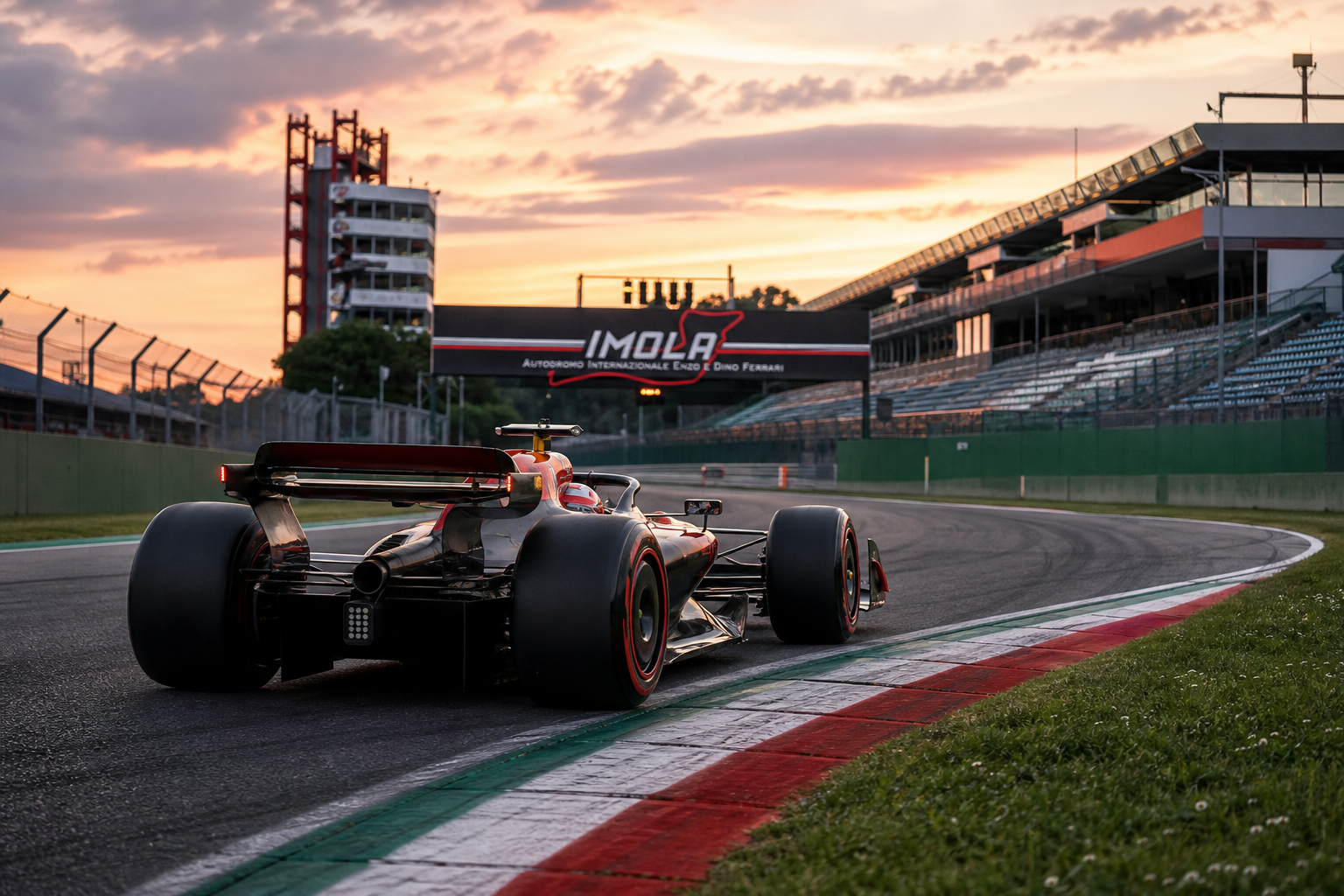

Formula 1’s 2026 calendar may have a rather awkward question lurking at the end of it: will the championship finish in the Gulf, as planned, or will Imola step in as an emergency alternative?
On paper, the Qatar and Abu Dhabi Grands Prix remain the intended closing double-header. Formula 1 is emphasizing that this is still the plan. That wording matters, because it also leaves room for a different outcome if those races cannot go ahead.
Imola has therefore entered the conversation as a possible fallback. Nothing in the available information confirms that the Italian circuit has been appointed as a replacement, nor does it establish that Qatar and Abu Dhabi will be canceled. At present, this is a contingency question rather than a revised calendar announcement.
The Official Plan Has Not Changed
F1’s current position is straightforward: Qatar and Abu Dhabi are scheduled to host the final two races of the 2026 season, and that remains plan A.
That distinction is important. A contingency being discussed does not mean the original races have been abandoned. Racing series routinely examine alternatives when a late-season event could be affected by circumstances outside the sport’s control. The public version of that process can look slightly mysterious, particularly when one circuit appears in headlines while the official calendar remains untouched.
In this case, the message is essentially: the season is still expected to end in the Gulf, but Formula 1 is not going to wait until the last minute before considering what happens if that plan becomes impossible.
That is sensible administration rather than panic. It is also the sort of thing F1 prefers to keep tidy and carefully worded, because a replacement race creates sporting, commercial, logistical, and political complications all at once. A calendar is not a restaurant booking that can be moved from Thursday to Friday because somebody forgot to check the diary.
Why a Late-Season Contingency Is So Complicated
The 2026 schedule is described as containing three triple-headers on paper. In practical terms, that means the championship is already built around several stretches of three consecutive race weekends. That format saves time and reduces some long-distance travel, but it also leaves very little slack in the system.
If a race is canceled during one of those sequences, the obvious solution is not always to insert another event immediately afterward. Teams need freight movement, personnel scheduling, hospitality arrangements, tire supply, broadcasting infrastructure, and circuit access. The cars may be capable of being packed into containers at alarming speed, but the rest of the circus is considerably less portable.
A replacement venue must also be able to meet Formula 1’s technical and safety requirements at short notice. That includes the track itself, pit-lane facilities, barriers, medical provisions, race control systems, paddock space, television compounds, and the less glamorous business of getting thousands of people and several hundred tons of equipment to the correct place without creating a traveling logistical farce.
Then there is the sporting side. A late substitute should not produce a race that gives one team an unexpected advantage because the circuit’s characteristics bear little resemblance to the event it replaces. That is impossible to avoid completely, of course. Formula 1 has never been shy about allowing the calendar to become an enormous engineering exam with the questions changed every weekend.
Why Imola Is an Intriguing Option
Imola is a logical name to mention because it is an established Formula 1 venue with a long connection to the championship. The Autodromo Enzo e Dino Ferrari is a proper old-school circuit: fast in places, technical in others, and far less forgiving than the vast expanses of modern purpose-built facilities.
It is also a very different proposition from Qatar and Abu Dhabi. A race at Imola would shift the final phase of the season from the Gulf back to Europe, changing the travel pattern, the climate, the circuit character, and potentially the competitive picture. That does not make it a direct substitute in any technical sense. It makes it a practical alternative with its own identity.
For drivers, Imola’s narrow and flowing layout tends to make qualifying especially important. Passing is not impossible, but the circuit does not offer the generous run-off areas and broad braking zones that have become familiar at some newer venues. A championship finale there could be tense, compact, and mildly terrifying in the traditional European-racing manner.
It would also carry historical weight. Imola is not an anonymous venue pulled from a spreadsheet. Its place in Formula 1 history is substantial, and the circuit has the kind of atmosphere that makes a race feel like an event rather than a temporary entertainment district assembled beside a hotel complex.
The Sporting Consequences of Moving the Finale
The location of the final race can shape how a championship is settled. Track layout, tire demands, weather, overtaking opportunities, and the likelihood of safety-car interruptions all influence the value of every point.
A switch from Qatar and Abu Dhabi to Imola would therefore be more than a change of scenery. Teams would need to adjust their aerodynamic choices, cooling requirements, tire preparation, and setup work. Data gathered during the season would become less useful if the alternative venue had not been part of the original preparation plan.
That is particularly relevant in 2026, when Formula 1 is entering a major technical reset. The new regulations bring changes to the cars’ power units and aerodynamic philosophy, meaning teams will already be learning quickly and coping with unfamiliar behavior. Adding a surprise circuit to the closing stretch would not be a minor administrative tweak. It could become another variable in an already complicated development race.
For a championship leader, the preferred venue might be the one that best suits the team’s strengths. For a title challenger, a late change could represent either an opportunity or an unnecessary nuisance. Nobody wants the deciding race to feel as though it was selected by pulling a track name from a hat, even if the circumstances make a replacement unavoidable.
What Happens Next?
The key point is that there has been no confirmed change to the 2026 finale. Qatar and Abu Dhabi remain scheduled, and Formula 1 continues to describe that arrangement as its primary plan.
The presence of Imola in the discussion indicates that contingency planning is taking place, but it does not tell us why a change might ultimately be required or whether a change will happen at all. Those details matter. A race can be threatened by a range of issues, and the correct response depends entirely on the nature, timing, and duration of the problem.
Until F1 or the relevant event organizers formally announce otherwise, the sensible reading is therefore a cautious one: the Gulf finale remains alive, while Imola is being kept in mind as a possible escape route.
That may sound less dramatic than declaring the calendar has been rewritten. It is also more accurate. Formula 1 has enough moving parts without turning a backup plan into a confirmed race. For now, the championship is heading toward Qatar and Abu Dhabi. But Imola is waiting in the wings, looking rather more prepared than a mere rumor probably ought to be.

0 Comments