
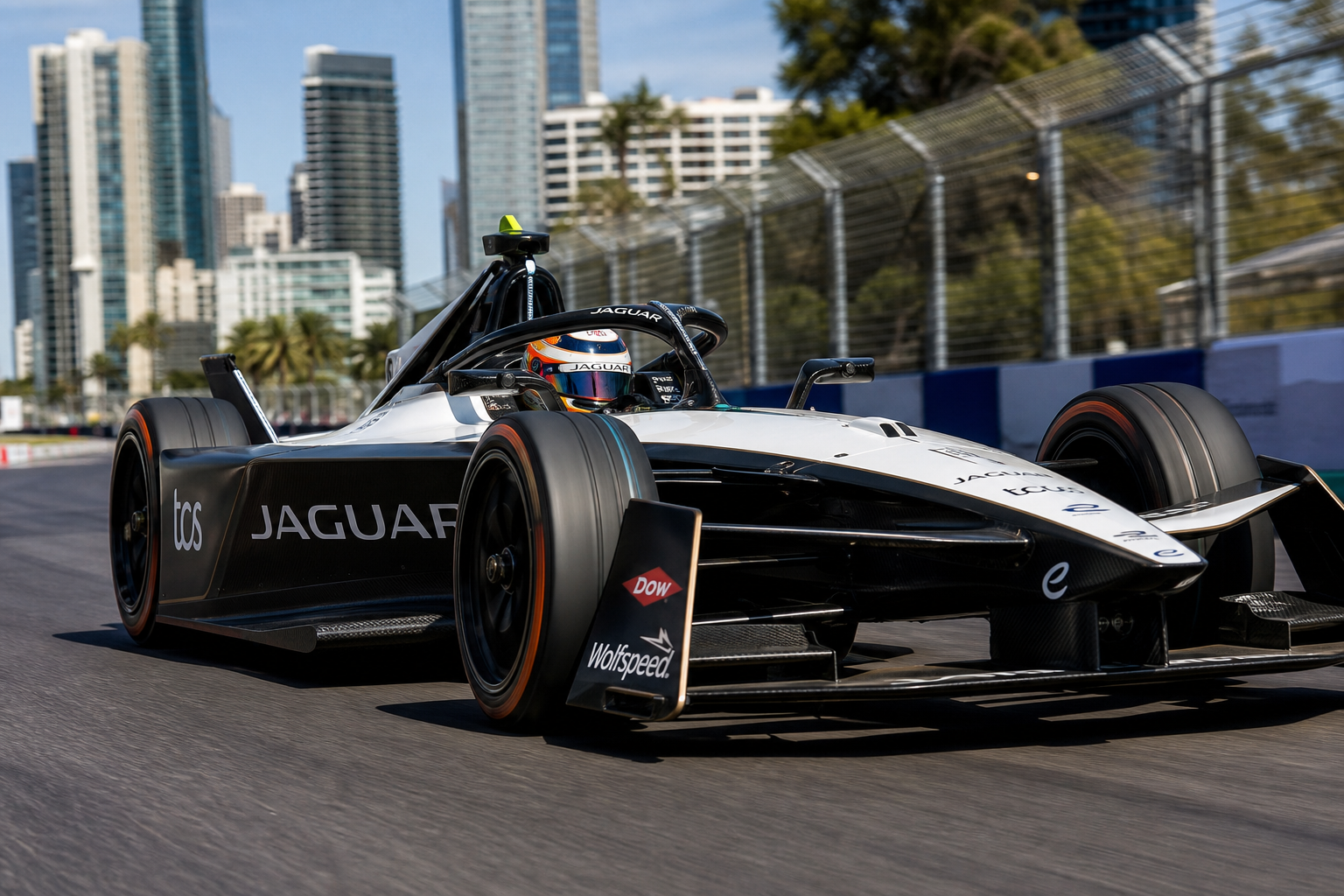

Formula E has a habit of rearranging its furniture just when everyone has settled into the room, and here comes another tidy little shake-up: Fortescue Zero has bought the Team Penske operation and will enter the 2026-27 season with a two-car Jaguar customer effort.
That means Jaguar’s presence on the grid is about to get a little busier. Fortescue Zero’s entry will add two more Jaguar-powered cars to a lineup that already includes the factory squad and Envision, bringing the total to six for the new campaign. In a championship where manufacturer alliances matter just as much as driver talent and energy management, that is no small thing.
A New Name, Same Slot on the Grid
The headline here is simple enough: Team Penske is out, Fortescue Zero is in. The acquisition covers Penske’s Formula E operation as the series moves toward its Gen4 ruleset, which begins with the 2026-27 season. That season is scheduled to start in December, so the clock is already ticking.
For Penske, it closes the chapter on a team that joined Formula E and brought a proper motorsport heavyweight name into a championship that has never really lacked for ambition, only for people who can explain the sporting regulations without needing a long lie down afterward. For Fortescue Zero, it is an immediate route into the series with an existing structure rather than building everything from scratch. Sensible. Efficient. Almost suspiciously so.
Why Jaguar’s Grid Footprint Matters
Formula E may not be the kind of championship where anyone strolls around waving a manufacturer badge like a football scarf, but the number of cars a brand supplies still tells you plenty. More entries mean more data, more chances to understand the tires, energy usage, attack modes, and all the other lovely bits of electric-racing nonsense that decide whether a weekend is brilliant or merely expensive.
Jaguar will now have four cars already on the grid before Fortescue Zero’s pair arrive: the factory team and Envision. Adding two more customer machines gives the brand a broader operating base, and in Formula E that can be worth its weight in lithium. The series rewards technical depth, fast adaptation, and an ability to read the race before everyone else does. Extra cars tend to help with all three.
What Gen4 Changes About the Picture
Gen4 is the next step in Formula E’s technical progression, and with it comes another reset of the competitive order. That is one of the championship’s defining traits. Every few seasons the hardware changes enough to make the old pecking order look a bit silly, which is either refreshing or maddening depending on which garage you happen to be standing in.
For a new entrant, or rather a newly rebranded one, timing matters. Arriving at the start of a new era is usually preferable to turning up halfway through a stable rules cycle and trying to make sense of everyone else’s spreadsheets. Fortescue Zero gets in as the field resets, which should give the outfit a cleaner launch pad and at least a fighting chance of looking clever early on.
What This Means for Penske
Team Penske’s departure is notable not because it leaves a hole in the sport’s history books the size of Indianapolis, but because the Penske name carries proper motorsport weight. Any team with that badge attached is expected to arrive with polish, discipline, and a mild air of inevitability. Formula E has rarely been a series that allows such things for long, which is probably part of the appeal.
The sale suggests a strategic handover rather than a chaotic exit. That matters. Formula E teams are not just racing outfits; they are technical operations, commercial platforms, and data-gathering machines rolled into one compact, expensive package. When ownership changes, the interesting question is usually whether the incoming group wants to race, learn, or both. In this case, Fortescue Zero is clearly aiming for both.
Jaguar’s Position in an Expanding Field
Jaguar has become one of Formula E’s more established players, and this latest move strengthens that position rather than merely decorating it. The brand has invested real effort into the championship for years, and customer teams have become part of the manufacturer’s broader competitive strategy. Formula E rewards consistency, and Jaguar now has more opportunities to collect it.
There is also a practical side to all this that should not be ignored. More Jaguar-powered cars on the grid means more variation in race situations, more strategic complexity, and more chances for the manufacturer to compare how its package performs across different team environments. If one team finds something useful, the others tend to notice. Fast. With graphs.
The Broader Business of Formula E
Formula E has always been as much about business logic as racing spectacle. Teams come and go, manufacturers deepen or reduce their commitments, and new names often arrive by taking over existing entries rather than marching in with a blank cheque and a heroic grin. That is not a flaw. It is how the championship keeps moving without requiring every newcomer to reinvent the wheel and then charge several million dollars for it.
Fortescue Zero buying Penske’s operation fits that pattern neatly. It gives the Australian outfit an established racing base, a ready-made platform for Gen4, and a route into a championship where institutional knowledge is worth plenty. In electric racing, as in most forms of motorsport, getting the infrastructure right is half the battle. The other half is making the thing fast, which tends to remain annoyingly non-optional.
So Jaguar’s Gen4 era now has a fresh customer team, Penske has ceded its place, and Fortescue Zero has bought itself a serious seat at the table. On paper it is a straightforward transaction. In Formula E terms, that probably means the next few months will be anything but dull.
0 Comments