
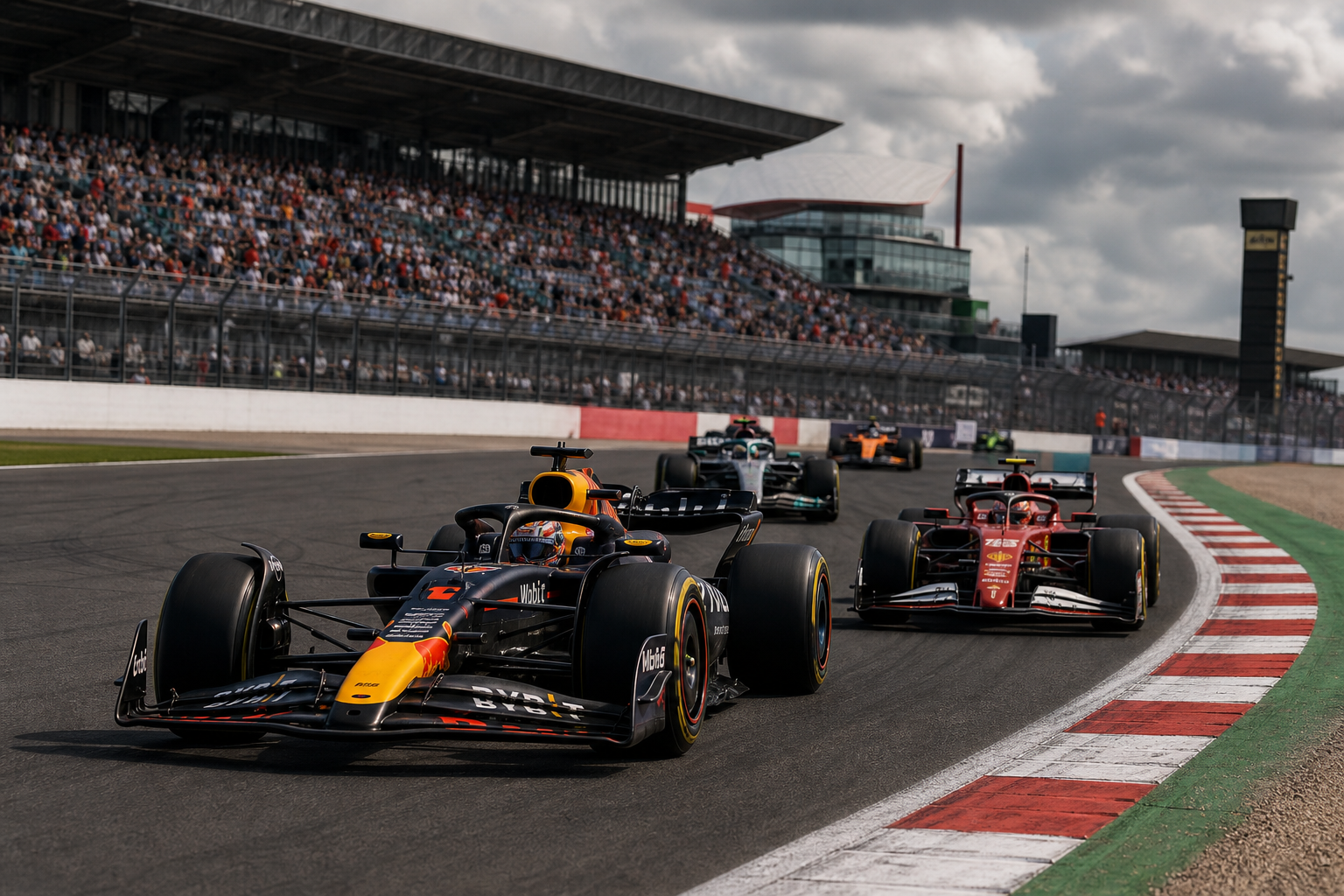

Formula 1 is preparing to make its Grand Prix weekends slightly shorter in 2027, with the standard race distance set to fall from 305 kilometers to 290 kilometers. The change has been approved by the Formula 1 Commission and now requires formal sign-off from the FIA World Motor Sport Council.
That is a reduction of 15 kilometers, or just under five percent. It may not sound like the sort of figure that causes engineers to throw their clipboards into a lake, but in Formula 1 a change of this size affects energy usage, strategy, car setup, sporting regulations, and the way teams calculate costs across an entire season.
Why Formula 1 Is Cutting the Distance
The decision is tied to the power-unit plan expected for 2027. The commission’s proposal is intended to align the length of a standard Grand Prix with the requirements of the revised power-unit package, while also reducing the cost associated with running the cars over the existing distance.
The available details do not yet spell out every technical change arriving with the 2027 power units, nor do they explain precisely how the savings will be distributed between manufacturers and teams. What is clear is that Formula 1 does not view the race-distance adjustment as an isolated sporting tweak. It is part of a wider attempt to make the competition’s future engine regulations work financially as well as technically.
That is a sensible place to start. A modern Formula 1 power unit is not merely an engine in the old-fashioned sense. It is a highly engineered system involving combustion, electrical energy, control software, cooling, fuel management, and a substantial research and development bill. Asking teams to cover fewer racing kilometers naturally reduces some of the operating burden, even if it does not magically turn Formula 1 into a budget-friendly hobby for local garages.
From 305 Kilometers to 290
Under the proposal, the standard Grand Prix distance will move from 305 kilometers to 290 kilometers. The number of laps will still vary from circuit to circuit because each track has a different length, but the target distance gives teams and race officials a consistent framework.
It also changes the arithmetic of a race in ways that could be more important than the raw distance suggests. A shorter event can alter fuel and energy targets, tire degradation calculations, cooling requirements, and the window in which a pit stop makes sense. A strategy that works over 305 kilometers may not transfer neatly to a race that ends 15 kilometers earlier.
That does not mean every race will suddenly become a frantic sprint. The proposal concerns the standard Grand Prix distance, not the complete weekend format, and the source material does not indicate that Formula 1 is replacing Grand Prix races with sprint events. The championship will still be built around conventional races, with the precise lap count determined by the circuit and the regulations governing the event.
At some tracks, 15 kilometers could represent only a handful of laps. At others, it may be more significant. The effect will depend on circuit length, tire behavior, overtaking opportunities, safety-car timing, and how closely the new power units operate to their energy limits. Formula 1 has a habit of turning a small numerical adjustment into a weekend-long argument involving six strategists, three simulations, and a television graphic that nobody understands.
What It Could Mean for Race Strategy
Shorter races do not automatically produce better racing, but they can change the incentives facing teams. With fewer kilometers to cover, a one-stop strategy could become more attractive at circuits where tire wear is marginal. Conversely, a track with heavy degradation could still reward multiple stops if the time gained on fresh tires outweighs the extra pit-lane visit.
The biggest influence may come from how the 2027 power units deliver and recover energy. If the revised package places different demands on electrical deployment or energy harvesting, teams will need to balance outright performance against the risk of running short before the checkered flag. Reducing the race distance gives engineers a little less road over which to manage those compromises.
That could affect the character of the closing stages. A driver who has spent an entire race protecting energy or tires may have more freedom to attack when the finish arrives sooner. Equally, a shorter distance could reduce the opportunity for a struggling car to recover through strategy, particularly if the race settles into a predictable rhythm after the opening laps.
There is no guarantee that fewer kilometers will mean more overtaking. Track layout, car performance, tire behavior, and the effectiveness of the aerodynamic regulations will remain far more important. A shorter dull race is still a dull race; it merely reaches the finish line before the audience begins checking the refrigerator.
The Cost Argument
The financial reasoning behind the decision is significant. Formula 1 has spent years trying to control spending while maintaining the technical competition that attracts manufacturers and fans. The cost cap has limited many areas of team expenditure, but power-unit development remains an especially expensive part of the sport, and manufacturers must also manage testing, logistics, replacement components, and trackside operations.
Reducing the standard distance does not remove those costs. Teams will still need to design, build, transport, and operate complete cars, and power-unit manufacturers will still face the expense of developing equipment capable of surviving the demands of a championship season. The measure is better understood as one piece of cost control rather than a grand financial cure.
It may also be an attempt to make the next power-unit cycle more appealing to manufacturers. Formula 1 needs major automotive companies to believe that participation offers technical relevance and commercial value without becoming an open-ended engineering contest. A regulation that reduces some running demands while preserving the spectacle could help make the package easier to justify internally, where executives tend to prefer spreadsheets to the noise of a V6 at full throttle.
Approval Is Not Yet Complete
The Formula 1 Commission has approved the proposal, but the change still needs approval from the FIA World Motor Sport Council. That distinction matters. The commission brings together the sport’s principal stakeholders and can agree on sporting and technical proposals, while the World Motor Sport Council provides the formal governing-body approval required to put the change into the regulations.
Until that process is completed, the 290-kilometer distance remains a proposed change rather than a fully enacted rule. Formula 1 regulations are rarely short documents, and even apparently straightforward amendments must fit into the broader sporting and technical framework. The final wording will determine how the distance is applied, how exceptions are handled, and whether any related changes are needed elsewhere in the regulations.
A Small Change With a Wider Purpose
For spectators, the immediate difference may be modest. A Grand Prix will not suddenly become a sprint, and the reduction is unlikely to transform the television experience on its own. The important point is what the adjustment says about Formula 1’s approach to the next generation of power units.
The sport is trying to keep its technical ambition while making the machinery less expensive to run. That is a difficult trick. Reduce the engineering challenge too far and manufacturers lose interest; allow costs to spiral and the grid becomes harder to sustain. Cutting 15 kilometers from the standard race distance is not a dramatic solution, but it is a practical way to bring the sporting format into line with the mechanical package being planned for 2027.
The real judgment will come once teams begin racing under those rules. If the shorter distance produces tighter energy management, sharper strategic choices, and lower operating costs without hollowing out the Grand Prix format, it will look like a sensible bit of housekeeping. If it merely makes already predictable races end a little sooner, fans may wonder why the sport needed another regulation meeting, a London gathering, and the collective brainpower of Formula 1 to discover that a race can be 15 kilometers shorter.
0 Comments