
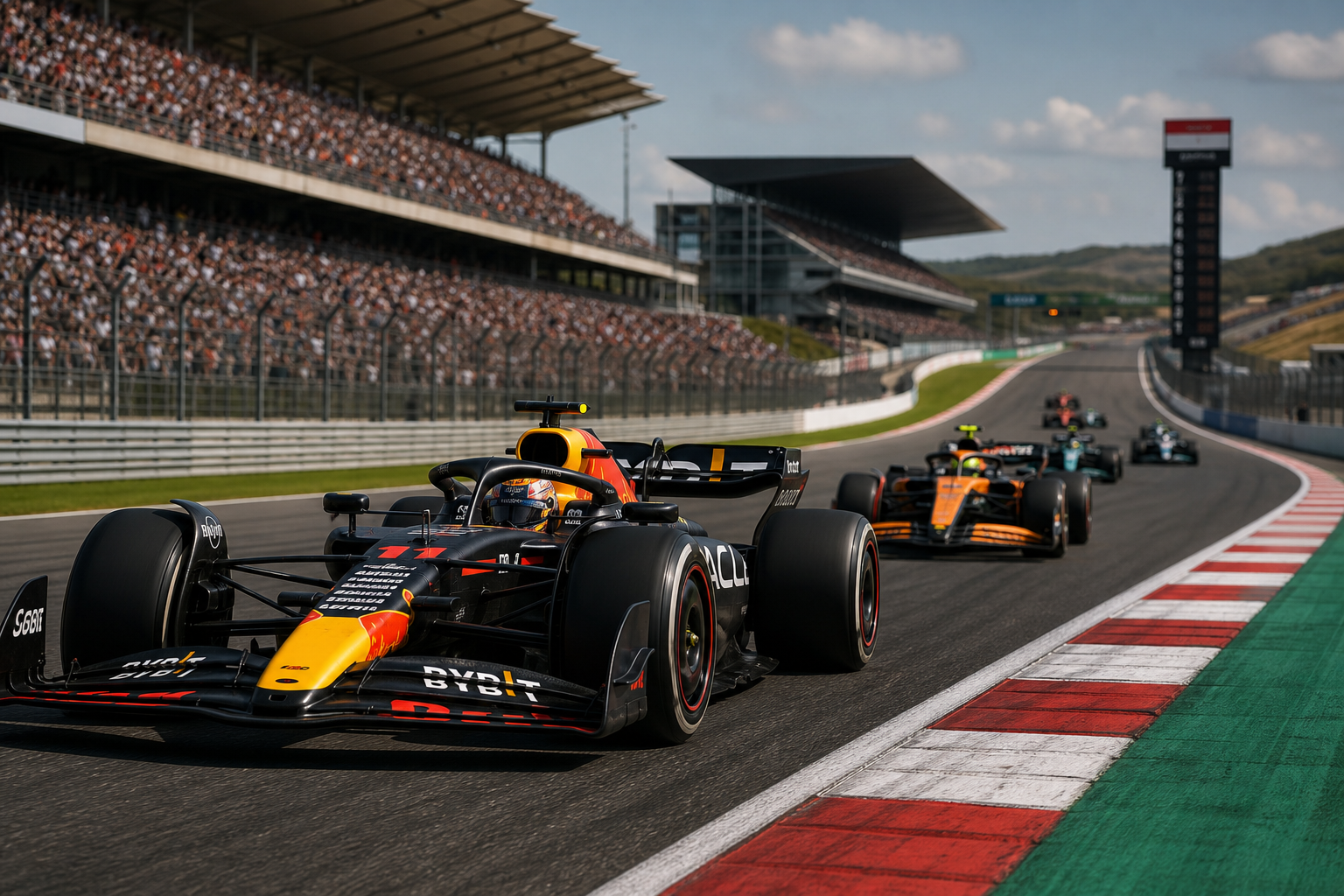

Formula 1 is preparing to make Grand Prix races shorter in 2027, with the standard race distance set to fall from 305 kilometers to 290 kilometers. That is a 15-kilometer reduction—roughly 4.9 percent—and it has been approved by the Formula 1 Commission, although the change still requires formal sign-off from the FIA World Motor Sport Council.
The decision was made during Monday’s Formula 1 Commission meeting in London. It is understood to be tied to the power unit changes expected for the 2027 season, with the shorter races intended to help control the cost and technical demands associated with the revised engine plan.
So, no, Formula 1 has not suddenly decided that Grand Prix racing should be over before everyone has finished arguing about tire strategy. The change is more practical than theatrical. It reflects the uncomfortable truth that modern power units are becoming increasingly complex, expensive and difficult to package into a race distance that was established for a rather different era of Formula 1 engineering.
Why the Race Distance Is Changing
The current standard Grand Prix distance is 305 kilometers, except at circuits with specific historical or logistical arrangements. That figure has been part of Formula 1’s basic sporting framework for decades, but the machinery covering those kilometers has changed dramatically.
Modern Formula 1 power units are not merely gasoline engines with a turbocharger attached and a large bill stapled to the side. They combine a turbocharged 1.6-liter V6 engine with sophisticated energy-recovery systems, electric motors, high-voltage battery packs and complex software. Teams must manage fuel consumption, electrical deployment, battery state of charge, cooling and component life over the course of a race.
The power unit rules planned for the next phase of Formula 1 are expected to place even greater emphasis on electrical energy and efficiency. The source material does not yet provide the complete technical specification for the 2027 revision, but the race-distance decision plainly indicates that the engine regulations and sporting format are being considered together rather than separately.
That matters because shortening a race is one of the few relatively simple tools available to the governing bodies. A smaller distance can reduce fuel and energy requirements, ease component stress and potentially limit the financial burden of operating the new machinery. It is not quite as glamorous as unveiling a new combustion concept in a room full of black polo shirts, but it may be considerably more useful.
What a 15-Kilometer Reduction Means in Practice
The change sounds modest on paper. Fifteen kilometers can disappear rather quickly when a Formula 1 car is traveling at racing speed. At most circuits, however, that distance represents several laps, and the exact number will vary according to the length of the track.
That means the sporting effect will not be identical everywhere. At a short circuit, 15 kilometers could remove a relatively large number of laps. At a long circuit, it might mean only a handful. The number of laps is also important because it affects the timing of pit stops, the opportunity to recover from an early mistake and the amount of time a driver has to attack or defend.
A shorter race does not automatically mean a less demanding race. Drivers will still have to manage tires, traffic and energy deployment, while teams will have fewer laps in which to recover from a poor strategy call. A badly timed pit stop may become even more costly if there are fewer opportunities to claw back the lost time.
The most obvious potential effect is on race strategy. Formula 1’s teams calculate fuel, tire wear and energy use with astonishing precision, often while pretending that everything is under control as the pit wall erupts into a small corporate panic. Removing 15 kilometers could change the preferred number of stops at some circuits, alter the value of tire conservation and make aggressive early-race tactics more attractive.
Whether that produces better racing will depend on the technical rules and tire behavior as much as the distance itself. A shorter event can create more urgency, but it cannot solve every problem. If aerodynamic performance still makes following another car difficult, removing several laps will not magically turn a processional race into a touring-car brawl.
The Cost Question Behind the Sporting Decision
The Formula 1 Commission’s decision is specifically linked to reducing costs associated with the expected power unit changes. That is significant because engine development remains one of the most expensive areas of Grand Prix competition.
Power unit manufacturers must design engines that are fast, reliable, efficient and durable enough to survive the season’s allocation limits. Every additional demand placed on the system can create consequences elsewhere: more cooling may require larger radiators, greater electrical deployment can increase battery and motor demands, and higher operating stress can require more expensive development or more frequent component replacement.
Cutting the race distance does not remove those engineering challenges, but it can reduce the energy required during each event. In theory, that may give manufacturers more freedom to meet the performance targets of the revised rules without pushing every component to its absolute limit.
It also fits Formula 1’s broader effort to present its engine regulations as financially and environmentally credible. The sport has been moving toward greater electrical involvement and more sustainable fuel use, but those ambitions still have to work within the brutal economics of a championship where small performance gains can cost millions of dollars.
The key word is “potentially.” A shorter race does not guarantee lower costs for teams or manufacturers. If the freed-up margin is immediately spent on more aggressive development, the accountants may see very little benefit. Formula 1 has a long history of turning sensible restrictions into elaborate engineering competitions. Give clever people a limit and they will spend a fortune finding the edge of it.
Approval Is Not Quite the Same as a Finished Rule
The Formula 1 Commission has agreed to the proposed reduction, but the measure still needs approval from the FIA World Motor Sport Council. That final step is important because the World Motor Sport Council is responsible for formally approving changes to the sporting and technical regulations.
Until that process is complete, the 290-kilometer distance should be treated as an agreed proposal rather than an entirely settled part of the 2027 rulebook. Formula 1 regulations are rarely allowed to travel in a straight line from idea to implementation. They pass through committees, technical groups, teams, manufacturers and governing bodies, each of which may discover a reason to adjust the wording—or add another paragraph the size of a small novella.
The eventual regulations will need to clarify how the reduced distance applies across the calendar, particularly at circuits that already operate under special race-distance arrangements. The source material confirms the change to the standard Grand Prix distance, but it does not yet explain every circuit-specific consequence or whether any other sporting rules will be adjusted alongside it.
Will Fans Notice the Difference?
For viewers, the immediate change may be difficult to spot. A race that is around five percent shorter will not feel radically different on television, particularly if the event still occupies the same broadcast window and retains the same qualifying format.
Drivers and strategists are more likely to notice. A few laps can influence whether a one-stop strategy remains viable, whether a damaged tire can survive until the pit window and whether a driver has enough time to recover after an early setback. In a championship decided by small margins, those details matter even when the headline number looks harmless.
There is also a philosophical question hanging over the decision. Formula 1 has traditionally used long races to test not only outright speed but also reliability, mechanical sympathy and strategic discipline. Reducing the distance slightly does not abandon that tradition, but it does acknowledge that the cars are becoming too energy-intensive—or too expensive to operate at full race length under the next set of power unit rules.
That is the real story here. The 2027 change is not a gimmick and, on its own, it is unlikely to transform Grand Prix racing. It is a piece of engineering housekeeping designed to make the next generation of power units workable within the financial and sporting limits of the championship.
Whether the compromise succeeds will depend on the full technical package still to come. If the revised engines produce closer performance, reliable energy deployment and cars that can follow one another properly, 290 kilometers may feel perfectly adequate. If not, Formula 1 will merely have slightly shorter races featuring the same old strategic frustrations—only with everyone reaching the checkered flag a few minutes sooner.

0 Comments