
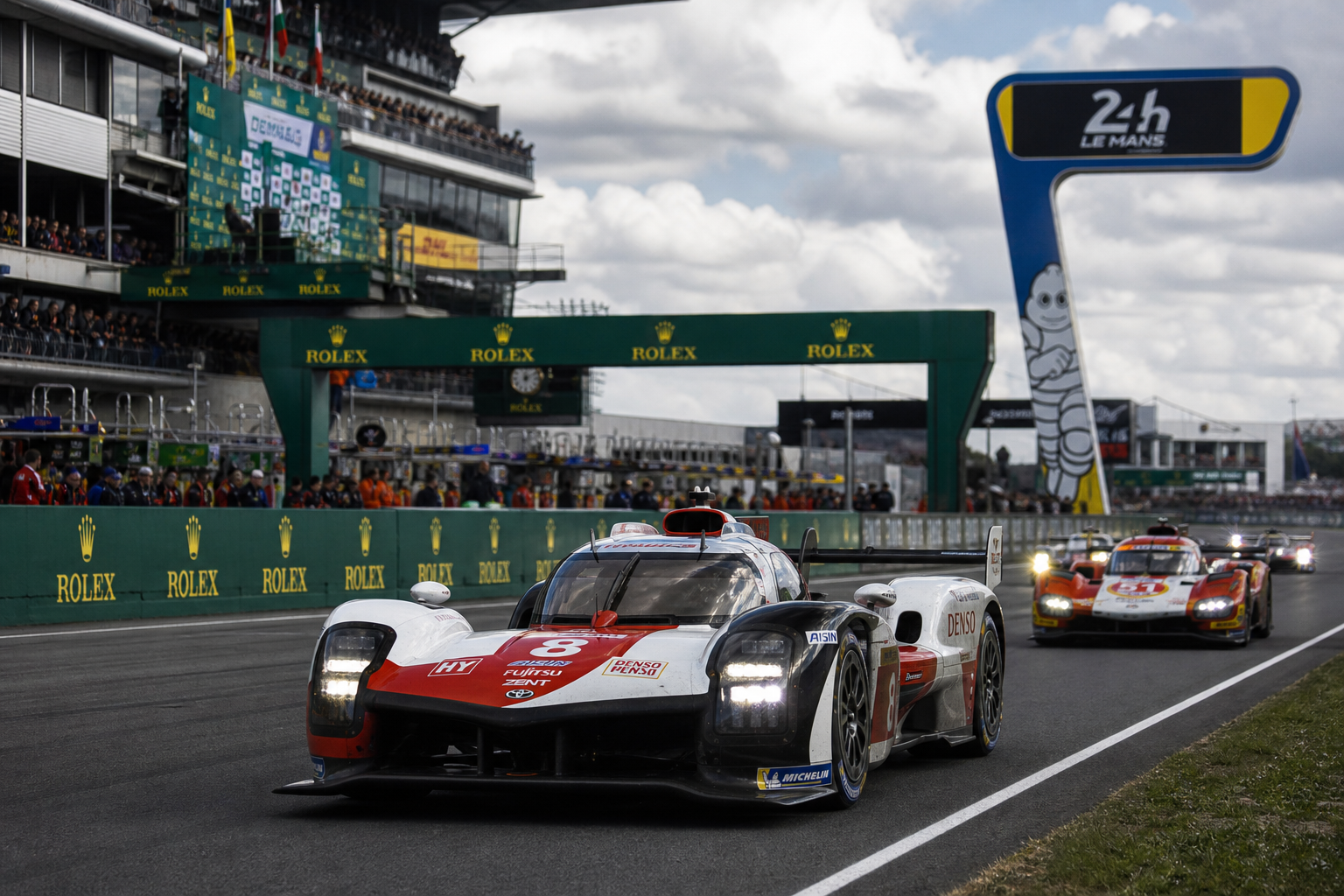

The World Endurance Championship has managed to avoid a round of public contract handbags, at least for now. After reports in Germany suggested the FIA and the Automobile Club de l’Ouest were at loggerheads over the series’ future, the governing body has clarified that the current promotional agreement already runs to the end of 2027.
That matters because the FIA and ACO are the pair that effectively keep the WEC machine turning. One provides the regulatory framework, the other handles promotion, and together they oversee a championship that has become one of the healthiest places in world motorsport for factory-backed racing. When those two start sounding cross with each other, people notice. And when the reported dispute concerns the commercial future of the championship, paddock ears twitch with unusual enthusiasm.
What the FIA Has Now Confirmed
According to the FIA, there is no immediate cliff edge lurking beneath the championship. The organization says it already has an agreement with the ACO covering promotion of the WEC through the end of 2027. That confirmation effectively counters the idea that the two sides were suddenly on the brink of a contractual dust-up over the series.
That does not mean the relationship is suddenly all smiles and shared canapés. Motorsport politics rarely work like that, and joint-ownership arrangements tend to produce more briefing-room drama than a Formula 1 press conference after qualifying in the rain. But the important point here is simple: the WEC’s promotional structure is not expiring at the end of this season, and the championship is not immediately heading into the void.
Why This Contract Matters So Much
The WEC is not a small-scale club championship that can be sorted out over a sandwich and a handshake. It is the top level of global endurance racing, home to the 24 Hours of Le Mans and a grid that has drawn back major manufacturers thanks to the hypercar formula. That makes governance and promotion more than administrative footnotes. They are part of the business case.
Manufacturers do not commit multimillion-dollar programs because they enjoy the smell of tire rubber and race fuel. They want stability, visibility, and a rulebook that will not be torched by a committee of exhausted officials every six months. A promotional agreement that stretches to 2027 at least gives the series a clearer runway, which is exactly the sort of boring but essential detail the paddock likes to have tucked away.
It also helps explain why a report of friction between the FIA and ACO caused such a stir. Endurance racing is built on long planning cycles. Cars take years to develop. Manufacturer programs are scheduled well in advance. Even the calendar needs more certainty than a race team coffee budget. So whenever a contract question pops up, it tends to attract more attention than the average governance squabble.
The WEC’s Wider Position in Motorsport
The championship’s recent growth has made this sort of news especially sensitive. The hypercar era has pulled the WEC back into the center of serious international sports car racing, with multiple manufacturers treating it as a genuine showcase rather than a glorified branding exercise. That shift has been one of the more encouraging stories in modern motorsport, which is nice for a change.
Le Mans remains the jewel in the crown, of course, but the broader WEC package has also become more valuable because it now offers manufacturers a pathway to compete in endurance racing without the old expense spiral that sent so many programs spinning off into the weeds. The FIA and ACO do not merely sanction races; they shape the rules and the commercial framework that make those programs possible.
So while a contract report might sound like the sort of thing only lawyers would read voluntarily, it actually sits right at the center of how the championship functions. If the promotional side gets messy, that uncertainty can ripple through team planning, manufacturer commitment, and even long-term class development. Not exactly thrilling pub chat, perhaps, but very much the sort of thing that decides whether a grid looks healthy or half-empty.
What Happens Next
For now, the key takeaway is that the FIA says the deal is already in place through 2027. That should calm the immediate noise around the reported disagreement, even if it does not guarantee smooth sailing behind closed doors. Motorsport’s governing alliances are often less serene than they appear on the outside, and endurance racing has always involved as much diplomacy as engineering.
Still, the confirmation is important. It gives the WEC a measure of continuity, and continuity is the sort of thing endurance racing lives on. The cars may be designed to run for 24 hours, but the series itself needs contracts that last a good deal longer than that.
In a sport where manufacturers, organizers, and regulators are forever trying to keep one another in line without actually saying so out loud, even a terse clarification is useful. The message from the FIA is clear enough: the WEC’s promotional arrangement is not suddenly falling apart, and the championship can carry on with the usual mixture of speed, strategy, and administrative intrigue that makes endurance racing so gloriously peculiar.
0 Comments