
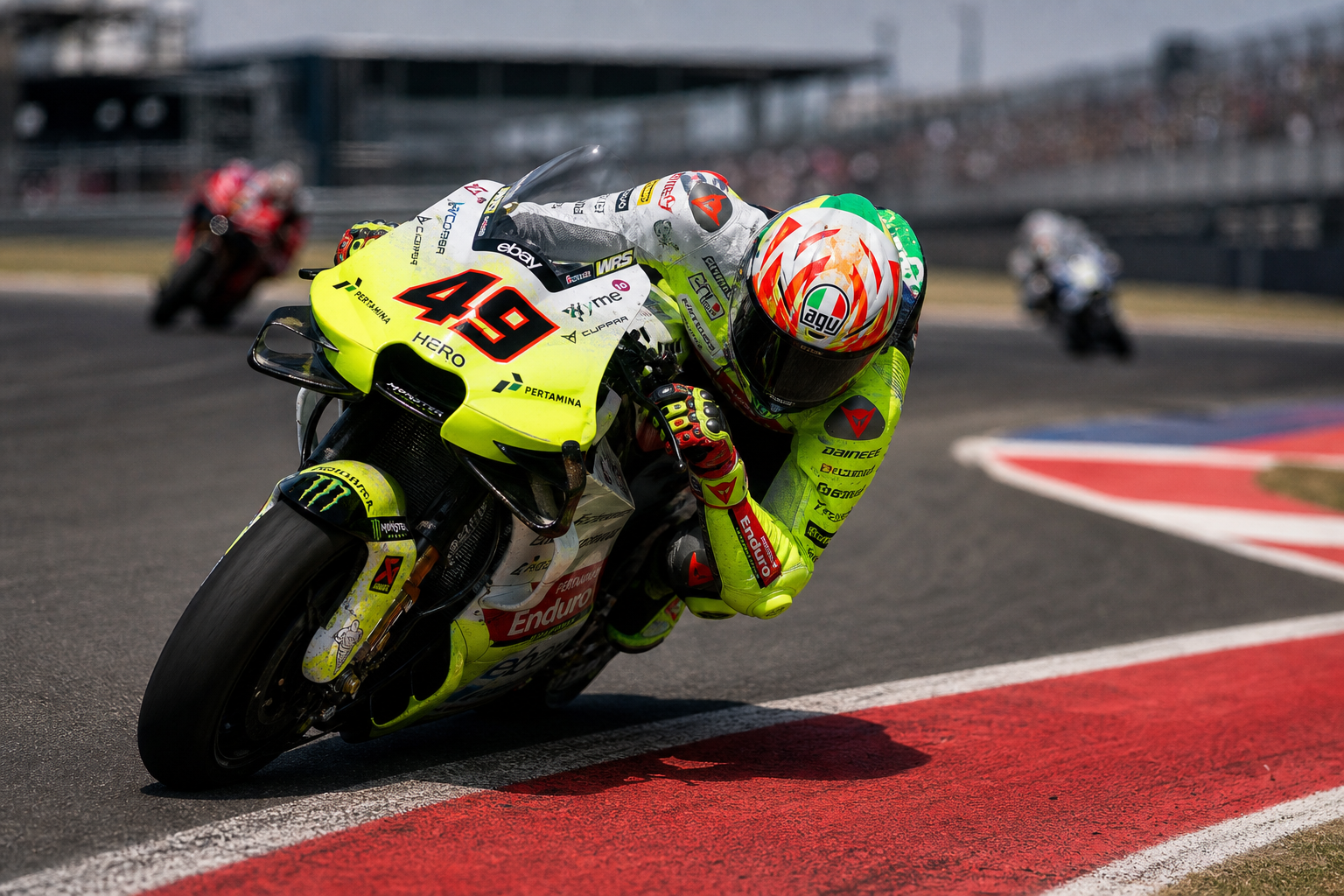

MotoGP has already added a sprint race to the weekend. Now the championship is considering another qualifying session to give that sprint its own grid, and Fabio Di Giannantonio is not convinced the riders should be expected to absorb yet another change in the name of entertainment.
The VR46 rider has voiced reservations about the proposal, warning that efforts to make MotoGP more dramatic can sometimes drift away from a less glamorous but rather important consideration: the physical health of the people riding the motorcycles at frankly ridiculous speeds.
MotoGP Is Considering Another Weekend Format Change
Stakeholders in MotoGP are discussing the possibility of adding a second qualifying session, specifically to determine the starting order for the sprint race. The idea would represent another adjustment to a weekend format that has already changed substantially since sprint races were introduced.
At present, MotoGP qualifying establishes the grid for both the Saturday sprint and Sunday’s full-length Grand Prix. A separate sprint qualifying session could give riders another opportunity to chase a fast lap, while also allowing the sprint grid to be shaped independently from the main race.
That sounds tidy on paper. Racing organizations do enjoy a tidy proposal, particularly when it creates another competitive session for television schedules and trackside audiences. The difficulty is that qualifying is not a harmless bit of administrative theater. It involves riders pushing for maximum performance, often with little margin for error, and every additional session brings more laps, more pressure and more opportunities for a crash.
Di Giannantonio’s Concern Is the Cost of More Action
Di Giannantonio’s objection is not that MotoGP should never evolve. His concern is that changes designed to improve the show can be made without giving enough weight to rider welfare.
That distinction matters. The modern MotoGP weekend is already densely packed. Riders have practice, qualifying, the sprint and the Grand Prix, with teams gathering data, managing tires and chasing setup improvements across a limited number of sessions. The sprint has added another race start and another points-paying contest, but it has also altered how riders and teams manage risk throughout the weekend.
A second qualifying session would not necessarily add a full race distance, but it would add another high-intensity competitive session. Riders would need to prepare the motorcycle, manage tire allocation and find a fast lap under the usual qualifying pressure. The physical cost may be smaller than that of another race, yet the risk profile is not automatically negligible.
Motorcycle racing is not a sport in which a driver can simply brush off a mistake and continue with a slightly bent front wing. A fall can end a weekend, complicate the next round or leave a rider carrying injuries for months. The machinery may be sophisticated, but the rider remains an unusually exposed component of the package.
The Sprint Race Has Already Changed the Rhythm
MotoGP introduced sprint races to increase the amount of meaningful competition during a Grand Prix weekend. Unlike practice, the sprint has immediate consequences: it awards championship points, creates another start and gives riders a second chance to deliver a result before Sunday.
For fans, the appeal is obvious. There is less waiting around for the main event, and a rider who qualifies poorly has an additional opportunity to recover. It also creates more strategic tension for teams, which must decide how aggressively to attack the sprint while protecting tires, equipment and riders for the longer race.
The format has made Saturday more important. It has also made the weekend less forgiving. A crash in the sprint can affect Sunday’s race, while an incident during qualifying can compromise two separate contests. Adding a sprint-specific qualifying session could sharpen the competitive spectacle again, but it would also push the timetable further toward constant maximum effort.
There is a certain irony here. The sprint was introduced partly to make every session feel more significant. If every session becomes a must-attack contest, however, the championship risks leaving riders with fewer moments to reset and fewer opportunities to manage their weekends intelligently. That may sound like a small distinction from a couch, preferably one with snacks nearby. It is rather different when the next corner arrives at racing speed.
Why the Proposal Is Attractive to MotoGP
From the championship’s perspective, the proposal has a clear appeal. A second qualifying session could give the sprint its own narrative, its own battle for pole and its own reason for viewers to tune in. It might also prevent Friday or Saturday performance from defining the grid for both races.
There could be sporting advantages as well. If a rider or team finds a major setup improvement after the first qualifying session, a separate session would give that work a direct effect on the sprint. The format might create more variation between the two grids and produce additional opportunities for riders to gamble on tire choice or setup.
But those benefits depend on the session creating meaningful competition rather than simply adding another timed run to an already crowded schedule. MotoGP must also consider tire usage, track conditions and the way a second qualifying session would interact with practice and warm-up. A format that looks exciting in a television rundown may be less appealing when teams have to make it work across a full season of travel and back-to-back events.
The Health Question Cannot Be Treated as a Footnote
Di Giannantonio’s warning puts the most important question in plain view: how much additional activity can the riders reasonably absorb before the spectacle begins to undermine the people producing it?
Riders already compete through fatigue, minor injuries and the accumulated strain of a long championship. The calendar demands repeated travel, rapid recovery and constant adaptation to different circuits. A qualifying session is shorter than a race, but it is also an environment in which riders are encouraged to use every available fraction of performance. The physical and mental workload cannot be judged by minutes alone.
That does not mean every proposed change should be rejected. MotoGP needs to remain engaging, and the sprint has shown that the championship is willing to experiment with its traditional structure. It does mean rider health should be part of the first discussion, not the final paragraph after the television strategy and promotional opportunities have already been agreed.
The best format is not necessarily the one with the greatest number of sessions. It is the one that produces hard racing while preserving enough margin for riders to compete properly across the entire weekend. Otherwise, the championship may end up manufacturing drama by steadily increasing the chances that someone will be unavailable to participate in it.
For now, the sprint-qualifying idea remains under consideration rather than a confirmed rule change. Di Giannantonio’s intervention is a useful reminder that MotoGP’s product is built around exceptionally brave and exceptionally human athletes. More action can be good television. More risk, simply because the schedule has room for it, is a rather different proposition.
0 Comments