
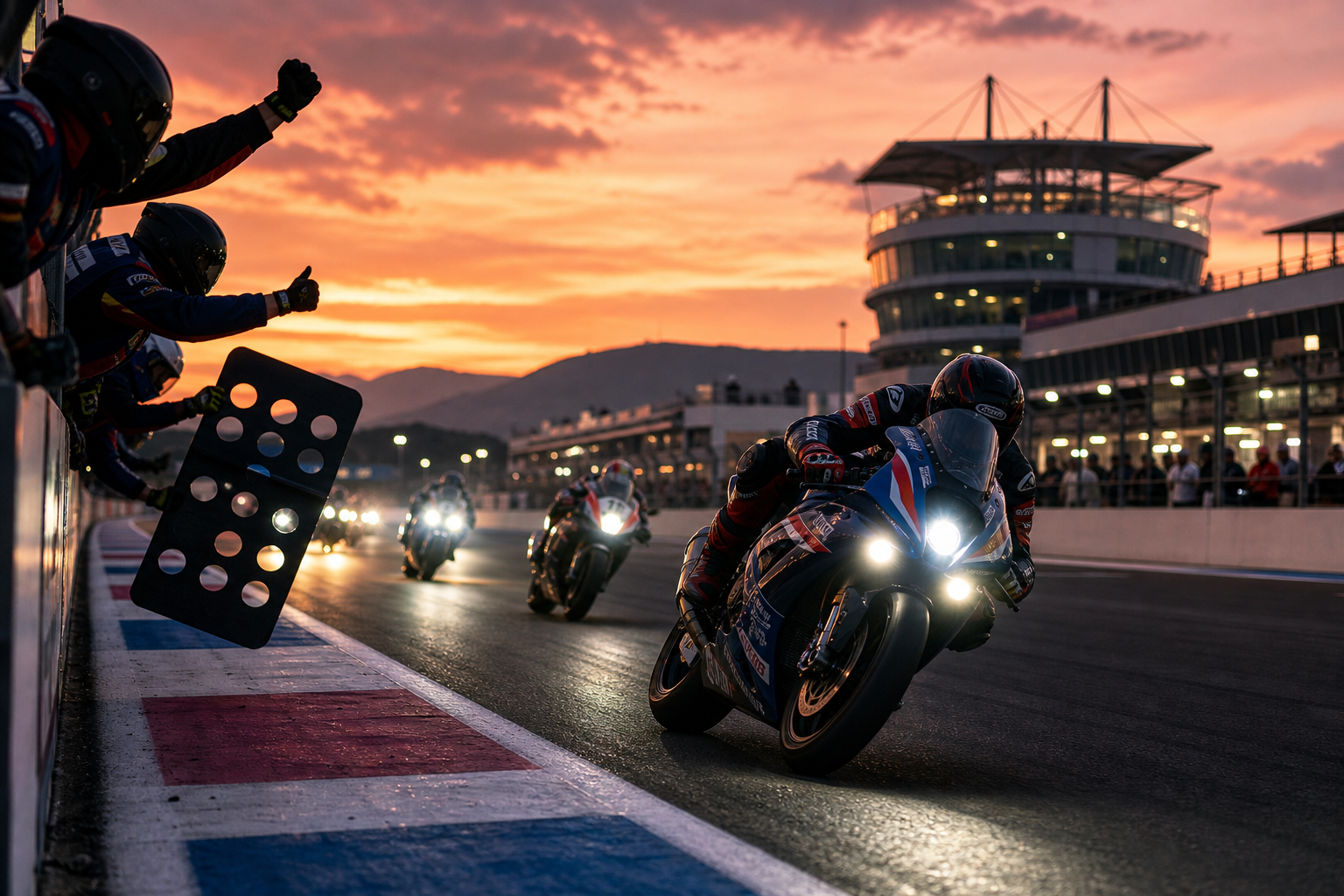

The 2026 FIM Endurance World Championship will be decided this weekend at the Bol d’Or, with Circuit Paul Ricard hosting the fourth and final round of the season. As ever, the 24-hour race on the southern French circuit brings together the full endurance-racing package: outright pace, night running, rider rotation, tyre management, fuel strategy and the mechanical reliability that separates a points lead from a championship trophy.
The season comes down to one race
The Bol d’Or is a fitting venue for a title decider. The event has long carried special weight in endurance racing, and Paul Ricard’s fast, technical layout gives teams a chance to attack with speed while still punishing any weakness in preparation. Over the course of a 24-hour race, a small mistake or a minor technical issue can quickly turn into a championship-defining swing.
That’s what gives this finale its edge. The season has reached its last round with the standings still in play, and the winner in endurance racing is rarely the fastest single bike over one lap. It’s the crew that can sustain pace for a full day, keep the machine alive, avoid penalties and make the right calls when conditions change.
Why the Bol d’Or matters in endurance racing
The Bol d’Or is one of the cornerstone events of the discipline, and the Paul Ricard circuit suits the format well. Its long straights reward top-end speed, but the braking zones and flowing sections also demand a stable chassis and riders who can adapt to changing track conditions as the race moves from daylight into darkness and back again.
Unlike sprint racing, endurance competition asks teams to think in layers. A setup that is gentle on tyres may sacrifice outright pace. A bike that is perfectly sharp at the start of a stint may become more difficult to ride as grip falls away. Fuel windows, pit-stop execution and rider sequencing become part of the engineering puzzle, and the Bol d’Or tends to expose every weakness.
What teams are chasing in the finale
With the season’s fourth and final round on the calendar, the stakes are straightforward: a championship can be secured, lost or transformed in a single race. That puts pressure not only on the title contenders but on the entire pit lane, where every team is balancing risk against the need to score as many points as possible.
In endurance racing, the final round also has a habit of rewarding consistency over flash. A team that has managed its campaign carefully can still be vulnerable if the Bol d’Or throws up a safety-car shuffle, a weather change or a mechanical issue at the wrong time. Conversely, a strong result at Paul Ricard can rescue a campaign that looked out of reach earlier in the year.
What makes endurance racing different
The FIM Endurance World Championship remains one of motorsport’s most demanding tests of a motorcycle package. The bike has to be quick, but it also has to survive long stints at race pace with multiple riders, repeated pit work and very little margin for error. That means the result reflects not just rider speed but the effectiveness of the whole operation: engineering, strategy, communications and preparation.
For manufacturers, EWC success also has a different kind of value. Endurance racing puts real emphasis on durability, electronics, braking stability and repeatable performance — all areas that matter in production-bike development, even if the race machines are highly specialized. A strong showing at an event like the Bol d’Or carries weight well beyond the finishing order.
A final test at Circuit Paul Ricard
Paul Ricard’s wide layout and long Mistral Straight make it one of the more recognizable circuits on the endurance calendar. It can produce close racing, but it also rewards a disciplined approach. Bikes need to be stable under braking, efficient on the straights and manageable for riders over long stints. Over 24 hours, the track’s demands become a test of patience as much as speed.
That is why the Bol d’Or serves as such a natural season finale. It is not only the race that decides the championship, but also the one most likely to expose how well each team has built its campaign. By the time the chequered flag falls, the standings should tell a clear story about who mastered the balance between pace and endurance.
For the 2026 EWC field, everything now points to one last night at Paul Ricard — and the kind of race where championships are often settled long before the final hour, but only confirmed after 24 demanding hours.
0 Comments