
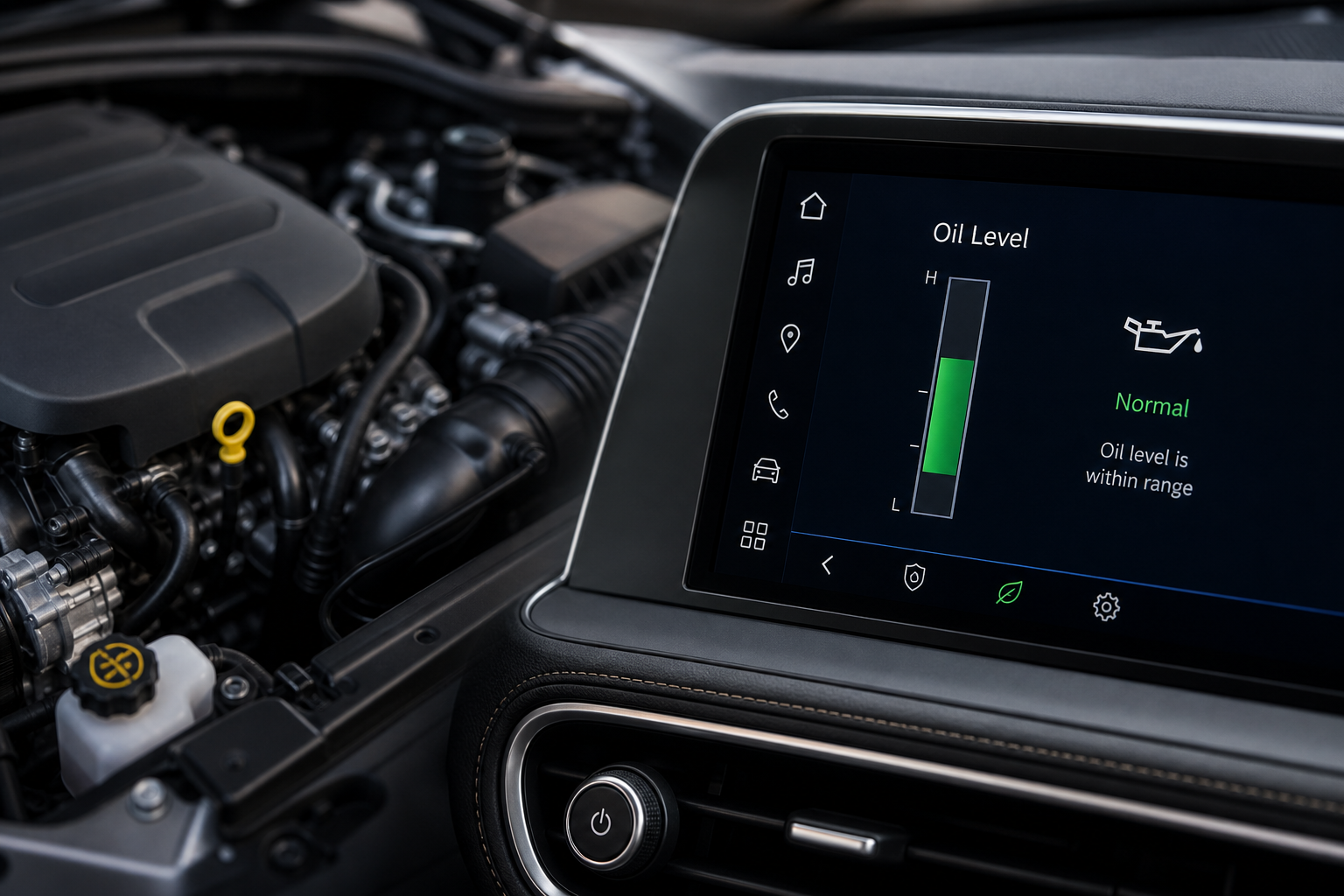

General Motors has introduced a new oil-level display that replaces the familiar dipstick with a digital readout in at least some of its latest vehicles. It’s a small detail on paper, but it says a lot about where modern vehicle design and service routines are headed: fewer mechanical touchpoints, more software-driven information, and a growing reliance on the vehicle’s onboard systems to tell the driver what’s happening under the hood.
The move is part of a broader trend across the industry. As engines become more tightly packaged and increasingly integrated with electronic monitoring, traditional maintenance rituals are being replaced by digital equivalents. The dipstick has been one of the most recognizable tools in automotive ownership for more than a century. GM’s new interface suggests that, at least in some applications, checking oil level is now becoming another task handled through a screen rather than a metal blade and a glance at the markings.
What the new display changes
The core change is straightforward: instead of pulling a dipstick from the engine bay to inspect oil level manually, the driver is presented with a digital oil-level gauge in the user interface. That means the vehicle is now interpreting and displaying the information electronically rather than relying on a physical measurement tool under the hood.
For drivers, the most obvious benefit is convenience. A screen-based oil check can be accessed without opening the hood, and the system can present the result in a way that’s easy to read at a glance. It also fits neatly into the current direction of vehicle cockpits, where nearly every major function—from navigation to tire pressures to maintenance reminders—has migrated to the infotainment display or driver cluster.
GM hasn’t made the oil level itself more important than it was before, but it has changed how the information reaches the driver. That distinction matters. The task remains the same; the interface has changed.
Why manufacturers are moving away from the dipstick
The traditional dipstick is simple, durable, and familiar, but it also has limitations. It depends on the driver performing the check correctly: the vehicle should be parked level, the engine should be at the right temperature, and the oil has to be given time to settle. Human error can easily lead to misleading readings. A digital system can standardize that process by collecting data through sensors and presenting a simple result in the cabin.
There’s also a packaging argument. Modern engine bays are crowded with emissions equipment, turbocharger plumbing, hybrid hardware, wiring, and structural components. Removing less frequently used manual service items helps simplify the layout. In the same way some manufacturers have reduced or eliminated traditional transmission dipsticks and other underhood service points, a digital oil-level gauge reflects the larger push toward sealed, monitored systems.
That doesn’t mean old-school maintenance has vanished overnight. Oil still has to be checked, changed, and maintained properly. But the method of inspection is evolving, and GM’s user interface is a clear example of that shift.
What this means for owners and service
For many owners, the digital display will probably be seen as a convenience feature first and a technical change second. It makes routine monitoring feel less like hands-on maintenance and more like part of the vehicle’s built-in diagnostics. That may suit drivers who rarely open the hood, though it will feel unfamiliar to anyone accustomed to checking oil the traditional way.
There are practical implications as well. A digital gauge is only as useful as the sensor data and software behind it, which places more importance on calibration, system reliability, and clear warnings when something is outside the normal range. In exchange, drivers get a more integrated view of vehicle health through the same interface they already use for other functions.
GM’s decision also signals how service information is being reframed inside the vehicle. Maintenance used to be a tactile experience, with the driver directly inspecting mechanical components. Now the information is increasingly interpreted for the driver by the car itself. For a lot of mainstream vehicles, that’s becoming the new normal.
A small feature with a larger message
On its own, a digital oil-level gauge isn’t the kind of feature that headlines a launch event. But it does fit neatly into the way modern vehicles are being designed: fewer visible mechanical checks, more embedded electronics, and more responsibility handed to the software layer. The dipstick may not disappear everywhere overnight, but GM’s new interface shows where the industry is headed.
For buyers, the real takeaway is simple. The familiar underhood routine is giving way to a cleaner, more digital experience, and oil level is now part of that transition. It’s a modest change, but one that reflects the steady redefinition of what basic vehicle maintenance looks like in a modern GM product.

0 Comments