
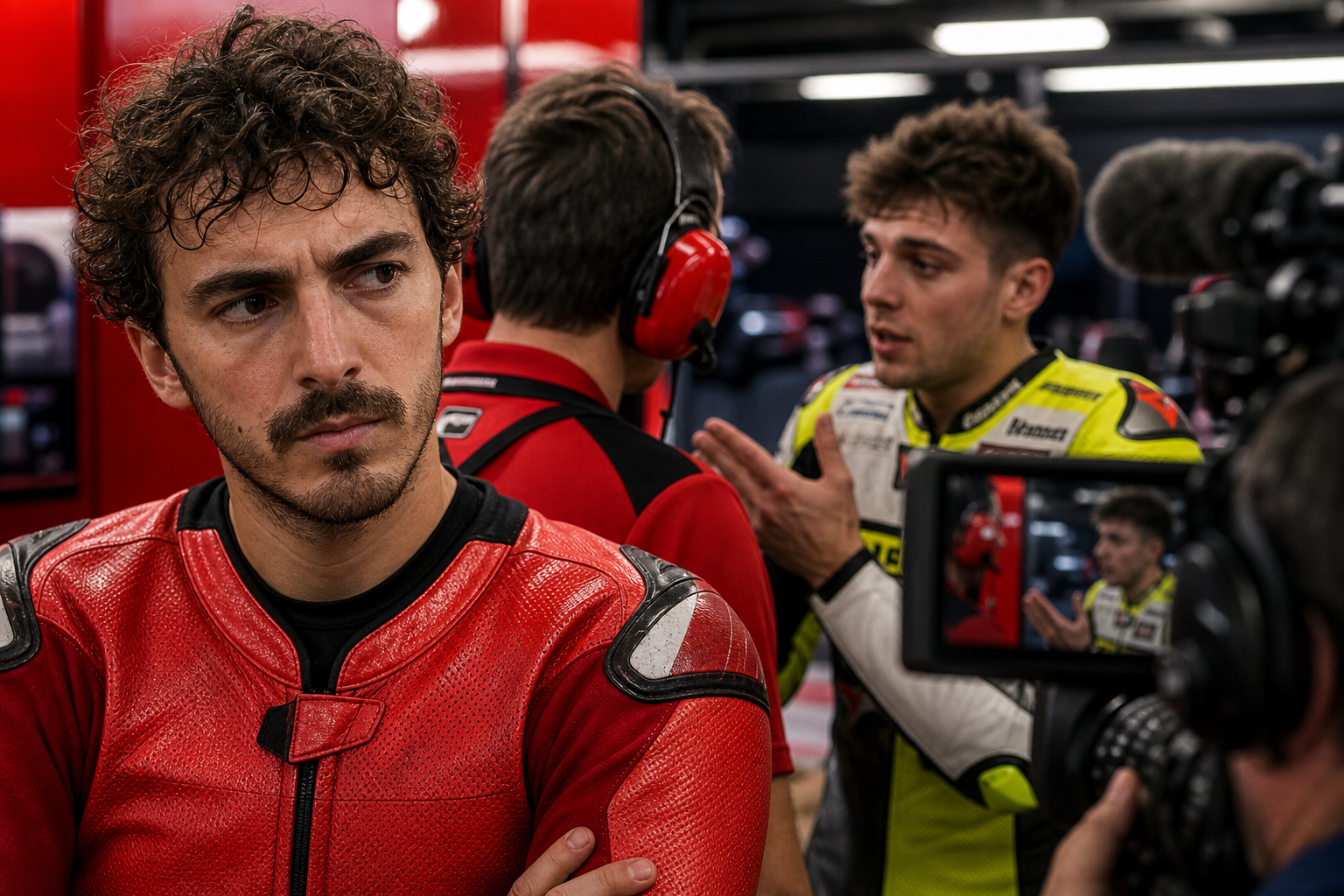

Francesco Bagnaia has pushed back hard after a televised excerpt of a private conversation with Fabio Di Giannantonio was aired during MotoGP coverage, saying the way it was presented made him look “terrible.” The two-time MotoGP world champion’s complaint is less about the exchange itself than the context in which it reached viewers.
The episode has drawn attention not because of a crash, a penalty or a championship dispute, but because of how modern racing coverage can shape perception. In a sport where rider body language, garage atmosphere and off-track communication are increasingly part of the narrative, edited audio or video can carry more weight than intended. Bagnaia’s reaction suggests he felt the broadcast stripped the conversation of the context needed to understand what was actually being said.
Why the broadcast upset Bagnaia
Bagnaia did not dispute that the conversation took place. His issue was with how it was used. By airing the exchange without the wider circumstances, he believes the broadcast created a misleading impression of his tone and intentions. That kind of selective presentation is particularly sensitive in MotoGP, where riders are constantly under scrutiny and even brief remarks can be replayed and dissected across social media, team channels and post-race analysis.
For a rider with Bagnaia’s profile, the stakes are obvious. As a Ducati factory rider and one of the leading figures in the championship, anything that makes him appear dismissive, confrontational or out of step with a fellow rider becomes part of the public record immediately. Once a clip is clipped, shared and commented on, the original context can disappear quickly.
The pressure of being constantly observed
MotoGP teams, riders and broadcasters operate in an environment where access is both a selling point and a risk. Viewers want to hear the raw exchanges that reveal what’s happening behind the scenes, but those moments are rarely as simple as they appear on television. A comment made in the heat of the moment, a joke between riders, or a terse exchange after a difficult session can all look very different once isolated from the situation that produced it.
Bagnaia’s reaction fits a familiar tension in modern motorsport coverage: the desire for more intimate access versus the obligation to avoid distorting what that access means. When cameras and microphones are brought closer to the action, the editorial choices behind what is shown become just as important as the recording itself.
What it means for Bagnaia and Ducati
Bagnaia’s public standing makes this kind of incident more noticeable than it would be for a lesser-known rider. As a Ducati star and a rider accustomed to championship-level pressure, he is already judged on results, demeanor and leadership. A broadcast that makes him appear harsh or disrespectful can influence how casual viewers interpret his personality, even if the underlying exchange was far more ordinary.
For Ducati, the episode is unlikely to have any technical or sporting consequence. But it does underline how tightly managed rider image has become in MotoGP. Manufacturers invest heavily in their stars as competitive assets and public-facing personalities, and broadcasters are now part of that wider ecosystem whether they intend to be or not.
Context matters in modern motorsport media
The broader issue is not unique to Bagnaia or MotoGP. As race coverage has become more immersive, the line between reporting and entertainment has narrowed. Audio snippets, garage footage and rider reactions are valuable because they bring audiences closer to the sport, but they also invite interpretation that may not match reality.
Bagnaia’s complaint is a reminder that context still matters, especially when the subject is a rider under intense pressure and the audience is being asked to judge a private exchange as though it were a complete statement. In a championship where reputations can shift quickly, the way a conversation is framed can matter almost as much as the words themselves.


0 Comments