
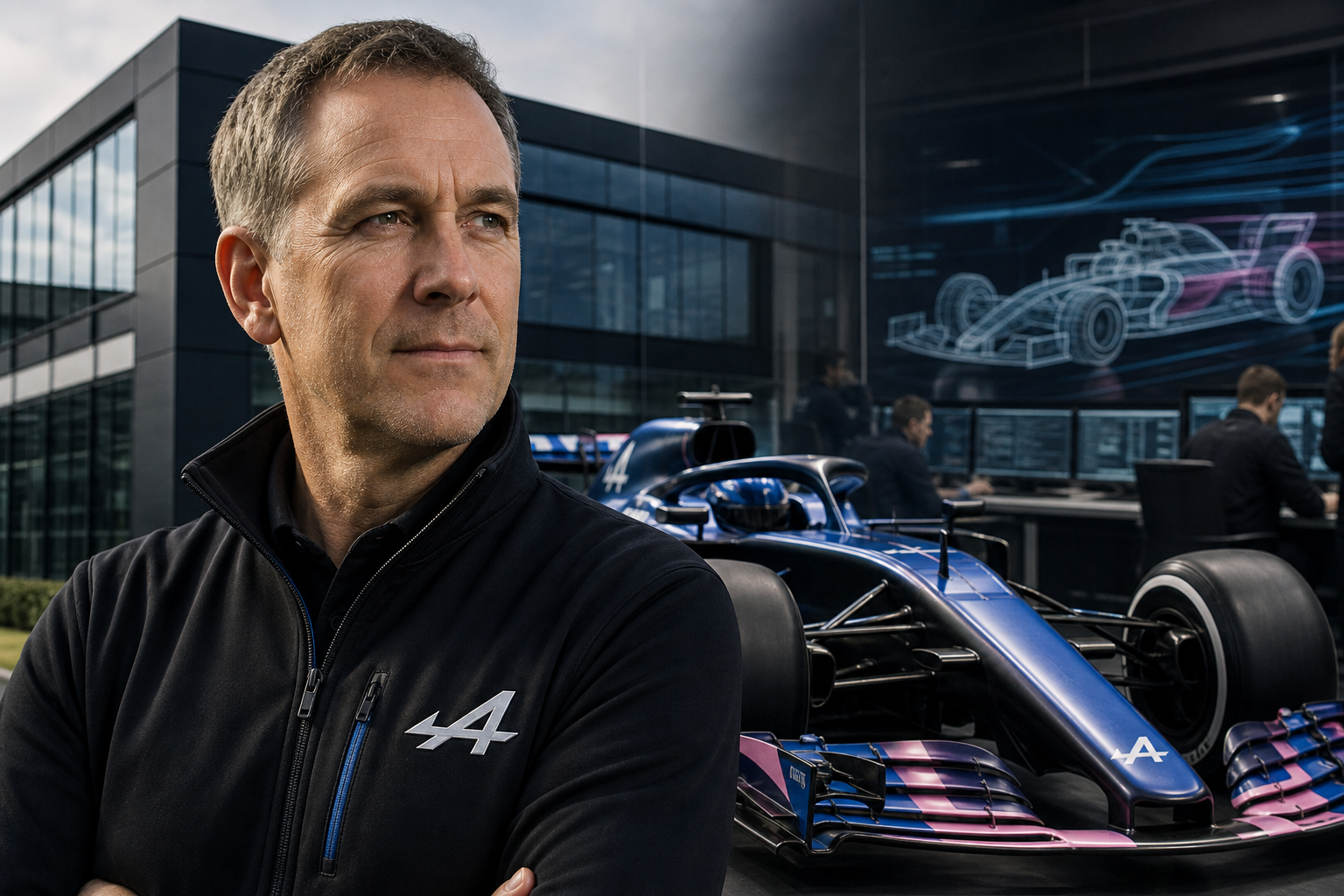

Alpine has strengthened its Formula 1 technical leadership with the appointment of Mike Elliott as chief technical officer, a newly created role that places one of the sport’s most experienced engineers back at Enstone. The move gives Alpine a clearer technical chain of command as it continues trying to improve the structure behind its F1 operation.
The team announced that Elliott will oversee the technical and engineering functions at its factory in Enstone, the long-established base of the former Renault F1 operation. The title is significant not just because of who has been hired, but because of how Alpine has chosen to define the role: this is not a narrow departmental job, but a senior position intended to coordinate the team’s core engineering effort.
A New Layer at the Top of Alpine’s Technical Operation
Alpine’s decision to create the CTO position suggests a desire to sharpen accountability and improve how the team’s technical departments work together. In Formula 1, where aerodynamics, vehicle dynamics, race engineering, simulation and development planning all have to align, the way a team is structured can be almost as important as the quality of the individual people involved.
By placing Elliott above the factory’s technical and engineering functions, Alpine is effectively adding a senior technical lead with oversight across the operation rather than relying on a more fragmented structure. That can be especially useful for a team that has been working to stabilise its long-term direction while trying to fight its way up the competitive order.
Why Elliott’s Return to Enstone Matters
For Elliott, the appointment marks a return to a place with deep significance in Formula 1 history. Enstone has been home to multiple championship-winning eras under different ownership and branding, and it remains one of the sport’s most recognisable technical centres. Bringing back an engineer with extensive top-level experience fits Alpine’s broader effort to reconnect its racing programme with proven leadership.
The 52-year-old Briton is well known in F1 circles, and his arrival gives Alpine another senior figure with the background to help shape car development and longer-term engineering direction. In a business where the smallest gains in design and execution can have outsized effects on performance, experience at this level carries real value.
What the Appointment Suggests About Alpine
Alpine has not treated the role as a symbolic title. The wording of the announcement makes clear that Elliott’s remit will cover the key engineering work done at the Enstone factory, which is where the team’s competitive foundation is built. That includes the development process behind future cars, the coordination of technical departments and the translation of on-track data into usable upgrades.
The timing also matters. Formula 1 teams are constantly balancing immediate race performance with the demands of future regulation cycles and development priorities. A strong technical structure can make the difference between incremental progress and another season spent trying to catch up. Alpine’s latest move indicates that it wants a more defined technical architecture to support both short-term competitiveness and longer-range planning.
Enstone’s Ongoing Importance in Formula 1
Enstone has long been one of Formula 1’s major engineering hubs, with a lineage that stretches back through Benetton and Renault to the present Alpine operation. The facility has seen title-winning cars, major regulation shifts and multiple eras of management, which makes changes to its technical leadership especially significant.
When a team with that history creates a new senior engineering role, it usually points to a desire for sharper organisation rather than a wholesale reinvention. Alpine’s move fits that pattern. It is less about making noise than about giving the factory a clearer technical authority figure as the team continues refining how it operates.
What Comes Next
Alpine has not just added another name to the organisation chart. It has chosen to create a role around a specific kind of oversight, one that places engineering leadership at the centre of the team’s factory operation. In a grid where structure and technical direction are often as important as raw pace, that can be a meaningful step.
For Elliott, it is a chance to take on a broad leadership role at one of Formula 1’s most familiar and demanding engineering bases. For Alpine, it is another sign that the team is continuing to reshape itself around a more defined technical model at Enstone.

0 Comments