
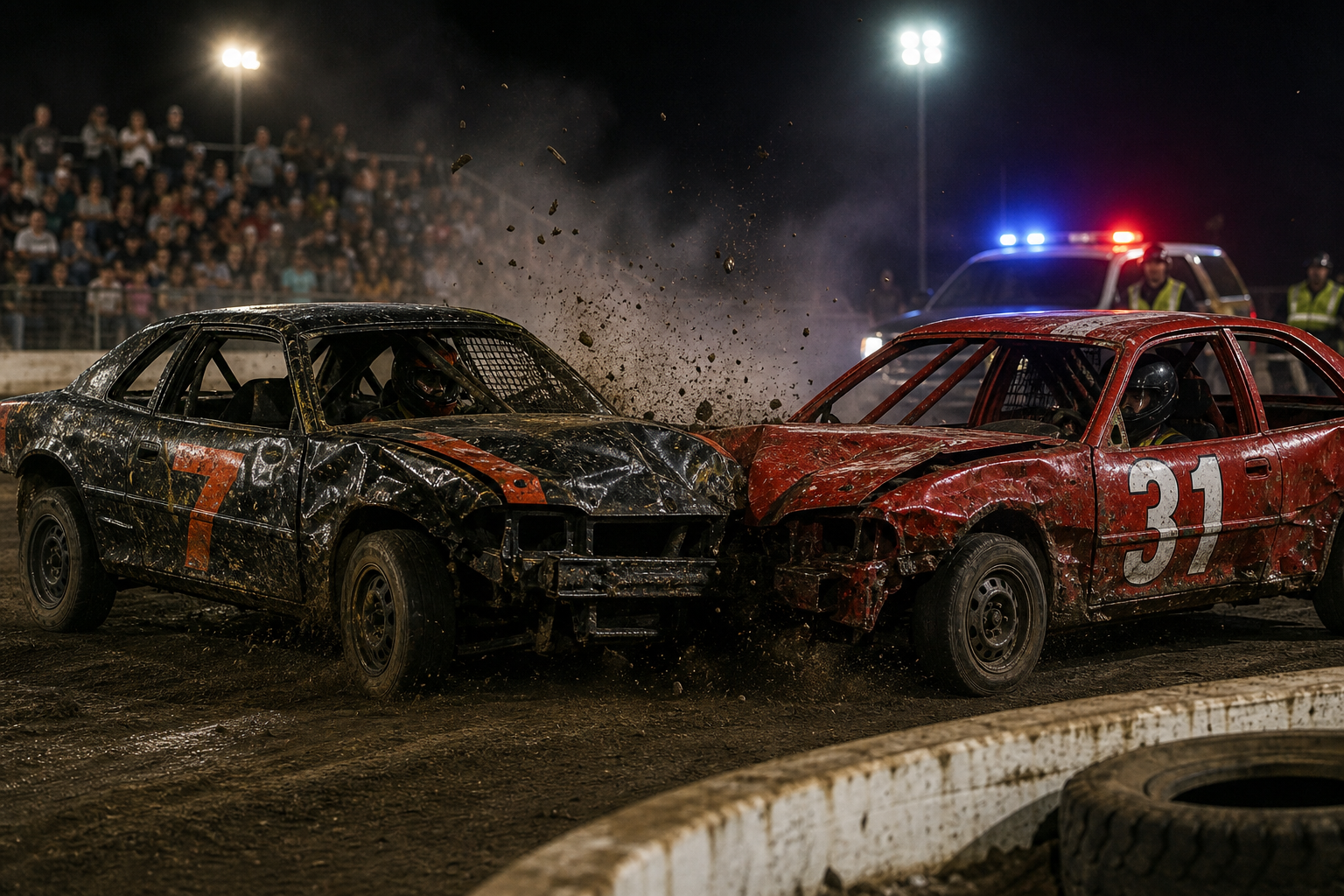

A race built around contact goes off-script
Figure-8 racing has never sold itself on restraint. The format is defined by close quarters, crossing traffic and the expectation that metal will get bent. But at a recent three-hour event in Ohio, the usual rough-and-tumble spectacle crossed from chaotic into something far more serious, ending in a crash and a felony charge for one driver.
The incident is a stark reminder that while short-track racing can look like organized mayhem, there are still limits. When tempers flare and a driver decides the rulebook no longer matters, the consequences can shift quickly from on-track damage to law enforcement involvement.
Why figure-8 racing attracts crowds
Figure-8 racing exists on the edge of motorsport and demolition spectacle. The cars run around a circuit shaped like the number eight, forcing competitors to pass through a central intersection where paths can converge at the worst possible moment. That built-in hazard is the appeal. Fans come to see near misses, aggressive passes, and the kind of unpredictability that more polished forms of racing try hard to eliminate.
Because contact is baked into the format, the racing often rewards bravery, split-second judgment, and a willingness to hold a line when common sense suggests lifting. But there is a difference between hard racing and deliberate retaliation. In events like this, officials usually tolerate plenty of bodywork abuse. They do not tolerate escalation that turns into a road-rage-style incident at speed.
What makes this incident stand out
The source material identifies the event as a three-hour race in Ohio and notes that it was designed around contact. That alone explains why the race could deteriorate so dramatically: the environment already encourages risk, and long-duration events can magnify frustration as cars, drivers, and tempers wear down over time.
What separates this case from the usual short-track carnage is the result. Instead of the story ending with torn sheet metal and a wry shrug from the pits, one driver now faces a felony charge. That elevates the incident from racing drama to a legal matter, which is a far different proposition for anyone who treats grassroots motorsport as a place where anything goes.
The thin line between aggression and misconduct
Grassroots racing depends on a shared understanding among competitors. Drivers are expected to race hard, but also to accept that officials will police the most reckless behavior. At a venue like a figure-8 track, where collisions are common and the audience is conditioned to expect them, that boundary can become blurry very quickly.
Still, the line exists. Intentional wrecking, retaliation after contact, or any action that rises beyond competitive hard racing can carry serious consequences. In this case, the post-race fallout suggests that what happened was viewed as more than a routine incident between racers trying to make it through a rough event.
Why the story resonates beyond one night at the track
Stories like this land because they sit at the intersection of entertainment, competition, and accountability. Figure-8 racing has long thrived on the idea that drivers are willing to accept more danger and contact than they would in conventional forms of motorsport. That does not exempt them from the real-world rules that apply when behavior on track spills into something criminal.
For smaller racing communities, incidents like this can have a practical impact as well. Promoters, officials, and track owners rely on a delicate balance: enough intensity to keep the show compelling, but enough discipline to keep events from becoming unsafe or unmanageable. One ugly night can put that balance under a microscope.
The Ohio race was supposed to be a chaotic, contact-heavy endurance event. Instead, it became another example of how quickly spectacle can turn into liability when tempers override judgment.


0 Comments