
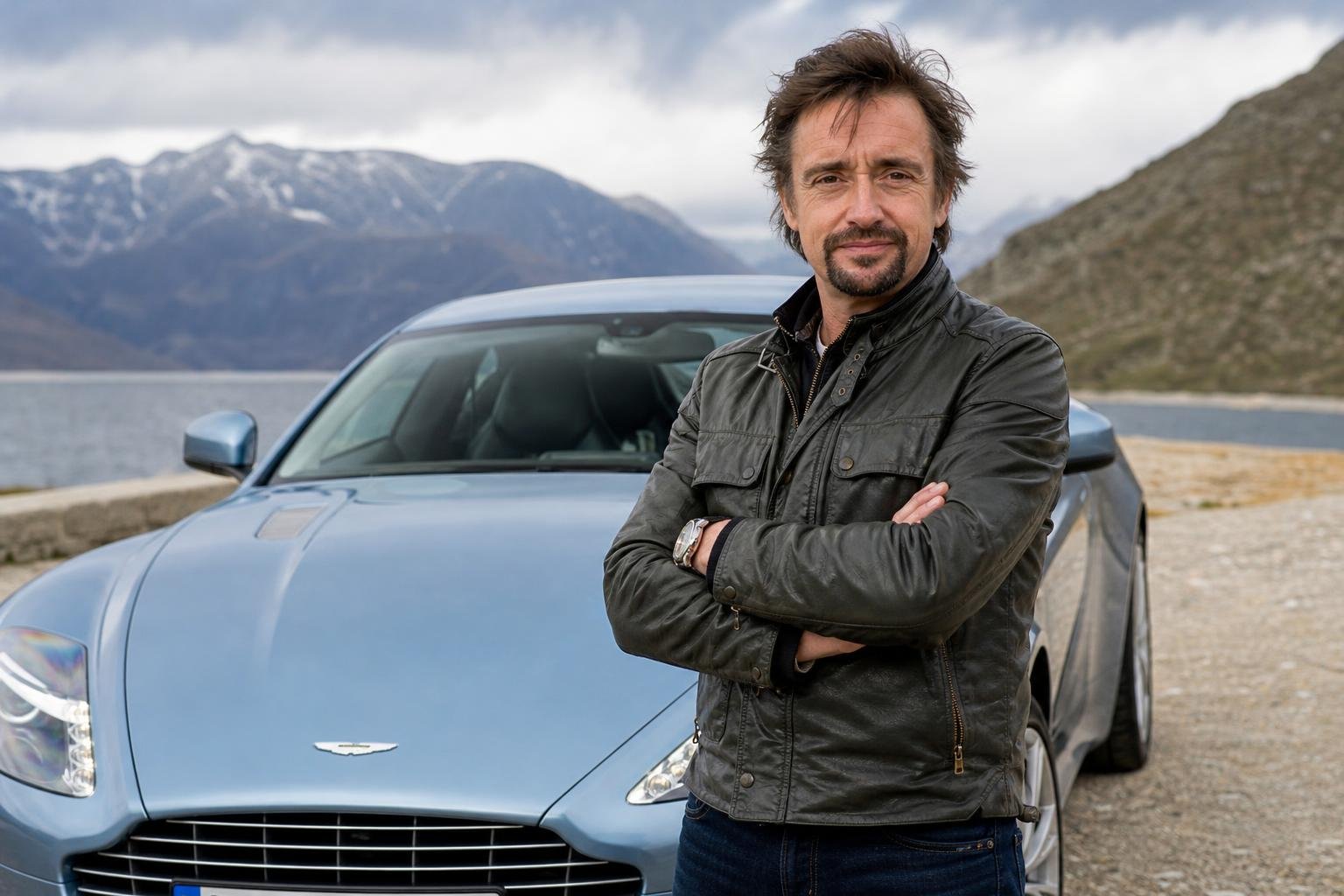

Richard Hammond was offered a chance to return to Top Gear, but the former presenter decided that the BBC’s revival should not attempt to recreate the version that made him, Jeremy Clarkson and James May internationally famous.
Speaking after Gordon Ramsay was announced as the new lead host, Hammond confirmed that the BBC had approached him about helping lead the revived series. His answer was shaped less by a lack of affection for the program than by a belief that the show’s most famous chapter belongs in the past.
Hammond Does Not Want to Rebuild the Old Top Gear
“They came to me about maybe getting involved in leading the new Top Gear, and I don’t want to drag it back to what it was,” Hammond told BBC Radio 4’s PM. “We had our tenure of it and enjoyed it and did our thing with it and went a bit crazy with it.”
That is a surprisingly clear-eyed position from someone who remains inseparable from the show’s most successful period. Hammond, Clarkson and May presented Top Gear together from 2002 until 2015, when their particular blend of rivalry, absurd challenges and genuine enthusiasm turned a car program into a global entertainment franchise before the trio moved on to The Grand Tour.
The trio’s chemistry was never simply a supporting feature. It was the format. The cars gave the presenters a reason to argue, compete and travel, but the audience often stayed for the personalities and the unpredictable relationship between them. Replacing one member while trying to preserve the same dynamic would risk producing a tribute act rather than a new television show.
A New Host and an Unfinished Lineup
Gordon Ramsay will lead the revived series, which is due to begin filming in 2027 before returning to BBC One and BBC iPlayer in 2028. The BBC has not yet announced Ramsay’s fellow presenters, while The Stig and the Dunsfold test track in Surrey are set to return.
Ramsay is an unusual choice, but not an arbitrary one. He has appeared on Top Gear three times, owns high-performance cars and holds a racing license. The BBC has also emphasized his lifelong interest in motorsports, which began near Silverstone. His automotive credibility is therefore more substantial than his primary identity as a television chef might suggest.
Hammond joked that television chefs tend to enjoy cooking, swearing, large watches and cars, adding that he was not going to question Ramsay’s credentials. Beneath the joke is a practical point: Ramsay already understands how to create a strong on-screen persona, and Top Gear has always depended on presenters who can generate an audience beyond the core car enthusiast base.
Still, Ramsay alone cannot determine whether the revival works. The BBC’s own history with the program demonstrates that a recognizable name is not enough. The chemistry between the full presenting team will matter more than the celebrity value of any individual host.
Why the Revival Needs a Different Tone
The decision to revive Top Gear comes after a difficult pause. Production stopped following a December 2022 crash at Dunsfold involving former presenter Andrew “Freddie” Flintoff. According to BBC reporting, Flintoff suffered serious facial and rib injuries after an open-topped Morgan Super 3 overturned during filming. The BBC later apologized and paid compensation, while the show was taken off air.
Hammond knows the risks of high-speed television stunts personally. In 2006, he suffered life-threatening injuries while driving a jet-powered dragster at more than 300 mph. His comments about the new show acknowledge that the program’s appetite for danger sometimes crossed into territory that was difficult to justify as entertainment.
“It doesn’t have to be, does it?” Hammond said when asked whether Top Gear was inherently dangerous. “Yes, Freddie had his moment – it’s bad. I had my moment. Yes, we got a bit carried away, but maybe it’ll go in a different direction. I think it should.”
That change will have to involve more than reducing the number of spectacular stunts. The earlier show treated risk as part of its identity, but today’s Top Gear also faces a different automotive world. Electric vehicles, advanced driver assistance systems, software-defined cars and changing emissions rules have altered what a modern car show can meaningfully discuss.
A fresh version could use that shift to broaden its subject matter. The challenge is to make new technology entertaining without turning the program into a manufacturer brochure, while preserving the curiosity and mischief that made the format distinctive.
Top Gear Is Older Than Its Most Famous Trio
Hammond’s decision also reinforces an important distinction: Top Gear is not the same thing as the Clarkson, Hammond and May era. The program debuted on BBC Two in 1977 as a conventional motoring magazine. Clarkson joined as a presenter in 1988, well before the show was reinvented in 2002.
That history gives the BBC more room than simply rebuilding the old formula. The program has already changed hosts, tone and structure several times. Its survival has depended on adapting to new presenters and new audiences, even if no later lineup has matched the cultural impact of the 2000s version.
The BBC’s decision to retain familiar symbols such as The Stig and Dunsfold suggests that the revival will not abandon the show’s identity entirely. But those elements are stage furniture, not a substitute for chemistry. A test track can provide continuity; it cannot manufacture the kind of relationship that Clarkson, Hammond and May developed over years.
Hammond’s Refusal Leaves the Show Room to Evolve
There is a certain neatness to Hammond declining the opportunity. He helped define one version of Top Gear, moved on with Clarkson and May to The Grand Tour, and now appears willing to let another group decide what the BBC program becomes next.
That does not guarantee the revival will succeed. Ramsay’s enthusiasm for cars may translate naturally to television, or it may remain secondary to his established celebrity persona. The unannounced co-presenters will determine whether the show feels like an ensemble or merely a Ramsay vehicle. And after Flintoff’s crash, the production will need to demonstrate that excitement no longer depends on treating danger as a punchline.
But Hammond’s refusal may be useful precisely because it rejects the easiest creative decision. The new Top Gear does not need to imitate its most popular past to justify returning. It needs to understand why that past worked, acknowledge what has changed and build a cast capable of creating a different kind of automotive culture on screen.
Sources: Motor1.com; BBC News; Radio Times; Variety; The New York Times; Business Insider.
0 Comments