

Performance-car history is full of machines that were technically impressive, genuinely entertaining, or simply gloriously strange—and still failed to attract enough buyers. Some were too expensive. Others wore the wrong badge, arrived at the wrong moment, or asked buyers to accept compromises that a Porsche 911 or Chevrolet Corvette never would.
Motor1’s sales-based survey highlights 12 such cars from the modern era. The numbers are not perfectly comparable: several figures cover an entire model line rather than the performance version, while others are estimates. Even so, the pattern is revealing. These cars were not necessarily failures of engineering. Many were failures of positioning, timing, or public imagination.
Alfa Romeo 4C: Beautiful, Brilliant, and Awkward
The Alfa Romeo 4C returned the Italian brand to the U.S. sports-car market with a carbon-fiber passenger cell, mid-engine layout, turbocharged 1.75-liter four-cylinder, and a dual-clutch transmission. It also went without power steering, making the car unusually direct but less agreeable in everyday driving.
With a starting price of $53,900, the 4C occupied an awkward space between affordable sports cars and exotic machinery. It looked like a miniature supercar but demanded the patience of a specialist vehicle. Alfa sold 2,210 examples in the U.S. and fewer than 10,000 worldwide. Its flaws were real, but so was its character—something many smoother, more sensible rivals lacked.
Audi TT RS: The Five-Cylinder Nobody Could Quite Justify
The third-generation Audi TT RS had one of the most distinctive engines in its class: a turbocharged 2.5-liter five-cylinder producing 394 hp and 354 lb-ft of torque. That engine gave the compact coupe a soundtrack and personality that its shared Volkswagen Group hardware could not erase.
The problem was the surrounding package. The ride was firm, the cabin was cramped, and the price began at $64,900 before rising above $73,000. Audi sold 11,875 third-generation TTs in the U.S. across all versions, but the RS represented only a portion of that total. For some buyers, the cheaper Golf R offered enough speed and greater practicality. The TT RS was special; it just made a difficult value argument.
Acura NSX: Too Early for the Hybrid Supercar
The second-generation Acura NSX was an ambitious technical exercise, combining a twin-turbocharged V6 with two electric motors. Base models produced 573 hp, while the later Type S reached 602 hp. Its hybrid system was not an efficiency gimmick—it was designed to improve response, traction, and corner-exit performance.
Yet the NSX arrived before hybrid performance technology had become familiar to exotic-car buyers. At a starting price of $156,000, it also faced established European names with stronger brand prestige. Acura sold just 1,818 second-generation NSXs in the U.S. before production ended in 2023. The car was not short on engineering. It was short on a market ready to appreciate what that engineering was trying to accomplish.
BMW M8: An Incredible Car in a Crowded Room
The BMW M8 delivered the kind of performance that should have made it unavoidable. Its twin-turbocharged 4.4-liter V8 produced 591 hp and 553 lb-ft of torque, with Competition versions later reaching 617 hp. It was fast, polished, and capable of covering ground with alarming ease.
But the M8 was also expensive, with a starting price of about $133,000, and it competed for attention inside BMW’s own sprawling lineup. Buyers could choose an M5 for similar performance and greater practicality, or spend less on a Corvette or Mustang and receive a more obvious performance statement. BMW sold 42,322 8 Series models during the generation’s roughly seven-year run; estimates put M8 volume near 9,500 units. That is not a commercial disaster, but it is remarkably easy to forget how much car the M8 offered.
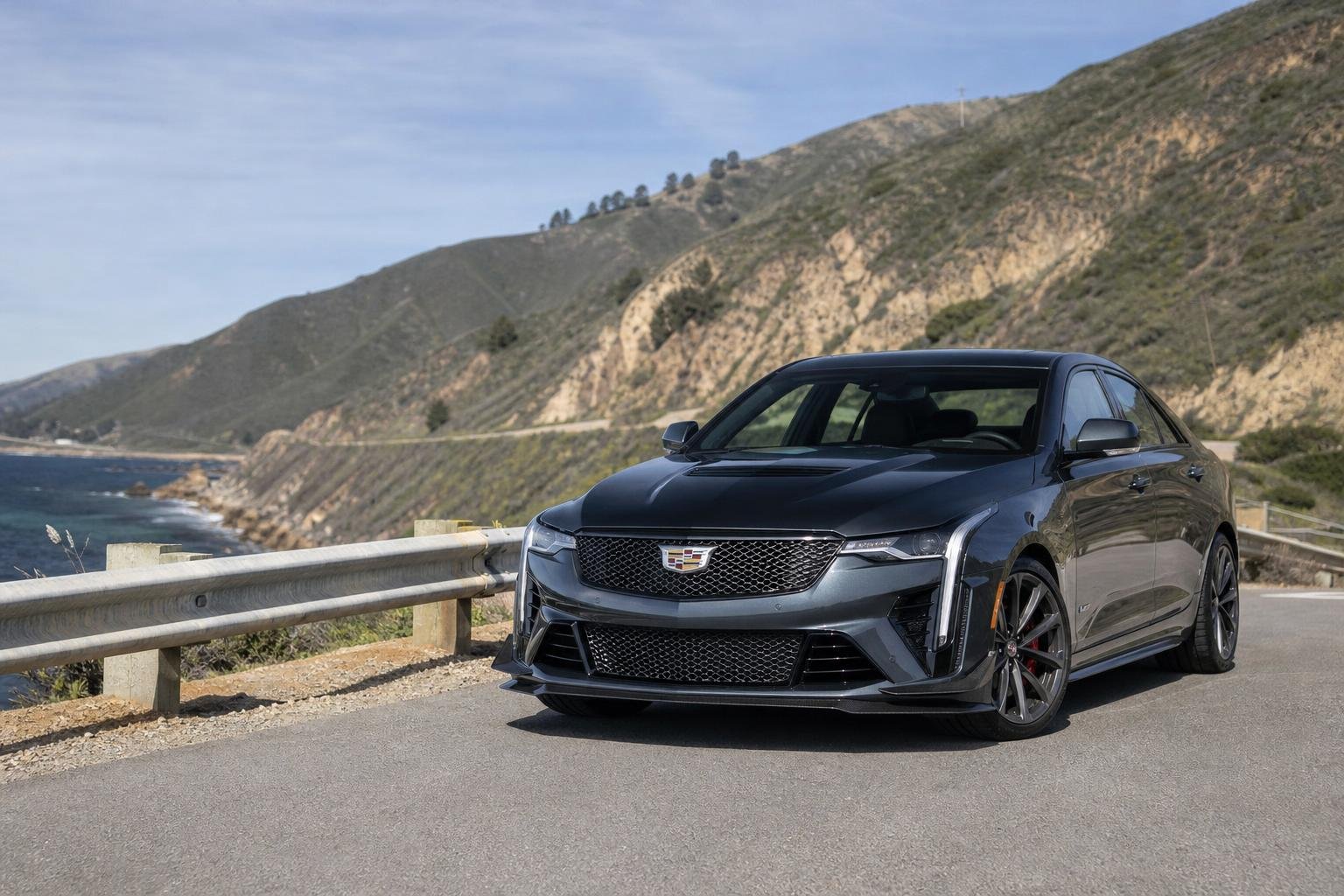
Cadillac ATS-V: The Manual Sedan That Arrived Under the Radar
The Cadillac ATS-V had the ingredients of a serious driver’s car: a twin-turbocharged 3.6-liter V6, 464 hp, 445 lb-ft of torque, rear-wheel drive, and the choice of an automatic or six-speed manual transmission. Cadillac claimed a 0-to-60-mph time of 3.9 seconds.
It also had to overcome Cadillac’s inconsistent performance identity and the enormous shadow cast by BMW’s M cars. Cadillac sold 148,804 ATS models overall, but does not separate V sales. The ATS-V therefore remains a rare sight, particularly in manual form. Its successor, the CT4-V Blackwing, gets the headlines today, but the ATS-V was already proving that Cadillac could build a compact sports sedan with genuine bite.
Fiat 124 Spider Abarth: The Other Miata
The Fiat 124 Spider shared its basic platform with the Mazda MX-5 Miata, but its turbocharged 1.4-liter engine gave it a different personality. In Abarth trim, it produced 168 hp and 184 lb-ft of torque and could be paired with a six-speed manual transmission.
It was not as naturally balanced in character as the Mazda, and the Fiat badge carried little momentum in the United States. Fiat sold 15,803 124 Spiders over four years, with Abarth sales never reported separately and likely representing less than 10 percent of the total. The car’s problem was not a lack of charm. It was that buyers already had an excellent roadster from the company that supplied the chassis.
Honda CR-Z: A Hybrid with the Wrong Expectations
The Honda CR-Z attempted something manufacturers rarely try: making a hybrid hatchback interesting to drive. Its 1.5-liter four-cylinder and electric motor initially produced 122 hp, later rising to 130 hp. More importantly, buyers could choose a manual transmission.
Handling was better than the output suggested, and Honda even offered a dealer-installed HPD supercharger kit capable of pushing output close to 200 hp. But the CR-Z was neither a practical economy car nor a convincing hot hatch. Its 35,404 U.S. sales from 2011 through 2016 show that the concept found an audience, just not a large one. It was an appealing idea trapped between two more clearly defined markets.
Infiniti Q50 Red Sport 400: Quick Enough to Be Ignored
Calling the Q50 a sales failure would be inaccurate; Infiniti sold 288,534 of the sedans in the U.S. over 11 years. The Red Sport 400, however, never received the recognition given to comparable BMW and Mercedes-Benz models.
Its twin-turbocharged 3.0-liter V6 made 400 hp and 350 lb-ft of torque, giving the sedan serious straight-line performance. The styling was restrained, perhaps too restrained, and Infiniti’s brand identity did little to create urgency. The Red Sport was the kind of car that made sense on a specification sheet but lacked the badge appeal and showroom drama that draw buyers into the luxury-performance segment.
Jaguar XFR-S: One Hundred Loud Reasons to Remember It
The Jaguar XFR-S was offered in the U.S. for a single year, 2014, and only 100 examples were sold. That rarity was built into the car from the beginning, but its $99,000 price and full-size-sedan proportions made it an especially niche proposition.
Under the hood was a supercharged V8 producing 550 hp and 502 lb-ft of torque. The XFR-S combined executive-car comfort with the kind of excess that made modern Jaguar performance models memorable. It never had a realistic chance of becoming common, but that is precisely why it deserves more attention now. It was not a diluted sports sedan; it was a luxury car with very little interest in behaving itself.
Kia Stinger GT: The Right Car Wearing the Wrong Badge
The Kia Stinger GT was one of the boldest mainstream performance sedans of its era. Rear-wheel drive, fastback styling, a twin-turbocharged 3.3-liter V6, 365 hp, and 376 lb-ft of torque gave it the hardware to challenge established German rivals. Its quickest versions could reach 60 mph in 4.7 seconds.
The starting price of $38,350 made the Stinger particularly compelling, but buyers struggled to view Kia as a performance brand. Kia sold 70,540 Stingers in the U.S. over six years, though GT numbers were not separated. The Stinger proved that an automaker could build an attractive, genuinely quick grand-touring sedan without charging luxury-brand money. The market simply did not reward the experiment enough.
Lexus RC F: A Naturally Aspirated Anachronism
The Lexus RC F offered a combination that was already becoming unusual when it launched: a naturally aspirated 5.0-liter V8, rear-wheel drive, and coupe bodywork. It produced 472 hp and 395 lb-ft of torque and could reach 60 mph in roughly 4.2 seconds.
The RC F was heavier and less agile than some turbocharged rivals, but its linear power delivery and high-revving character gave it an identity of its own. Lexus later added a lighter, more focused Track Edition with additional carbon-fiber components and a larger rear wing. Across the RC line, Lexus sold 57,820 cars in the U.S. before production ended in 2025. The RC F never became a sales leader, but it preserved an increasingly rare mechanical recipe.
Polestar 1: A Limited-Production Design Statement
The Polestar 1 was less a mass-market sports car than a declaration of intent. Its long, elegant coupe body drew heavily from Volvo design language, while a twin-charged 2.0-liter four-cylinder hybrid system produced a combined 619 hp and 738 lb-ft of torque.
Only 1,500 examples were produced worldwide, including 313 for the U.S. With a starting price of $155,000, it was never intended to fill showrooms with volume. Still, the car demonstrated that electrification could support a dramatic grand tourer rather than merely an anonymous commuter. Its low sales were a consequence of exclusivity and price, not evidence that the concept lacked merit.
Why These Cars Were Missed
These models did not share a single failure. The Alfa Romeo 4C was too uncompromising, the CR-Z too difficult to categorize, and the Polestar 1 too expensive to reach a broad audience. The NSX arrived before hybrid performance had become fashionable, while the Stinger and ATS-V asked buyers to take less familiar brands seriously.
There is also a lesson in the sales data itself. Performance buyers do not shop only for horsepower or acceleration. They buy identity, usability, heritage, and confidence in the badge. A car can be faster than its rival and still lose if the rival communicates its purpose more clearly.
That is why these cars remain interesting. They represent manufacturers willing to take risks—sometimes successfully, sometimes awkwardly, and occasionally with spectacular disregard for conventional wisdom. The market ignored many of them, but history may be kinder to cars that had something distinctive to say.
Sources: Motor1; Road & Track; Goodwood; HotCars.
0 Comments