
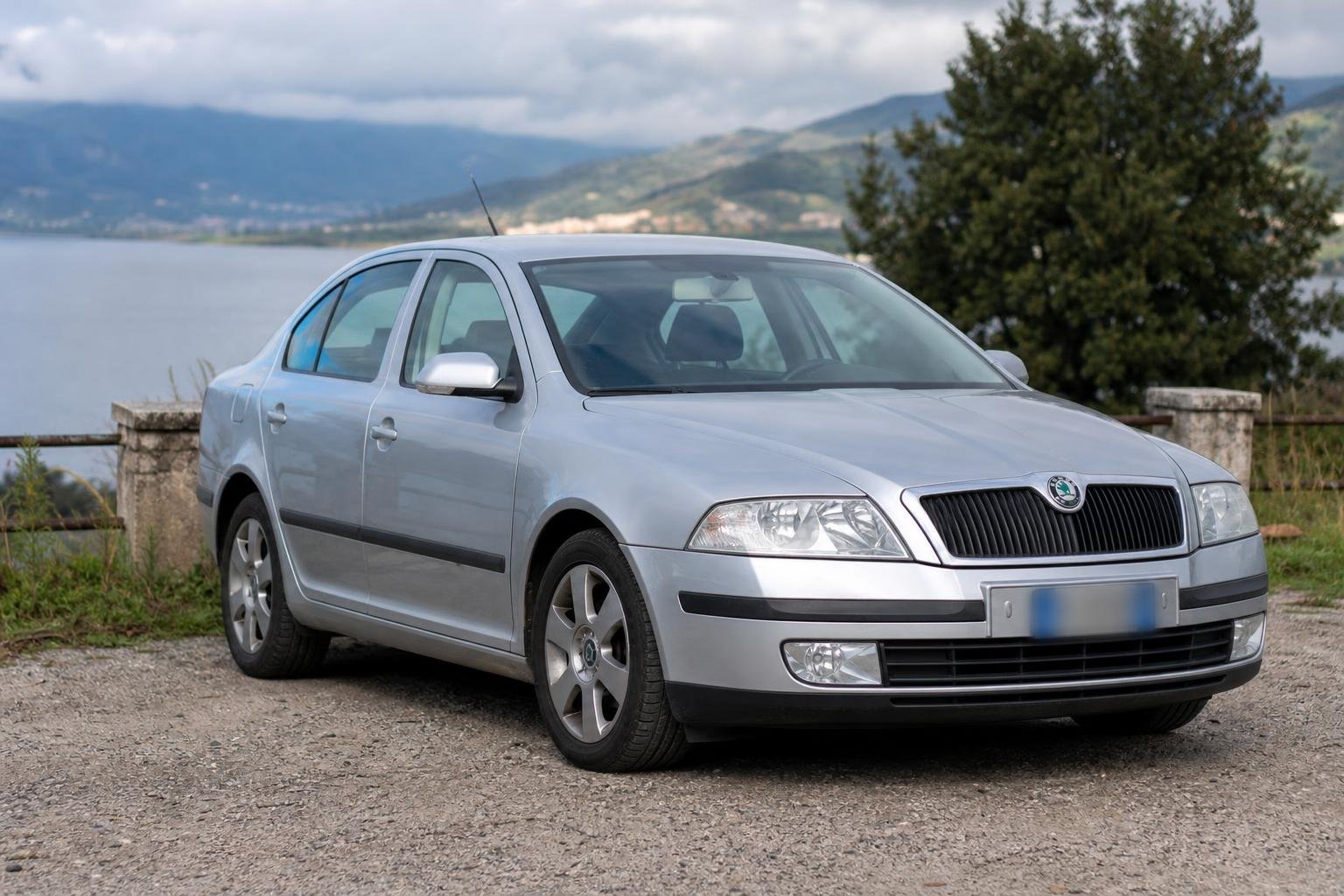

New cars offer more technology, more driving assistance and, in many cases, more sheer size than they did a decade ago. But one long-term owner’s 2017 Skoda Octavia makes a persuasive case for something less fashionable: keeping a car that already does its job well.
As reported by Motor1, the owner’s Octavia has covered nearly a decade of family duty without giving him a compelling reason to replace it. It is not a collector’s car or a performance standout. It is a mainstream compact family vehicle with a 1.8-liter TSI engine, a manual transmission and a purchase price of roughly $24,145.05 USD at the time.
That ordinary description is precisely what makes the story useful. The Octavia is being judged by the standards that matter to most owners: reliability, operating costs, comfort, practicality and whether a newer vehicle would genuinely improve daily life.
Reliability is more valuable after the warranty expires
The owner describes the Octavia as consistently dependable in both freezing winter weather and hot summer conditions. That is a personal account, not independent reliability data, but long-term ownership provides a type of evidence that a short press-drive cannot. A car that starts, runs and stops predictably for years becomes easier to trust because its owner has experienced its behavior across ordinary use.
That trust also has a financial dimension. The owner paid for the car outright and has kept it rather than repeatedly replacing it through leases or short ownership cycles. He argues that buying a reasonably equipped family car and keeping it for many years has been a better financial decision than continually taking on new payments.
There is an important qualification: keeping an older vehicle is not automatically cheaper. Maintenance, tires, insurance, fuel and unexpected repairs still matter, and one owner’s trouble-free experience cannot predict the future condition of every Octavia. But depreciation is often most severe during a vehicle’s early years. Once a car is already owned and functioning properly, replacing it with a newer model can mean paying a substantial premium for features that may not improve basic transportation.
The 1.8 TSI delivers useful performance without excess
The Octavia’s 1.8-liter turbocharged four-cylinder is another reason the owner remains satisfied. He describes it as responsive, eager and strong through the midrange, with enough passing power for two-lane roads. That is a sensible kind of performance: not the acceleration of a sports car, but enough torque and flexibility to make daily driving feel effortless.
The manual transmission has also remained trouble-free, although the owner admits that a dual-clutch automatic might occasionally have been more convenient. That trade-off highlights an increasingly uncommon choice in the new-car market. Manual transmissions have become rare outside enthusiast vehicles, while many mainstream cars now rely on automatic gearboxes as standard equipment.
More power would not necessarily make the Octavia more useful. For a family car, predictable throttle response, comfortable cruising and adequate passing performance can be more valuable than a headline acceleration figure. The 1.8 TSI appears to occupy that practical middle ground for this owner.
Physical controls have become a genuine ownership advantage
The owner’s strongest criticism of newer vehicles concerns their constant warnings and increasingly screen-based interiors. He is not rejecting technology altogether; his Octavia has a touchscreen. His complaint is that many new cars place too many ordinary functions behind menus, alerts and touch-sensitive interfaces.
That criticism has practical merit. Adjusting climate settings or changing audio volume through a physical knob can require less visual attention than navigating a screen. Driver-assistance alerts can also be useful, particularly when they identify a genuine hazard. But excessive warnings may become background noise, especially when the system reacts to minor lane-position changes, nearby objects or brief lapses in driver attention.
The issue is not simply old versus new. Properly calibrated assistance systems can reduce fatigue and help prevent crashes. The concern is whether manufacturers are designing the interaction around the driver or merely installing every available warning function. A vehicle that constantly interrupts its driver may be technically advanced while still being unpleasant to operate.
Newer does not always mean better built
The owner also believes many newer vehicles feel less substantial inside, citing harder plastics, fewer physical switches and features that have moved onto lengthy options lists or subscription plans. These observations are subjective, and cabin quality varies widely by brand and price class. Still, they point to a real tension in the modern vehicle business.
Automakers are adding expensive electronics, larger displays, connectivity hardware and driver-assistance sensors while also trying to control manufacturing costs. The result can be an interior that looks modern but does not necessarily feel more durable or easier to use than the cabin of an older vehicle.
Software adds another layer of uncertainty. A frozen infotainment system is inconvenient, but a vehicle that depends on a central display for climate control, camera views or other basic functions can become more difficult to operate when that display fails. The owner’s concerns are based partly on complaints he has encountered online, so they should not be treated as a statistical survey. Even so, they reflect a reasonable ownership question: how much of a vehicle’s functionality remains accessible when its software or screen stops working correctly?
The most important features are not on the specification sheet
The practical arguments explain why the Octavia has stayed, but they are not the entire reason. This car carried the owner’s family through school runs, vacations, traffic jams and border crossings. It was also the vehicle used to bring his daughter home from the hospital eight years ago.
That kind of attachment cannot be measured by horsepower, screen size or warranty coverage. A replacement car might be quieter, more efficient or better equipped, but it would not erase the years already connected to this one. The Octavia has become part of the family’s history because it was present for routine moments that became important only in hindsight.
That does not mean every aging car deserves indefinite loyalty. A vehicle with serious corrosion, worsening mechanical problems or expensive safety deficiencies should not be kept for sentimental reasons alone. But when an older car remains reliable, practical and affordable to operate, replacing it simply because newer products exist can be a poor financial decision.
The 2017 Skoda Octavia’s appeal is therefore less about nostalgia than judgment. It does what its owner needs, avoids unnecessary complexity and carries a history that no configurator can reproduce. For buyers who are satisfied with their current vehicles, that may be the strongest argument against treating every new model as an automatic upgrade.
Sources: Motor1.
0 Comments