
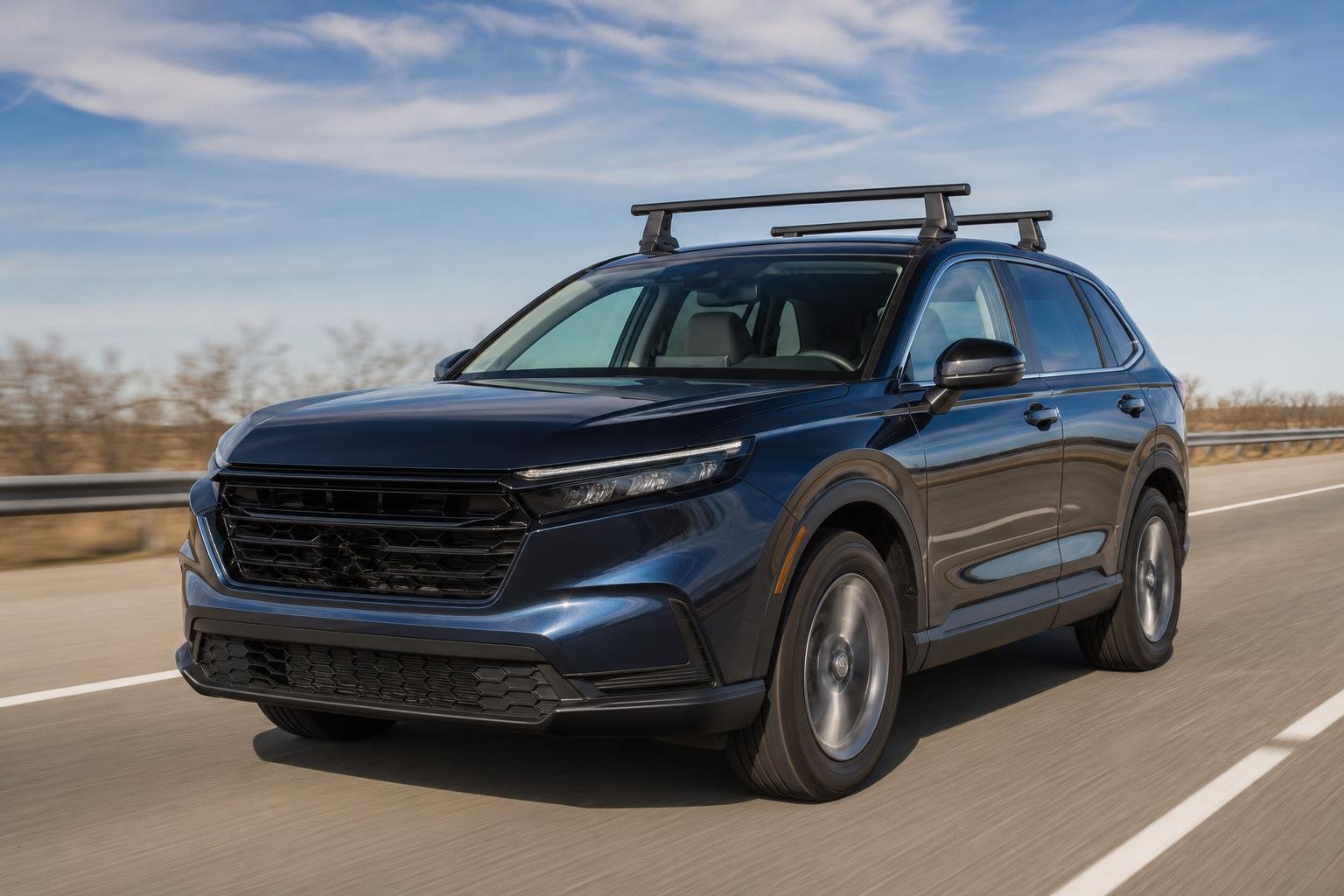

Roof racks can make it easier to carry bikes, luggage and outdoor gear, but leaving them installed when they are not needed can reduce fuel economy. The effect is most noticeable at highway speeds, where the added aerodynamic drag becomes more costly.
Vehicle manufacturers spend considerable effort refining body shapes to reduce drag. Roof-mounted accessories work against that goal by increasing the vehicle’s frontal area and disturbing the airflow over the roof. Crossbars, cargo boxes and other equipment can create additional turbulence, while their weight may also contribute to higher energy use.
Crossbars affected Kia Carnival fuel economy
Testing by Car and Driver highlighted the potential impact of even a relatively streamlined factory accessory. Removing the factory crossbars from a Kia Carnival press vehicle increased observed fuel economy from 25 to 28 mpg. That improvement also extended the minivan’s highway range by 60 miles, or 97 kilometers.
The result is significant because the crossbars were not necessarily carrying a load. Their presence alone affected the vehicle’s interaction with the air, demonstrating why drivers who use a roof rack only occasionally may want to remove it between trips.
Roof carriers increased the penalty
Consumer Reports found a larger reduction during a test of a Nissan Altima sedan at 65 mph, or 105 km/h. Installing a roof rack reduced fuel economy by 11 percent, equivalent to a five-mpg decline in the test. Adding a roof carrier box increased the total reduction to 19 percent, or nine mpg.
The same effects were less pronounced on a boxier SUV, according to the testing, but the aerodynamic penalty still depends on the vehicle, accessory and speed. Highway driving magnifies the impact because aerodynamic resistance rises as speed increases.
Accessory choices matter by vehicle type
The fuel-economy tradeoff may be less noticeable on vehicles already shaped around off-road use. Models such as the Jeep Wrangler, Ford Bronco, Toyota Land Cruiser, Toyota 4Runner, Mercedes G-Class and Land Rover Defender have boxier designs and are not primarily optimized for aerodynamic efficiency. Adding equipment such as roof racks, skid plates, snorkels, auxiliary lighting or high-clearance suspension may therefore produce a smaller change relative to their existing design.
For more aerodynamic crossovers, SUVs, hatchbacks, wagons and minivans, however, exterior accessories can have a clearer effect on operating costs. Roof racks and cargo boxes remain useful for road trips, camping and family travel, but keeping them fitted to a daily driver when they are empty can increase fuel use unnecessarily.
Removing unused crossbars or cargo carriers will not eliminate every source of fuel consumption, but the available testing shows that it can make a measurable difference, particularly during regular highway travel.
0 Comments