
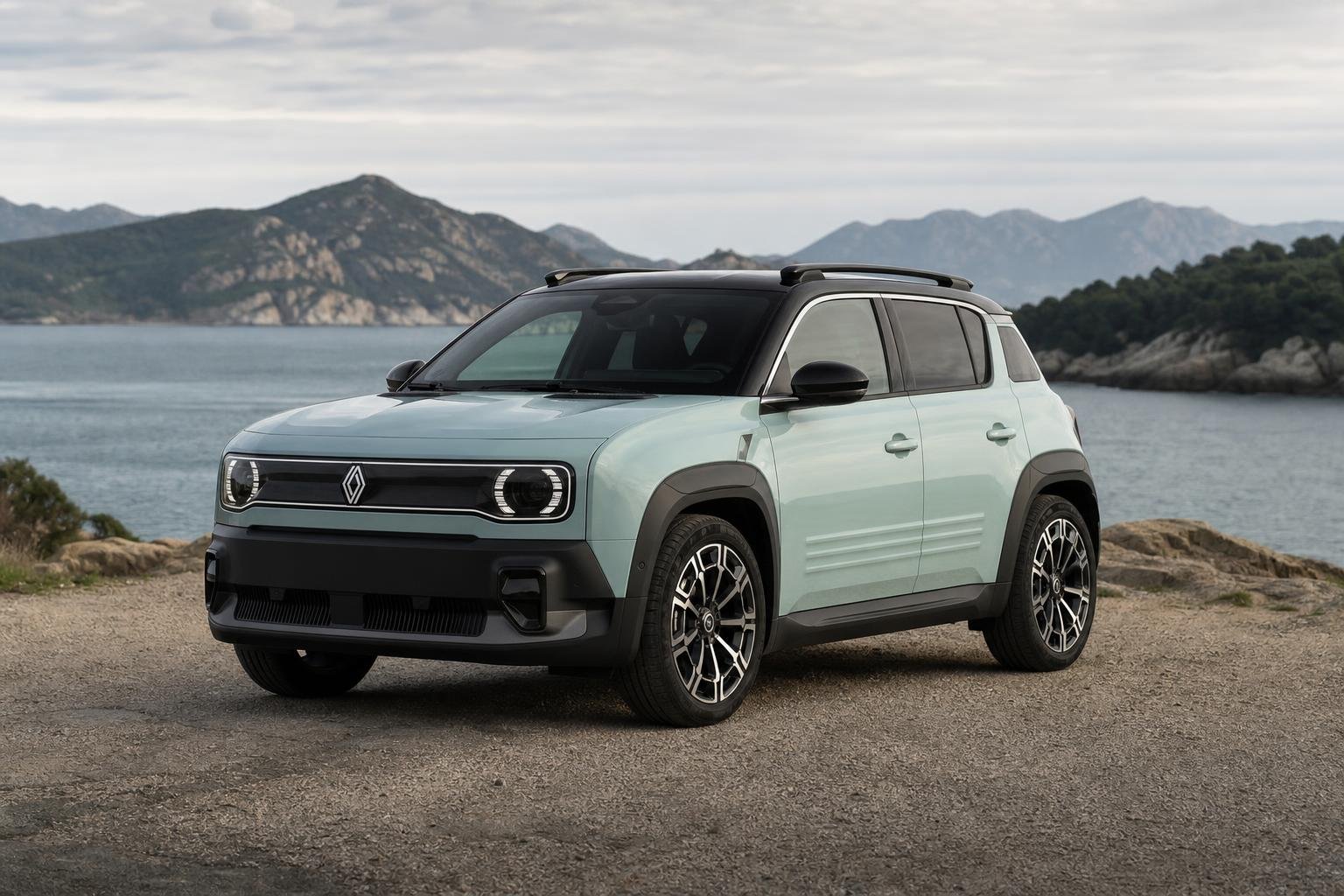

The Renault 4 E-Tech brings the spirit of the original 4L into a modern electric crossover, adding more passenger and cargo space than the related Renault 5 E-Tech hatchback. Tested in mid-spec Techno form, the R4 combines retro-inspired styling, useful standard equipment and engaging road manners in a compact package currently limited to Europe and the UK.
Renault’s original 4L debuted in 1961 as the brand’s first front-wheel-drive passenger car. Designed for families and workers, it sold 8.13 million units during a 33-year production run. The modern R4, which entered production in 2025 after the 2022 Renault 4ever Trophy concept, retains several visual references to that car while moving into the B-SUV segment.
Retro styling with a larger footprint
At 4,144 mm (163.2 inches) long, the R4 is almost half a meter longer than its predecessor and 222 mm (8.7 inches) longer than the R5. Its wheelbase accounts for 84 mm (3.3 inches) of that difference. The crossover remains relatively compact, but its increased dimensions give it a more practical profile.
Design details include an illuminated grille, semi-circular LED headlights, squared wheel arches, bumper cladding, sculpted side surfaces and a distinctive greenhouse. Pill-shaped taillights and a black roof add further visual character, while the overall design combines modern electric-vehicle cues with references to the classic 4L.
Renault also offers a Plein Sud version with a retractable fabric roof. The tested Techno trim sits between the Evolution and Iconic versions.
More space than the Renault 5
The cabin shares its dashboard and digital cockpit layout with the Renault 5 E-Tech. Hard plastics cover much of the upper and lower dashboard, but fabric inserts on the dashboard and doors improve the interior’s perceived quality. A 10.1-inch infotainment screen uses Google-powered OpenR software, although the review car experienced some Android Auto bugs. The Reno voice assistant was also described as intrusive at times.
Some controls require adjustment, including the volume buttons mounted above the display and the column-mounted gear selector. Physical climate controls on the center console are a welcome inclusion.
The R4’s longer wheelbase and taller roof provide more rear-seat room than the R5. Rear headroom is generous, knee room is adequate and the bench can accommodate three adults for short journeys. Luggage capacity is 420 liters (14.8 cubic feet), although there is no dedicated storage area for charging cables beneath the hood.
Standard Techno equipment includes 18-inch alloy wheels, roof rails, a digital cockpit, six-speaker audio, wireless phone charging, four USB-C ports, automatic climate control, a hands-free tailgate, folding mirrors, selectable driving modes and a driver-assistance package with automated parking.
Strong road manners and two battery options
The R4 uses Renault’s AmpR Small electric-vehicle platform and a multi-link rear suspension. On winding roads, it reportedly behaves more like a hatchback than a crossover, with limited body movement and quick, direct steering. The front-wheel-drive layout can experience torque steer under hard acceleration or on slippery surfaces.
The tested version used a 52 kWh battery and a front-mounted motor producing 148 horsepower (110 kW/150 PS). It reaches 100 km/h (62 mph) in 8.2 seconds, while Sport, Comfort and Eco modes alter power delivery. The vehicle is also quiet at highway speeds and agile in urban driving. A One Pedal function is now available.
In city and suburban use, the 52 kWh model can exceed 400 km (250 miles), while sustained highway driving reduces real-world range to approximately 250–280 km (155–186 miles). A 100 kW DC charger can replenish the battery from 15 to 80 percent in roughly 30 minutes. A 40 kWh version produces 118 hp (88 kW/120 PS) and offers a stated 310 km (193-mile) range.
An entry-level Jogging variant is expected to join the range by the end of the year with a 37 kWh battery, 305 km (190 miles) of range and a 107-hp (80 kW/110 PS) motor. The 2027 model year also increases the flagship version’s range to 415 km (256 miles). No all-wheel-drive version has been indicated.
Pricing and verdict
In Greece, pricing starts at €28,900 ($32,400) for the 40 kWh Evolution model before local incentives. The 52 kWh Evolution starts at €33,500 ($37,500), while the Techno and Iconic trims cost €35,500 ($39,800) and €37,500 ($42,000), respectively. The Plein Sud roof adds €1,200 ($1,300).
With more practicality than the Renault 5 and engaging handling, the Renault 4 E-Tech expands the retro EV formula without giving up much driving appeal. Its limited highway range in larger-battery form remains a consideration, but the combination of design, equipment and space gives it a strong position among Europe’s small electric crossovers.
0 Comments