
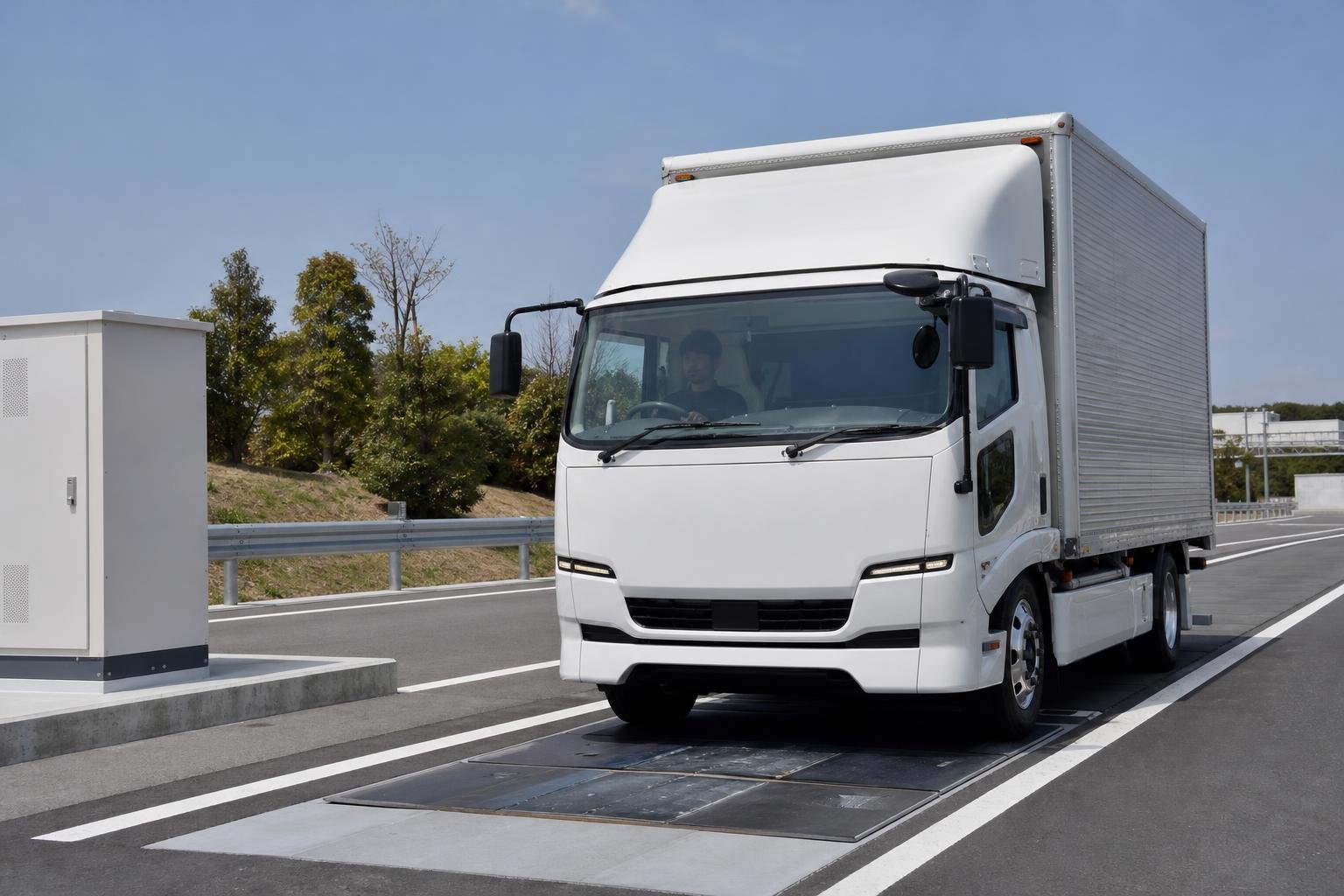

Honda and the Taisei Group have unveiled a wireless power transfer road system designed to charge electric vehicles while they are moving. The technology places charging equipment beneath the road and transfers electricity to a receiver-transmitter mounted under the vehicle.
Honda has begun practical testing of the system, although it has not disclosed the amount of power that can be delivered from the road or how much the vehicle’s battery could be replenished while driving. The system receives electricity from nearby electrical boxes.
Commercial vehicles are the initial focus
Honda’s first applications will target commercial vehicles rather than private passenger cars. Later this year, Honda and Taisei are expected to begin constructing a new test road where they will evaluate the surface’s strength and durability.
Large commercial vehicles will subsequently use the road, which is planned to be upgraded to provide power outputs of up to 150 kW. Honda expects to begin testing the technology on public roads in Japan from 2027, after private-road trials are completed.
Wireless charging would supplement existing infrastructure
Honda does not present the system as an immediate replacement for home or public charging. Instead, supplying electricity while an EV is in motion would reduce how frequently owners need to stop and charge their vehicles elsewhere.
Wireless charging roads have also been explored by other automakers and technology companies. Stellantis demonstrated a related concept in 2021, an Israeli startup revealed a functional wireless charging road in 2023, and Hyundai is also working on similar technology.
Honda’s system uses charging hardware embedded in the road alongside a high-power-density receiver and transmitter beneath the vehicle. The company says the technology is part of its effort to support carbon neutrality by 2050 and encourage broader EV adoption, but the testing process will determine whether the system can eventually become commercially viable.

0 Comments