
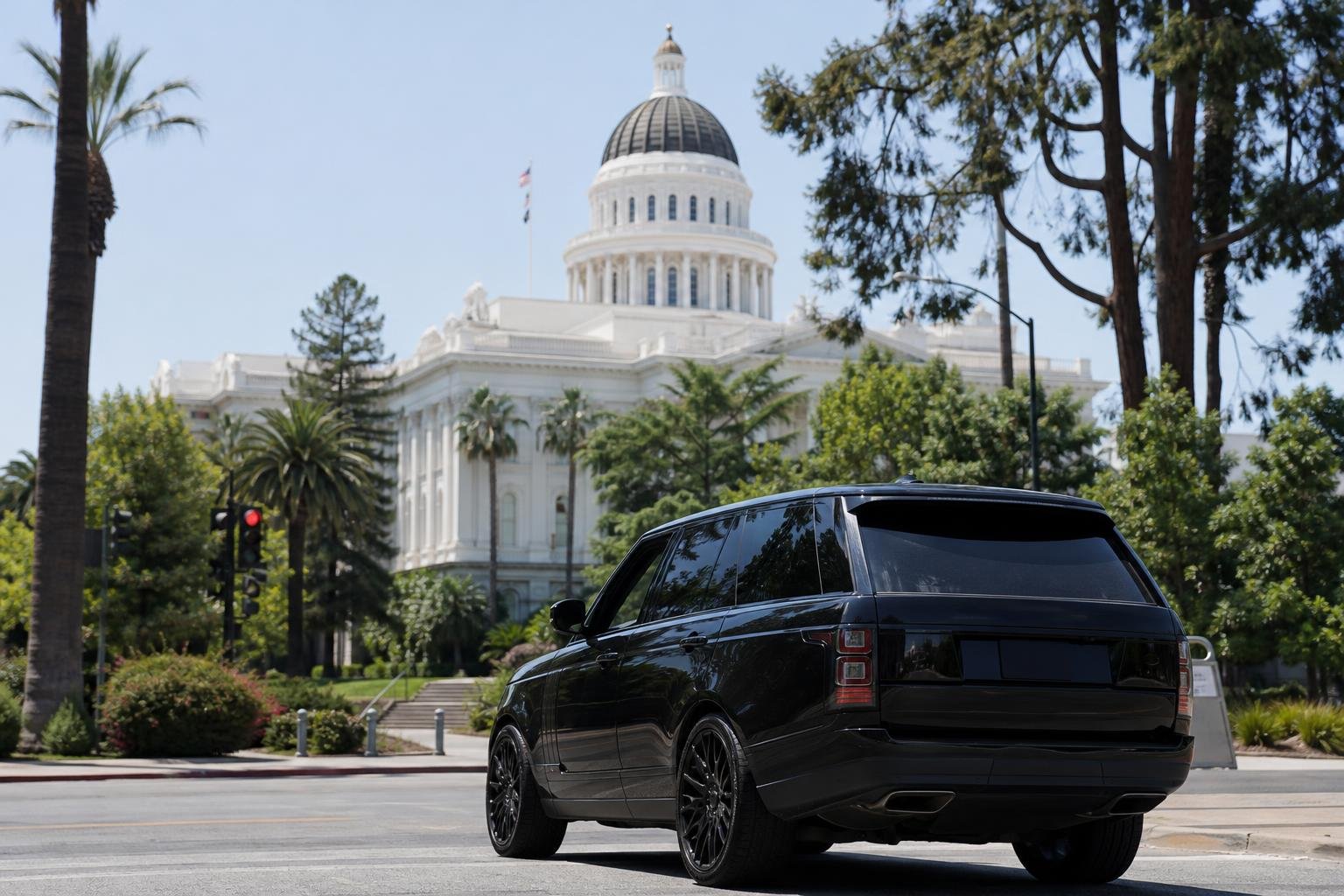

California has enacted a law aimed at residents who use Montana-based shell companies to register vehicles outside the state and avoid California taxes. Senate Bill 1406, signed by Governor Gavin Newsom on September 30, took effect immediately.
The legislation gives California officials additional ways to pursue unpaid use taxes, interest, and penalties connected to vehicles held by out-of-state entities. Senator Jerry McNerney’s office estimates that the Montana registration strategy costs California about $20 million each year.
How the Montana registration strategy worked
Montana does not impose a sales tax, making it attractive to some high-value vehicle buyers. Under the arrangement targeted by the law, a California resident could create a Montana LLC, place a vehicle under the company’s name, register it in Montana, and continue using it in California.
California already required dealers to retain records of sales to out-of-state buyers. Existing rules also made a vehicle purchased outside California subject to taxation if it entered the state within 12 months of the purchase. SB 1406 expands the state’s ability to apply those rules to shell companies and the individuals behind them.
Owners and company officials can face personal liability
Under the new law, a shell company is treated as a California resident for relevant vehicle use-tax rules when any shareholder, partner, member, or beneficial owner lives in California.
The legislation also allows officials to hold the company’s officers, managers, partners, beneficial owners, and members personally responsible for unpaid taxes, interest, and penalties. However, the state still must establish that the vehicle was used, stored, or consumed in California within 12 months of its purchase and that the required tax was not paid.
The law lists several potential indicators of a shell company. These include a lack of identifiable business activity, no physical location outside California, no employees receiving W-2 forms, and missing federal or required out-of-state tax filings. California identifies those circumstances as possible evidence of tax evasion.
California had already begun investigating
The new legislation follows enforcement action that was already underway. In March, Attorney General Rob Bonta announced charges against 14 people accused of hiding more than $20 million in luxury vehicle purchases and avoiding more than $1.8 million in taxes.
The vehicles cited in that case included a $1.8 million McLaren Elva, a $1.5 million Porsche 918 Spyder, and a $1.26 million Ferrari F12TDF. Investigators alleged that paperwork falsely indicated the cars were intended for use outside California even though they remained in the state.
0 Comments