
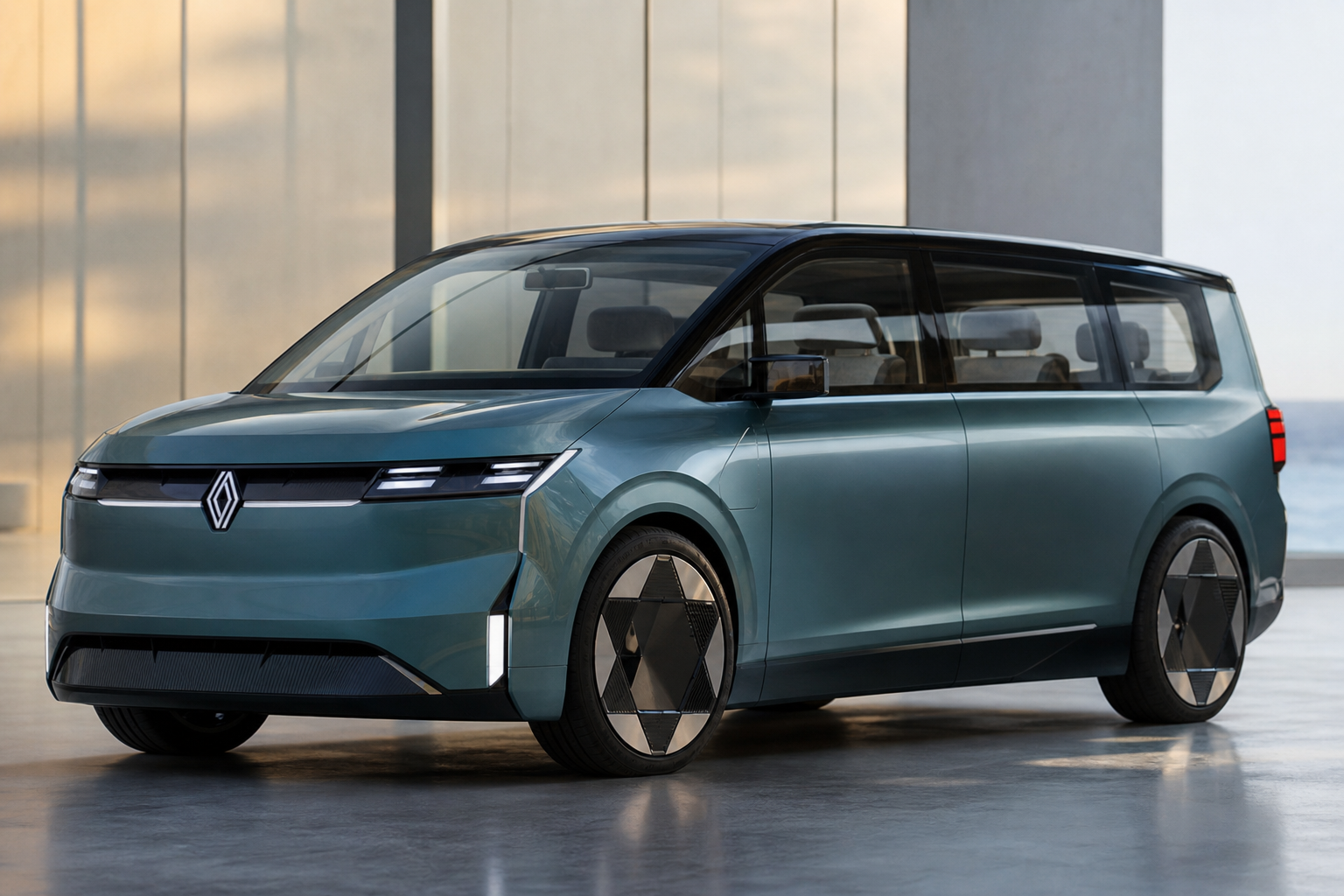

Renault is preparing an electric reinterpretation of the Espace, the family vehicle that helped establish the European minivan in the 1980s. Called the E-Space Concept, the vehicle is set to debut at the Paris Motor Show and could eventually become a production rival to the Volkswagen ID. Buzz.
The concept looks back to the original Espace, which launched in Europe in 1984 with a boxy shape and fiberglass body. Renault later applied the Espace name to a three-row combustion-powered SUV, reflecting the broader shift away from traditional minivans. The E-Space instead returns to a more van-like design.
Retro-inspired exterior design
Its front end uses a short hood and upright face, updated with LED lighting and an illuminated Renault badge. A steeply angled windshield adds a more dynamic profile, while the straight beltline continues to a vertical rear section designed to preserve interior volume.
Renault has not released seating or cargo figures, and interior images have not yet been shown. Earlier Espace generations offered two- and three-row layouts, with some versions featuring front captain’s chairs that could swivel 180 degrees. Based on the concept’s appearance, the E-Space seems to use a two-row arrangement, although that has not been confirmed.
Compact dimensions and electric platform
The concept measures 4.7 meters, or about 185 inches, in length. That places it at approximately the same overall length as a Honda CR-V. Renault has not provided additional technical specifications for the E-Space, but the company previously confirmed details of its RGEV platform for compact vehicles.
The architecture is expected to use 800-volt electrical hardware and cost 40 percent less to build than Renault’s current cars. Its associated electric motor can produce up to 271 horsepower, compared with 217 hp for the equivalent current motor. Renault has also said a range-extender version could increase electric driving range from 466 miles to 879 miles.
Production timing remains uncertain
Renault has moved some recent concepts into production relatively quickly. The Renault 5 took three years to reach the road, while the Twingo required two years after development support from China. If the E-Space follows a similar process, a road-legal production model could arrive in Europe in roughly two years, though Renault has not confirmed that timing.
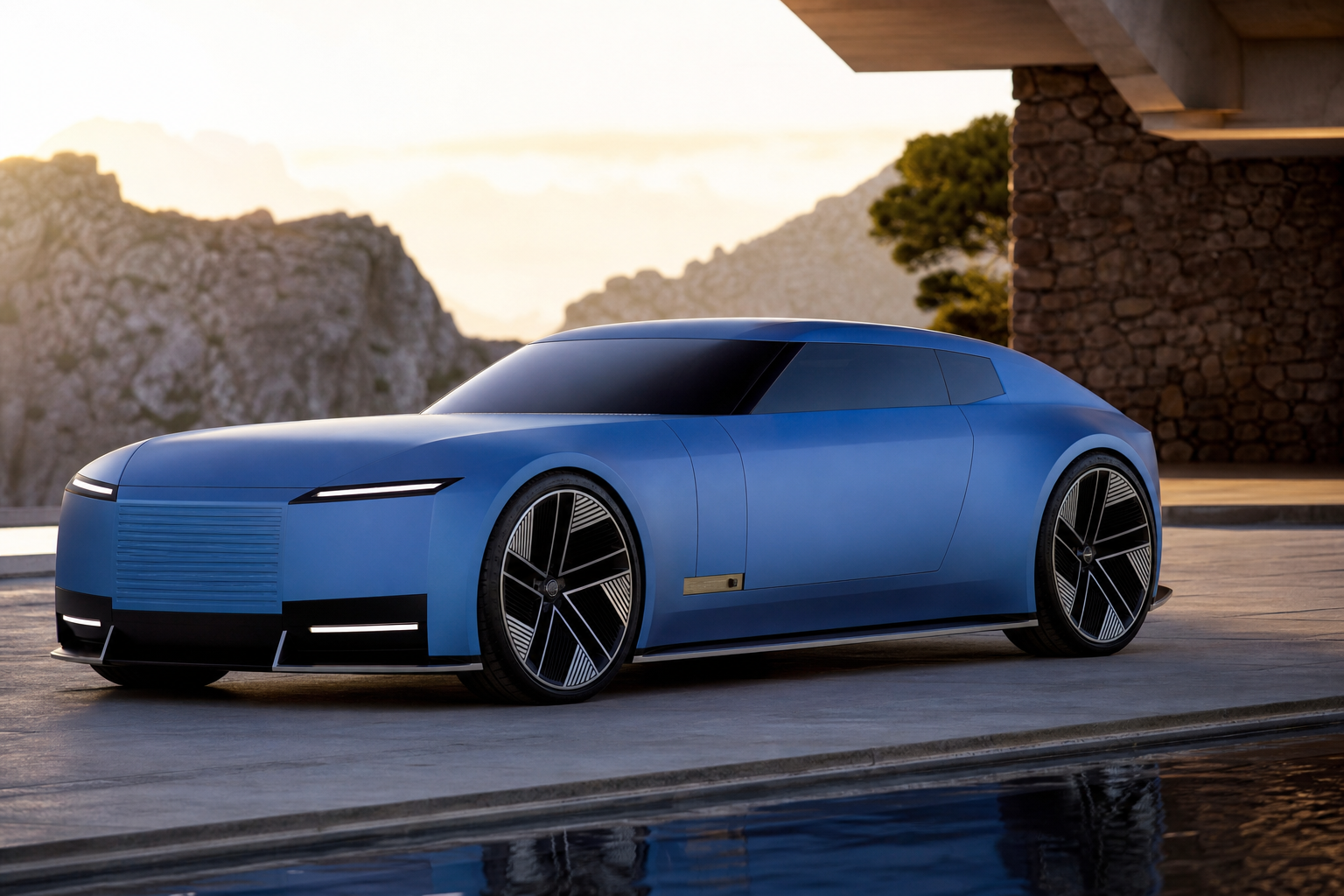
The model will not be offered in the United States, where minivan demand has recently increased after years of consumers shifting toward SUVs. Renault’s Paris display will also include the Gordini 8 electric coupe concept, a Twingo electric subcompact with a panoramic glass roof, updated Scenic and Megane models, and the 4 JP4x4 concept.
0 Comments