
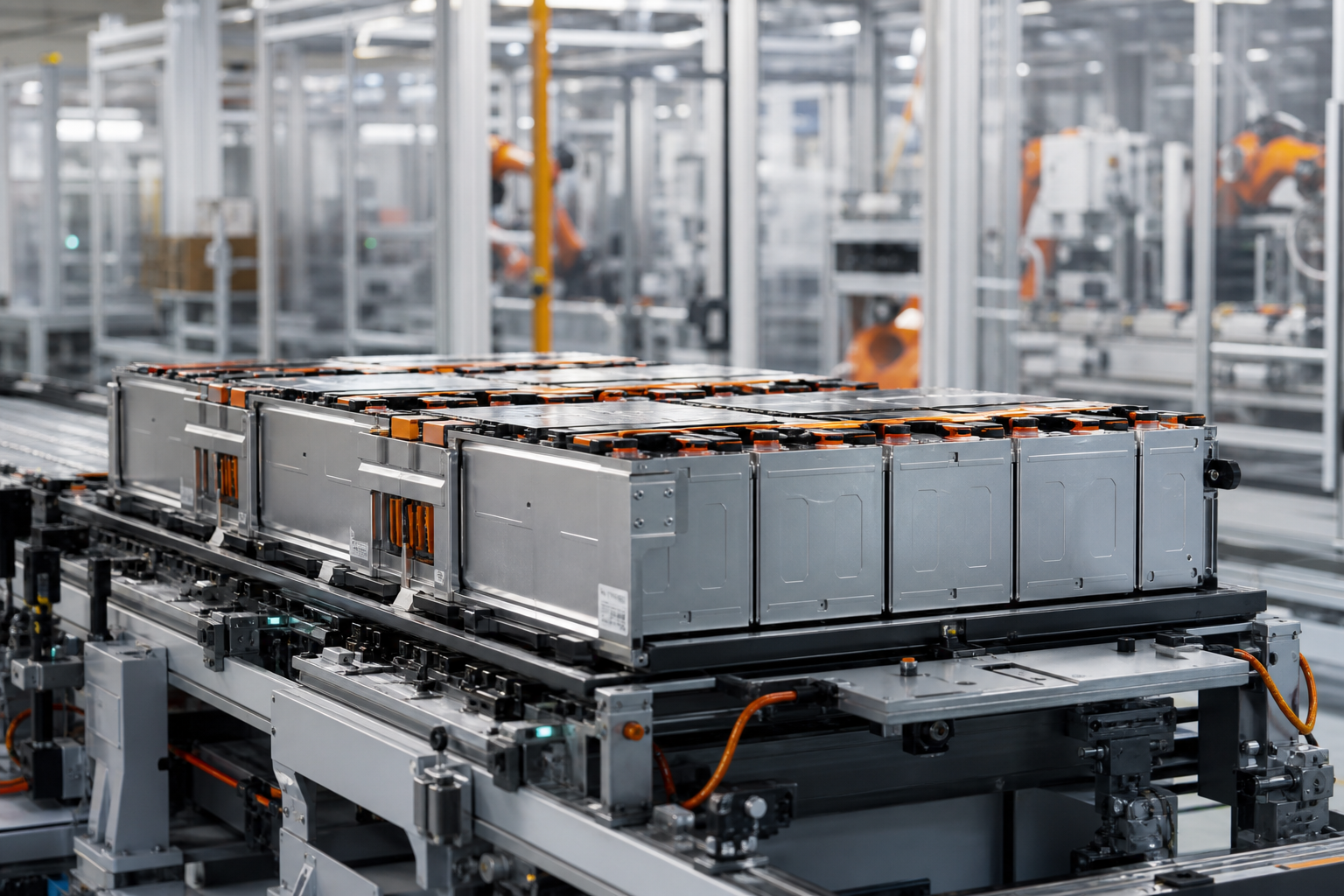

General Motors and LG Energy Solution are moving ahead with plans to produce lithium manganese-rich (LMR) prismatic battery cells for electric trucks and full-size SUVs. Their Ultium Cells joint venture will manufacture the batteries at its Spring Hill, Tennessee, facility, with production targeted for 2028.
Construction and facility upgrades are scheduled to begin later this year and are expected to be completed in 2028. The expansion could add approximately 500 jobs, increasing employment at the plant to around 1,700 positions.
Lower-cost battery chemistry
LMR batteries use a greater share of manganese than conventional cathodes containing nickel, manganese, and cobalt. Because manganese is less expensive than cobalt, the chemistry is intended to reduce battery costs.
GM officials have previously suggested that using LMR batteries in the Chevrolet Silverado EV could lower costs by at least $6,000. The potential savings could address one of the challenges facing GM’s electric full-size trucks and SUVs, which remain relatively expensive.
Chevrolet dealers sold 3,672 Silverado EVs during the first half of the year, while GMC dealers sold 3,044 Sierra EVs over the same period. The Sierra EV Elevation Standard Range, which has a stated range of 283 miles (455 kilometers), starts at $62,400.
LMR battery targets
GM and LG have not disclosed many technical details about the upcoming cells. They said the LMR technology is designed to provide 33% greater energy density than lithium iron phosphate (LFP) batteries while maintaining a comparable cost.
The companies also plan to use different battery chemistries across their electric-vehicle lineup. LMR cells are expected to serve more affordable variants, while high-nickel batteries will be used for models requiring longer range.
If the production timeline remains on track, Ultium Cells is expected to become the first manufacturer globally to commercially produce the next-generation LMR technology.

0 Comments