
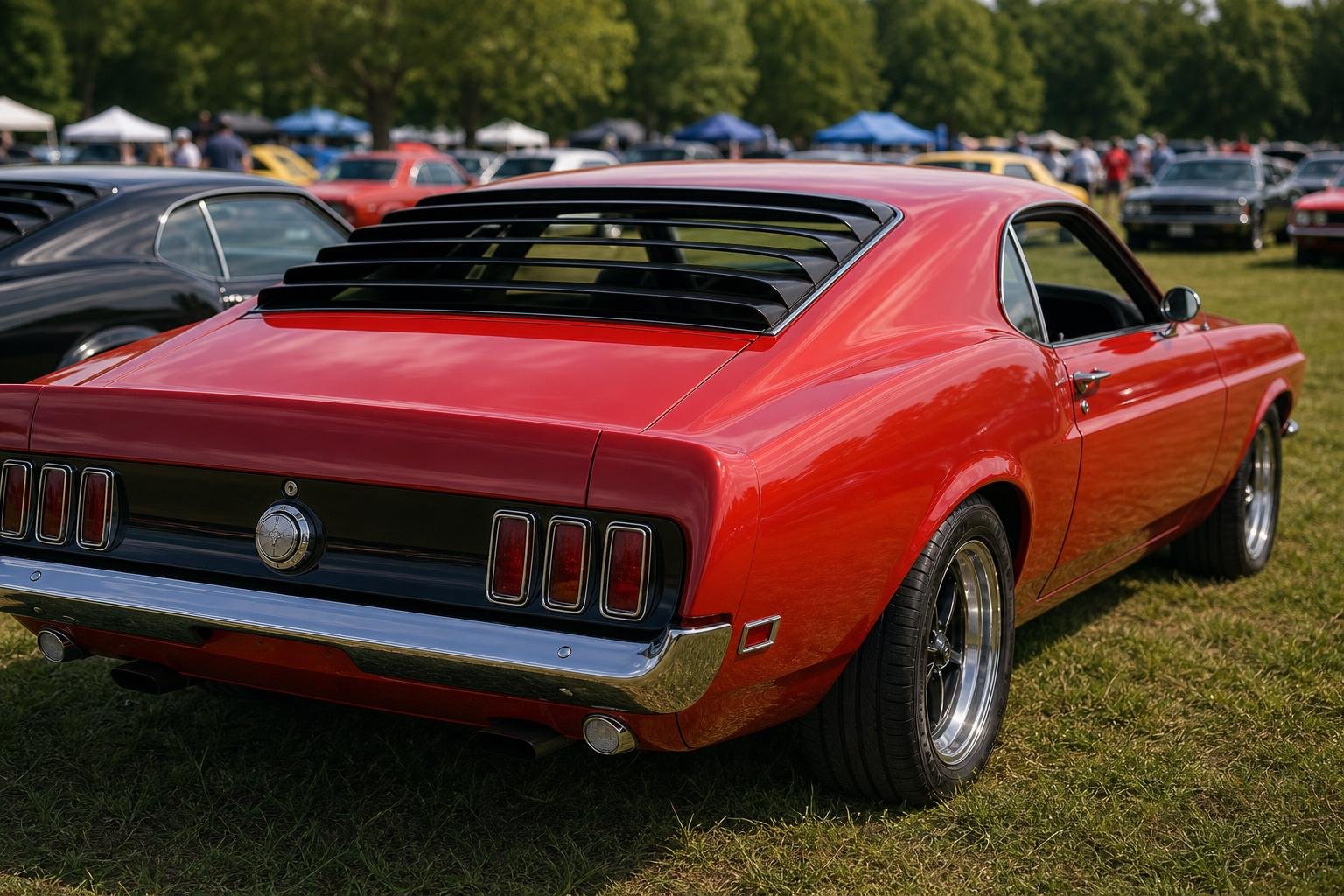

Rear window louvers became a defining visual feature of many 1960s and 1970s performance cars, but their appeal was not purely cosmetic. The slatted covers helped reduce the sun’s impact on the large, sharply angled rear glass used by many fastback muscle cars, while also adding privacy and a distinctive appearance.
Louvers typically consisted of dark horizontal metal or plastic slats joined in a frame and mounted over the rear window. They appeared most often on fastbacks, although some notchback coupes also received them. The design was particularly useful when air conditioning remained an expensive option and automotive window tinting was still in its early stages.
From engine ventilation to rear glass
The basic louver concept was not new to the auto industry. Automakers had stamped louvers into body panels to help release engine heat as far back as Buick Roadmasters from the 1940s. The style became especially recognizable on the Lamborghini Miura, however.
The Miura debuted at the 1966 Geneva Auto Show with a plexiglass panel over its 4.0-liter V12. Because the panel trapped substantial heat from the 350-horsepower engine, designer Marcello Gandini replaced it with a louvered covering. The solution became an enduring part of the Miura’s design.
Louvers arrive on American muscle cars
Ford had already used fixed metal louvers on the rear quarter windows of the 1965 Mustang. For 1969, the automaker offered rear-window “Sports Slats” on Mustang SportRoof models, the fastback version of the car. The aluminum pieces were installed over the existing glass rather than replacing it.
Chrysler followed in 1970 with louver packages for the Dodge Challenger and Plymouth Barracuda. Those systems also used aluminum covers fitted over the rear window. On a fastback, the slats could help limit the amount of direct sunlight entering through the broad rear glass while preserving some daylight.
The appearance was an important part of the appeal, too. Much like shutters on a house, the louvers created a more enclosed look and offered some additional privacy. Their dark, layered design also complemented the bold graphics and aggressive styling associated with period muscle cars.
Aftermarket kits and a modern revival
By the middle of the 1970s, aftermarket manufacturers were selling louver kits for a wide range of vehicles. Japanese coupes such as the Datsun 280Z and Mazda RX-7 became popular candidates, and some kits included matching louvers for the rear quarter windows.
The trend continued into the 1980s before window tinting and the smoother, more aerodynamic styling of the 1990s reduced its popularity. Louvers have since returned in new forms. Lamborghini continues to reference the Miura’s design on the Temerario and Revuelto, while Chevrolet uses the treatment on the high-performance C8 Corvette ZR1. Aftermarket versions are also available for vehicles including the Toyota GR86 and BMW 4 Series.
0 Comments