
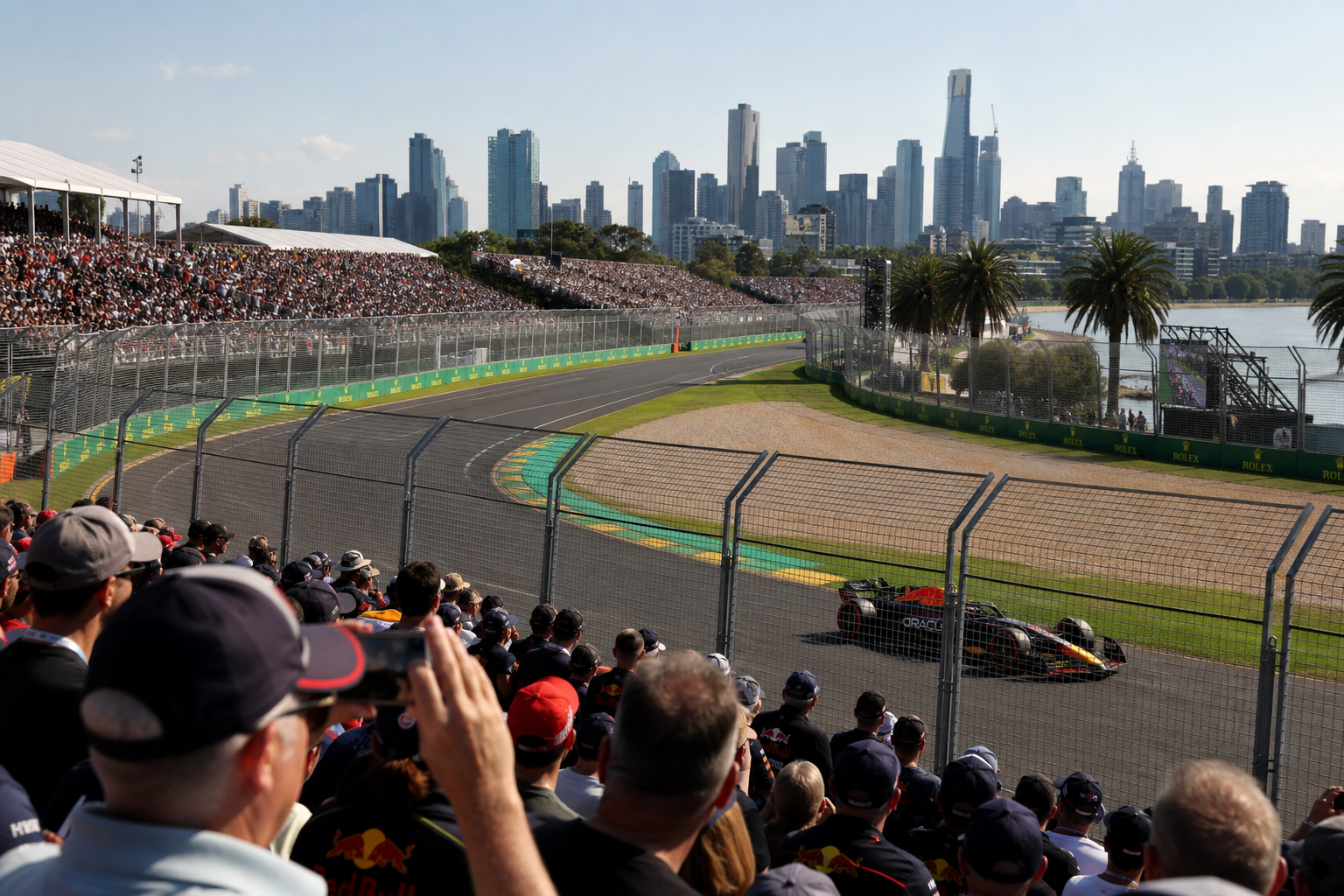

The 2027 Formula 1 calendar has only just started to come into focus, and already the Australian Grand Prix has managed to remind everyone that motorsport is not always a gentleman’s game. Ticket pricing for the event has become a talking point, which is a polite way of saying fans are once again wondering whether a day at the races now requires a second mortgage and a small act of Parliament.
That was one of the topics discussed as the week’s major motorsport stories were picked apart, with the 2027 F1 schedule, sprint race reaction, and a handful of Supercars developments all thrown into the mix. It is a fairly healthy cocktail of bureaucracy, sporting politics, and the sort of financial irritation that tends to arrive whenever a grand prix is involved.
The Australian GP Price Question
The Australian Grand Prix has long been one of the more popular stops on the Formula 1 calendar. Melbourne does the event properly. The crowd is knowledgeable, the atmosphere is lively, and Albert Park usually delivers that slightly absurd but thoroughly enjoyable blend of parkland scenery and screaming machinery. So naturally, the question becomes how much of that experience supporters are being asked to pay for.
Pricing at major sporting events has become its own kind of motorsport arms race, and Formula 1 is hardly immune. The sport’s growth has brought bigger audiences, more corporate demand, and more elaborate event packaging. Fine, that is all very modern and efficient and excellent for balance sheets. But somewhere along the line, the punter in the grandstand still has to be able to afford a ticket without feeling as though they’ve accidentally bought a week in Monaco.
When fans start talking about price gouging, the issue is rarely just the number on the ticket. It is the feeling that access is tightening while the show keeps telling people to grin and enjoy the spectacle. Sporting events need atmosphere, and atmosphere does not appear by magic. It comes from ordinary fans who care enough to turn up. Lose too many of them to pricing headaches and the whole thing starts to feel a bit too polished, a bit too corporate, and rather less like a race meeting.
Why The 2027 F1 Calendar Still Matters
The 2027 calendar remains one of the more interesting pieces of the puzzle because Formula 1 scheduling is never just a spreadsheet exercise. It affects travel, logistics, race promotion, TV planning, and the kind of local buildup that determines whether an event feels like a national occasion or merely a very expensive weekend.
Any talk around the calendar tends to trigger debate well beyond the track itself. Circuits want better dates, promoters want more favorable slots, and fans want races when they can actually attend without needing a holiday from work and a separate budget for hotel bills. It is a wonder the whole thing doesn’t come with a user manual and a financial disclaimer.
The sprint-race angle also remains relevant because Formula 1 has spent several seasons tinkering with the format in the hope of making race weekends more dramatic, more valuable, or at the very least harder to ignore. Some fans enjoy the extra competitive sessions. Others regard them as an unnecessary garnish on an already busy weekend. Both camps usually have a point, which is irritatingly civilised of them.
Supercars: The Other Half Of The Argument
On the Australian touring car side of things, Supercars has its own collection of squabbles and strategic headaches. The phrase “civil war” gets thrown around for a reason: the category has never been shy about internal disagreement, and that can be both a weakness and a sign that people still care enough to fight about the direction of the series.
The details discussed this week included Supercars schedule questions and door numbers, which may sound delightfully minor until you remember that touring car racing is built on tiny regulations that somehow manage to spark enormous arguments. That is part of the charm, frankly. If everyone agreed all the time, half the paddock would probably go missing out of sheer confusion.
Supercars has always occupied a very specific place in Australian motorsport. It is a national championship with deep tribal loyalties, manufacturer baggage, and a fanbase that pays close attention to the smallest technical and sporting changes. That makes it resilient, but it also means every decision gets scrutinized from three angles at once: competition, identity, and common sense. Usually in that order, though not always in that order.
Why The Conversation Resonates Beyond The Headlines
What ties the Australian Grand Prix discussion and the Supercars debate together is that both are really about the same thing: how motorsport keeps itself accessible, relevant, and entertaining without forgetting the people who pay to watch it. That sounds obvious, but motorsport has a habit of overlooking the obvious while commissioning new lanyards.
Formula 1 is a global business with enormous commercial gravity, and Supercars is a domestic championship constantly balancing tradition against survival. Different beasts, same pressure. One is trying to preserve the spectacle without pricing out the crowd. The other is trying to keep its identity intact while sorting through its own internal politics. Neither task is exactly a picnic.
So when the week’s talking points range from 2027 calendar details to ticket pricing and Supercars infighting, you get a fairly clear snapshot of the modern racing business. The cars matter, obviously. The races matter. But the politics, the money, the scheduling, and the fan experience matter too. Annoyingly, they all show up to the same party.
And that is why these discussions land with readers. They are not abstract paddock gossip. They go straight to the question of who gets to attend, who gets to compete, and who gets to decide what the show looks like. Motorsport has never been short of noise. The challenge is making sure the right people are still there to hear it.

0 Comments