
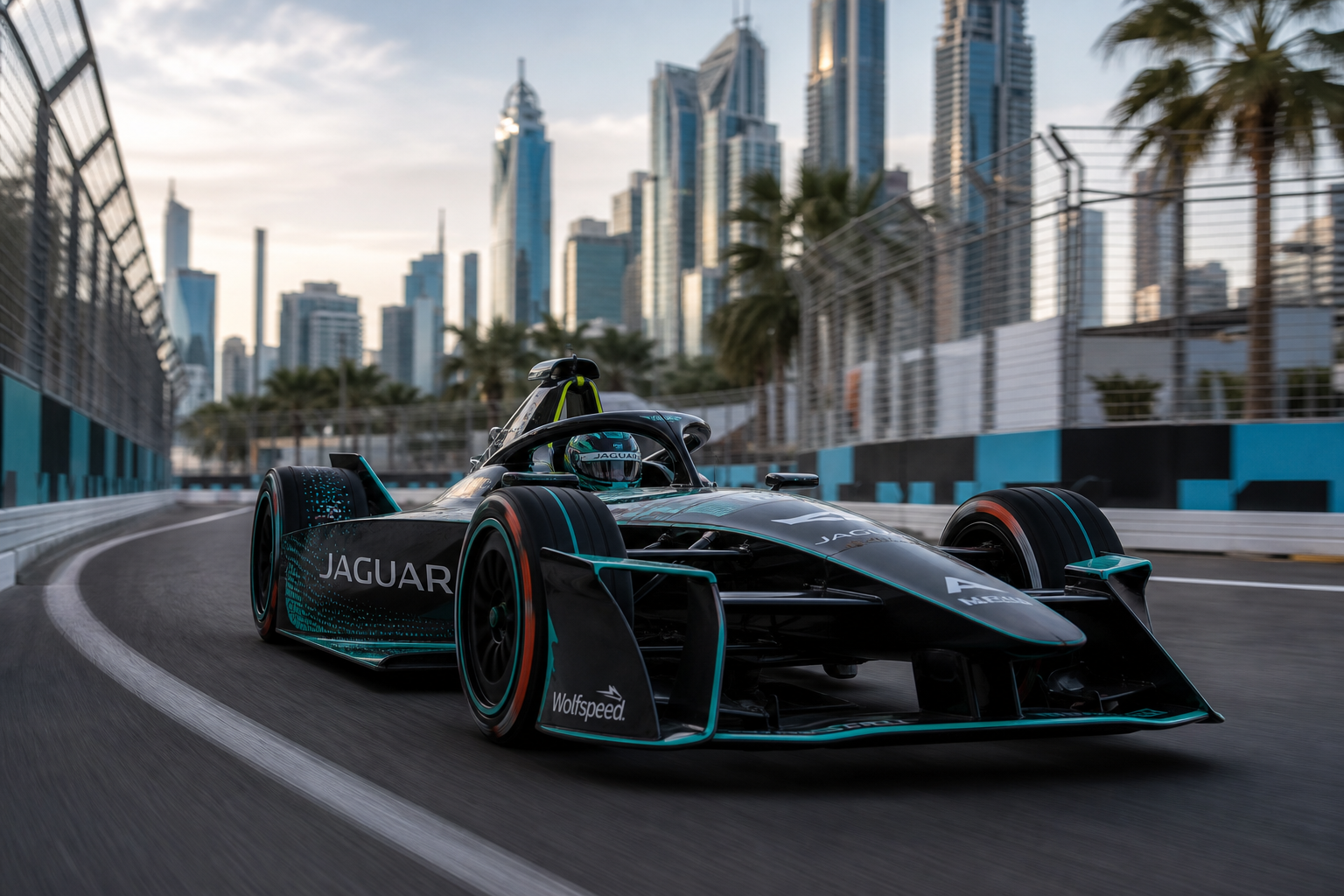

Formula E is about to lose one familiar name and gain another, which is the sort of circuit-level corporate shuffle that keeps the paddock accountants busy and the rest of us reaching for a strong cup of tea. Fortescue Zero has acquired Team Penske’s Formula E operation and will enter the championship with a pair of Jaguar-powered cars for the Gen4 era.
The Australian outfit is set to join the 2026-27 season, which begins in December, and its arrival adds two more Jaguar-badged machines to a grid that already includes four from the manufacturer’s existing presence through the factory team and Envision. In other words, Jaguar’s electric racing footprint is about to become rather hard to miss.
A New Name, A Familiar Badge
The interesting wrinkle here is not just the ownership change, but what it says about the shape of Formula E heading into Gen4. Manufacturer-backed electric racing programs have always relied on a mix of works teams and customer operations to build scale, spread risk, and generally make the whole enterprise look less like a science fair experiment. Fortescue Zero’s move into the championship does exactly that.
Running Jaguar power means the team is tapping into one of the more established technical packages in the series, while the acquisition of Penske’s operation gives the newcomer a ready-made foundation rather than a clean-sheet start. That matters. Formula E is not a place where you casually turn up with a laptop and optimism and expect to be competitive by Thursday.
What Happens To Penske?
For Team Penske, the sale brings down the curtain on its Formula E run. Penske joined the series in an era when the category was still trying to prove that electric single-seaters could be serious racing machinery rather than an earnest urban novelty with bodywork. The team’s departure closes one chapter of that evolution and hands the slot to a new owner with different priorities, but the same need to learn the peculiar arts of Formula E pace, energy management, and strategic survival.
That is the rather unglamorous truth of the series: the car may be the headline, but the race is often won with brains, patience, and the ability to avoid making a brilliant move look embarrassingly ordinary by running out of usable energy. The paddock is full of people who can explain this with charts.
Why Gen4 Matters
The timing also points toward the next technical phase of the championship. Gen4 is the upcoming Formula E generation, and with each new ruleset the series tends to reset the pecking order, reward the teams that adapt quickly, and embarrass the ones that assumed yesterday’s knowledge would carry over unchanged. It usually does not. Motorsport is rude like that.
For a new entrant, that reset is both danger and opportunity. Yes, everyone has homework to do. But when the rulebook changes, established hierarchies can wobble, and a well-run customer team can arrive with enough infrastructure, technical support, and common sense to matter sooner than the skeptics expect.
Jaguar’s Growing Presence
Jaguar’s role in all this is worth a closer look. With the factory squad, Envision, and now Fortescue Zero all fielding Jaguar-powered cars, the brand’s presence in Formula E will be substantial. That sort of spread is useful for a manufacturer trying to turn racing into a development and marketing exercise rather than an expensive logo on a set of body panels.
Formula E has long been attractive to manufacturers because it offers a relatively compact way to develop electric drivetrain know-how under proper competition pressure. The racing is hard enough to matter, the technical constraints are real, and the visibility is decent. In other words, exactly the sort of environment where you find out whether your clever ideas are actually clever or just dressed up with enough PowerPoint to get past the first meeting.
What To Watch Next
Fortescue Zero’s entry will be watched closely not just because of the Penske connection, but because customer operations are often where Formula E’s long-term strength is measured. If the team can arrive competitive, stable, and technically coherent from the start of the Gen4 period, it will underline just how much the championship now depends on strong structures rather than heroic improvisation.
For now, the headline is simple enough: a well-known name is leaving, a new one is arriving, and Jaguar’s electric racing family is getting larger. In Formula E, that sort of change is never just administrative paperwork. It is usually the first move in a much bigger game.
0 Comments