
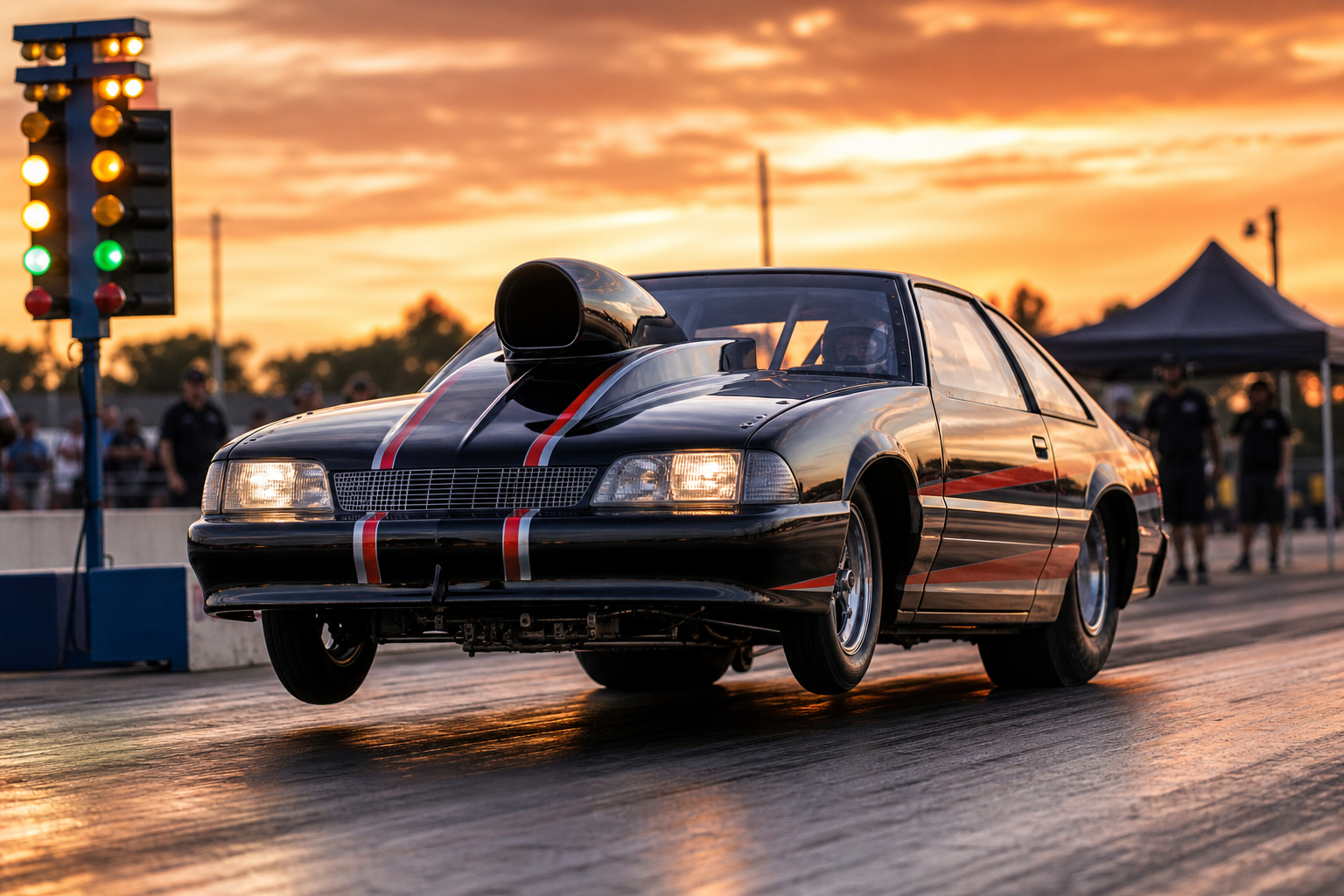

Steve Nusbajtel has arrived at Mildura with the sort of problem every drag racer quite likes to have: genuine pace, but no silverware to show for it yet. After taking top qualifying honours in his second season of Super Sedan competition, the next job is the less glamorous one — backing it up when the Christmas tree drops and the pressure stops pretending to be a warm-up act.
The Canberra-based racer will tackle round three of the 2026/2027 ANDRA Regional Sportsman Series this weekend at the Mildura City Council Sunset Nationals, held on September 19-20. He’s doing it in a different car from the one he originally planned to race, having switched machines while waiting on a new engine combination. That sort of shuffle is familiar enough in sportsman drag racing: half engineering project, half logistics exercise, and occasionally a test of patience best measured in coffee.
Why the car change matters
Nusbajtel’s temporary move into the new car has altered the shape of the weekend. The machine launches more sharply, which sounds like the sort of brochure language that should come with a sniff of marketing gloss, except in drag racing it means something very real. A harder leave off the line compresses everything that follows. Reaction times matter more, track position comes and goes faster, and the driver has less time to correct a less-than-perfect start. In other words, the tree suddenly becomes a lot less forgiving.
That matters at Mildura, where the field is short on sentiment and long on elapsed time. Top qualifying pace is useful, but in sportsman racing it only becomes meaningful once the car repeats it when the bracket racing gets serious. Nusbajtel’s task is straightforward in theory and mildly irritating in practice: make the car do what it has shown it can do, then keep it there while everyone else is trying to nick an advantage in the usual calm, orderly drag-racing fashion — which is to say, absolutely not calmly or orderly at all.
Second season, sharper expectations
This is Nusbajtel’s second season in Super Sedan, a class that tends to reward drivers who understand consistency as much as speed. That’s the slightly unglamorous truth of sportsman drag racing. Raw pace gets attention; repeatability wins rounds. The best runs are often the quietest ones, because the driver, chassis and engine combination all do their jobs without drama. Not exactly headline material for the pub, but very handy when the ladders are being filled out.
For a racer still building experience in the class, the switch to a quicker-leaving car can cut both ways. On one hand, it gives Nusbajtel more authority from the start line and a better shot at converting qualifying form into race-day results. On the other, it tightens the margin for error. A car that reacts faster can also expose a driver who’s a fraction late, or a touch too aggressive, and drag racing has a merciless way of recording those tiny mistakes in black and white. Mostly black, if you’re on the losing side.
Mildura and the Regional Sportsman grind
The Mildura City Council Sunset Nationals forms round three of the 2026/2027 ANDRA Regional Sportsman Series, which means the stakes are real enough for the teams involved but still firmly rooted in the sportsman ethos: do the job properly, keep the car together, and try not to give away rounds with something daft. Regional events like this are the backbone of the sport, where many drivers sharpen their craft away from the glare of the national-level headlines.
Mildura is also the sort of venue where track conditions, consistency and driver discipline can matter as much as outright pace. In bracket-style competition, a quick car is useful only if it can be placed exactly where the driver expects it to be. That’s where experience starts to pay off. A racer who can read a car, the surface and the staging lights usually has a better day than the bloke chasing hero runs and praying the numbers will look after themselves. They rarely do.
What Nusbajtel needs to do next
The headline fact is simple enough: Nusbajtel has already shown the speed to lead qualifying. The unanswered question is whether he can turn that into a cleaner, more complete weekend. The new car’s sharper take-off should help, but it also means the rhythm of the run will be different and the margin to the tree will be smaller. That places a premium on discipline, especially in a class where the slightest hesitation or overcommitment can send a run sideways before it has properly begun.
If he can adapt quickly, the ingredients are there for a strong result. If not, Mildura will serve up one of motorsport’s oldest lessons: being fast on one lap is lovely, but racing is the bit that keeps score. And drag racing, for all its straight-line simplicity, has a deeply nasty habit of exposing anybody who thinks the first good number is the same thing as the finished article.
Still, there are worse positions to be in than bringing qualifying pace to a regional event and arriving with a car that launches harder than the one you were waiting on. That’s a decent hand to play. Now the trick is to keep the thing straight, keep the lights honest and let the stopwatch do the talking.
0 Comments