
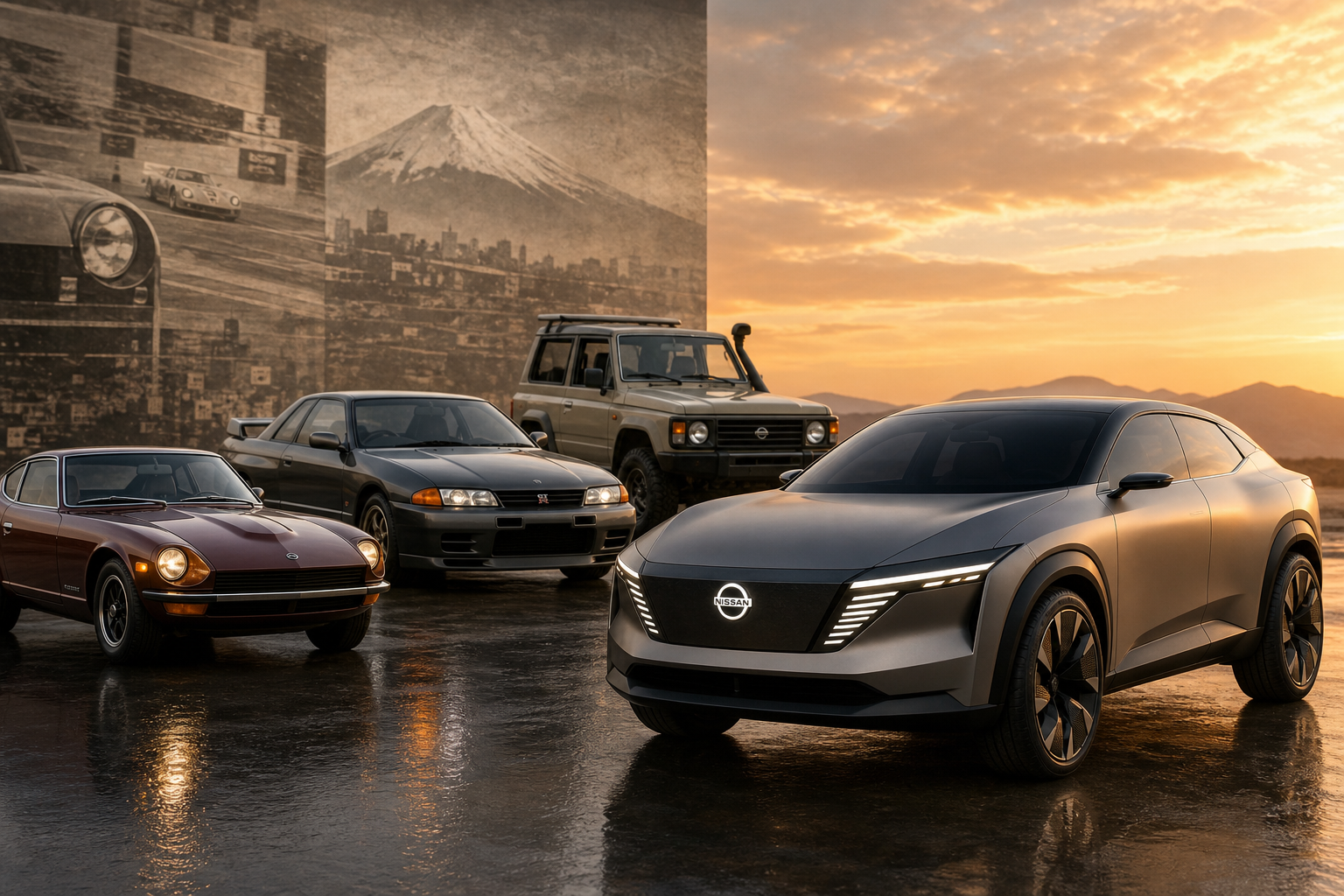

Nissan North America is preparing to lean harder on its past as it works to sharpen the brand’s identity. According to comments made by the company’s U.S. boss to The Drive, the automaker wants future products to carry what he described as “subtle nods to the heritage” and to remain “true to our origins.”
That may sound like a familiar playbook in an industry that often reaches into its archives, but Nissan’s direction matters because the brand has a deep well of recognizable nameplates, performance cars and off-road icons to draw from. The challenge is deciding how to use that history without turning new products into pastiche. For Nissan, the goal appears to be credibility first, nostalgia second.
A brand with real history to work from
Nissan does not have to invent a legacy story from scratch. Its history includes compact cars, family sedans, trucks, sport compacts and some of the most recognizable performance machines to come out of Japan. The Z car, the GT-R, the Patrol, and long-running truck and SUV lines all give the company assets that can be referenced without stretching the truth.
That matters in a market where buyers are often asked to choose between vehicles that may be technically competent but emotionally interchangeable. Heritage, when handled well, can give a product a clearer identity. It can also help a brand communicate what it stands for without relying entirely on trim names, marketing copy or oversized grilles.
What Nissan appears to be aiming for
The key phrase in Nissan’s messaging is restraint. “Subtle nods” suggests the company is not chasing retro design in the most obvious sense. Instead, it seems more interested in borrowing cues, proportions, color themes, trim details or model references that connect a new vehicle to the brand’s past without making it look like a throwback exercise.
That approach has worked for other manufacturers when it’s tied to a specific lineage. A strong heritage story can help a car feel more deliberate, especially in a segment where brand differentiation is often thin. Nissan’s task is to make sure those references feel earned, not pasted on.
Why heritage is useful in today’s market
Automotive brands increasingly rely on storytelling because product cycles are long, mechanical differentiation is narrower than it once was, and many buyers research vehicles heavily before they ever visit a showroom. A brand with a recognizable history can build trust more quickly than one that has to introduce itself every time it launches a model.
That’s especially relevant for Nissan, which has spent recent years working to rebuild momentum and sharpen its positioning. A clearer identity can help across the lineup, from everyday crossovers to enthusiast models. If the company can connect those products to a believable heritage, it gives customers one more reason to care beyond horsepower, lease payments or feature lists.
Balancing nostalgia with present-day expectations
The risk, of course, is overdoing it. Automotive history can be a useful tool, but it can also become a crutch if a manufacturer leans too heavily on old badges and familiar shapes without delivering a product that feels current. Buyers may appreciate the reference, but they still expect modern packaging, safety tech, efficiency and usability.
Nissan’s best-case scenario is probably the one hinted at by its North American leadership: use the past as an anchor, not as a template. That allows the company to build vehicles that feel connected to the nameplate history people remember while still meeting the demands of today’s market.
The broader brand question
There is also a strategic dimension to this beyond styling. A company that knows how to frame its history effectively can make its lineup feel more coherent, especially when products span different regions and market segments. Nissan has the opportunity to reinforce its identity through design cues, model names and product narratives that remind buyers what makes the brand distinct.
For enthusiasts, the more interesting question is which parts of Nissan’s heritage will be emphasized. The performance side of the portfolio has obvious appeal, but the company’s strength also lies in practical, familiar vehicles that have been part of daily life for decades. If Nissan wants heritage to sell cars, it will have to show that its roots extend beyond one halo model or one golden era.
For now, the message is straightforward: Nissan wants its future products to feel connected to where the company came from. If the execution is careful, that could help the brand regain some of the identity that long-term car buyers tend to notice even when they can’t always define it in words.


0 Comments