
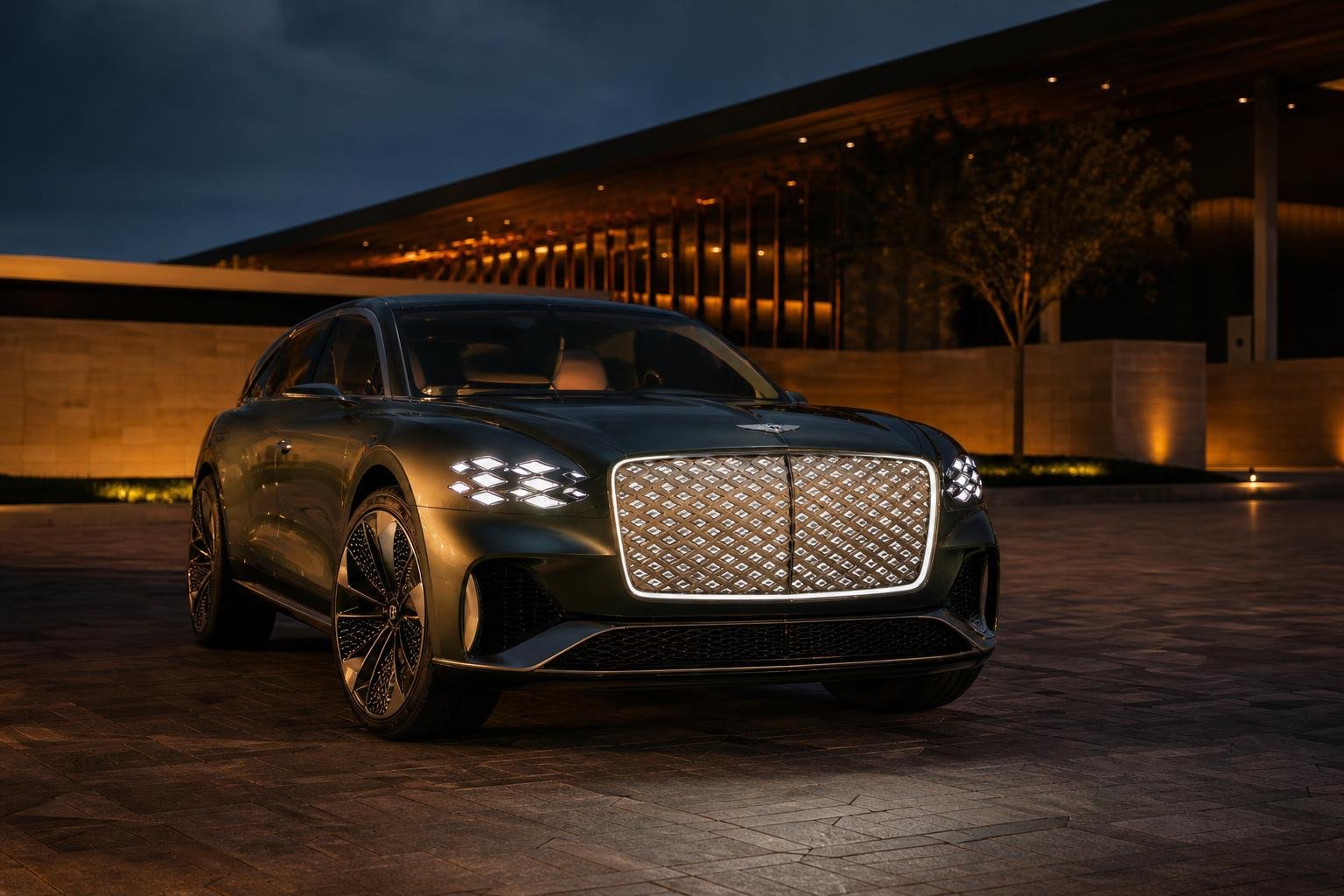

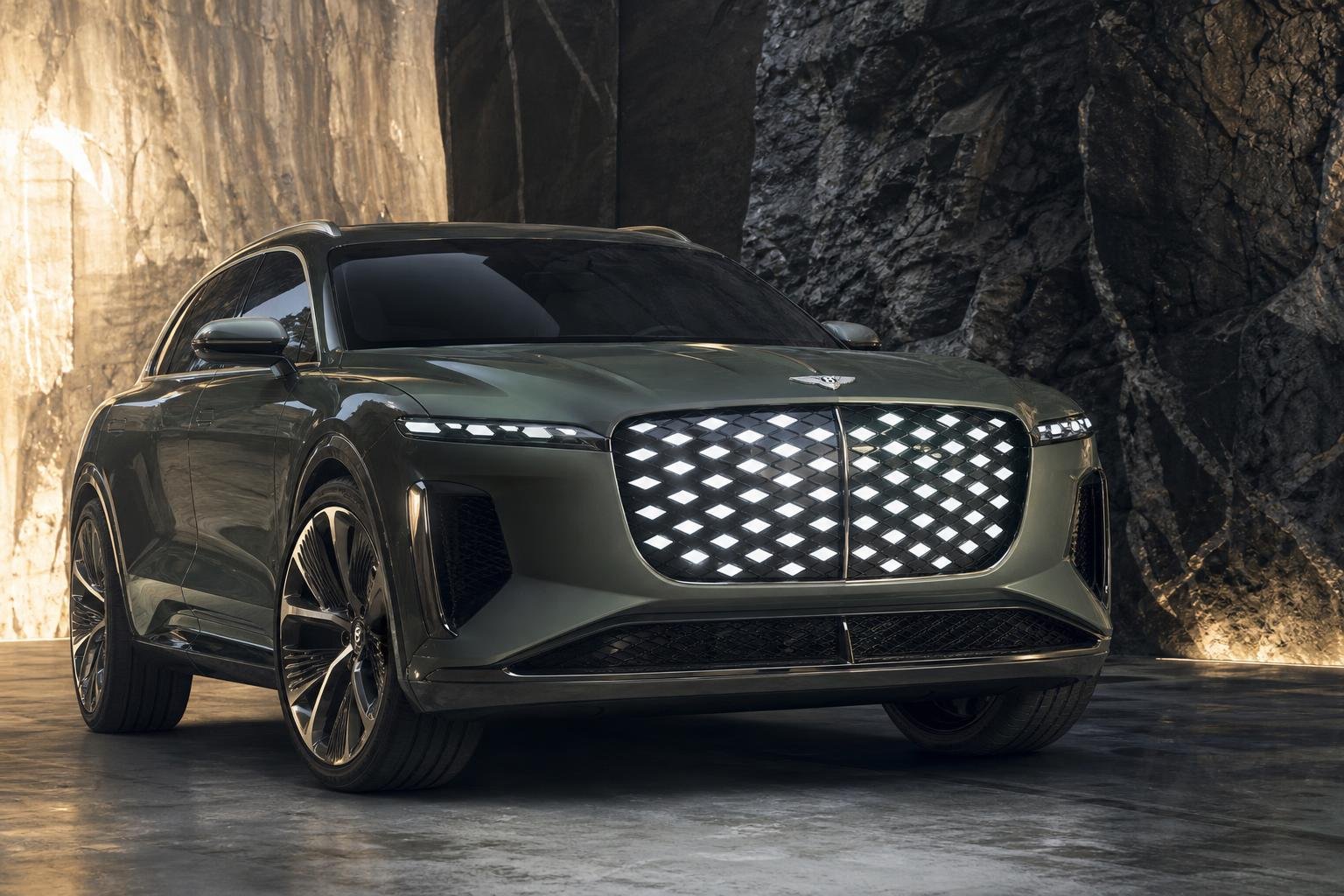
Bentley’s fourth model line will not be content with looking expensive in daylight. The Torcal’s new illuminated grille uses 76 individually machined, diamond-shaped elements, more than 260,000 laser-drilled openings and 202 hidden LEDs to create a front-end signature that changes after dark.
The design is an unusually literal attempt to make Bentley’s traditional identity visible at night. It also shows how luxury automakers are moving beyond simple chrome, lighting strips and oversized logos to create distinctive signatures that can be recognized before a vehicle’s shape is fully visible.
A familiar grille with a more theatrical purpose
Bentley says the Torcal’s grille draws inspiration from the Continental T, a car whose imposing front end helped define the brand’s modern visual language. The Torcal does not simply reproduce that earlier design. Instead, it translates the familiar upright grille into a three-dimensional pattern of differently sized diamond forms.
Each element is individually machined and assembled by hand. That detail matters because the effect depends on the grille reading as a crafted metal object when the lighting is switched off. Bentley is not treating the illumination as a separate decoration mounted onto the front fascia. The lighting is built into the surface, allowing the same component to appear conventional during the day and dramatically different at night.
Every diamond-shaped element receives its own transparent cover. Bentley says those covers use materials and coatings similar to those found in the headlights, giving the grille a common visual and technical language with the rest of the front end. A Bright Pack version will use diamond elements with metallic-finish covers, providing buyers with two grille treatments rather than a single fixed interpretation of the design.
The engineering behind the glow
The grille’s surrounding metal frame contains more than 260,000 tiny laser-drilled holes. Hidden behind that surface are 202 LEDs, arranged to distribute light across the grille rather than producing a collection of obvious bright points.
That is a more difficult task than simply placing a light behind a translucent panel. The surface must look coherent when illuminated, while the metal structure still needs to retain its conventional appearance when the system is off. The result is intended to make the illumination feel as though it is emerging from the grille itself.
Bentley also says the component has undergone abrasion and gravel-impact testing. That is a necessary reality check for a design that could otherwise look more like a delicate piece of jewelry than an exterior vehicle part. The company has added active condensation management as well, helping keep the transparent covers clear over time.
Those durability details are important because illuminated exterior trim is easy to celebrate in a studio image and considerably harder to maintain in daily use. Road debris, weather, washing and temperature changes are not especially sympathetic to intricate lighting hardware. Bentley has not provided a repair cost or long-term maintenance schedule, so the ownership implications remain unanswered, but the testing suggests the company understands the practical challenge.
Micro LED headlights add more than visual drama
The Torcal’s lighting technology extends into the headlights. Each unit contains four modules, including two vertical Micro LED projectors with 16,000 pixels each, along with conventional modules for the low and high beams.
Micro LED systems use individually controlled light-emitting elements to shape the beam with greater precision than a traditional fixed light source. In the Torcal, Bentley says the upper projector covers a 40-degree angle, extending illumination toward the edges of the driver’s field of vision. That wider coverage is intended to help when cornering, where a conventional forward-facing beam can leave the road edge and bend less clearly lit.
The lower projector uses a narrower 20-degree beam to concentrate light more precisely ahead. Bentley also says the system can adjust its distribution to improve the driver’s visibility while reducing glare for other road users. That is the more meaningful promise behind the hardware: not simply brighter headlights, but more controlled light placed where it is useful.
Bentley claims the system can provide enough illumination to read a book from up to 0.6 miles away. That is a manufacturer claim rather than an independently verified performance figure, and it says little by itself about real-world headlight effectiveness. Beam control, road conditions, weather and glare management are all more important than a dramatic maximum-distance comparison.
Bentley is making the grille a signature again
Robin Page, Bentley’s head of design, said the company did not set out merely to create an illuminated grille. Instead, he described the goal as developing “the next iconic face of Bentley” by combining diamond craftsmanship with advanced lighting technology.
That ambition explains why the grille receives so much attention. Bentley’s challenge is not a lack of brand recognition. Its challenge is preserving a recognizable identity as vehicle fronts become more crowded with sensors, aerodynamic openings and complex lighting. The Torcal’s approach is to make the grille itself the event.
There is a touch of excess here, deliberately so. A grille with 76 individually finished diamonds and hundreds of LEDs is not trying to win an argument about simplicity. It is making the traditional luxury-car gesture—an imposing, carefully crafted front end—visible in a market where many vehicles now communicate their identity through animated lamps and glowing emblems.
The more important question will be whether the Torcal’s illuminated face feels integrated once the production vehicle is experienced outside controlled photography. Bentley has addressed some practical concerns through impact testing and condensation control, but the design still walks a narrow line between sophisticated craftsmanship and spectacle.
For now, the Torcal suggests Bentley intends to treat lighting as part of its next design language rather than as an accessory. By day, the grille is meant to recall the brand’s metalwork and heritage. At night, it becomes a carefully engineered display—flashy, unmistakable and very much in keeping with Bentley’s belief that restraint is not always the point.
Sources: Motor1.com
0 Comments