
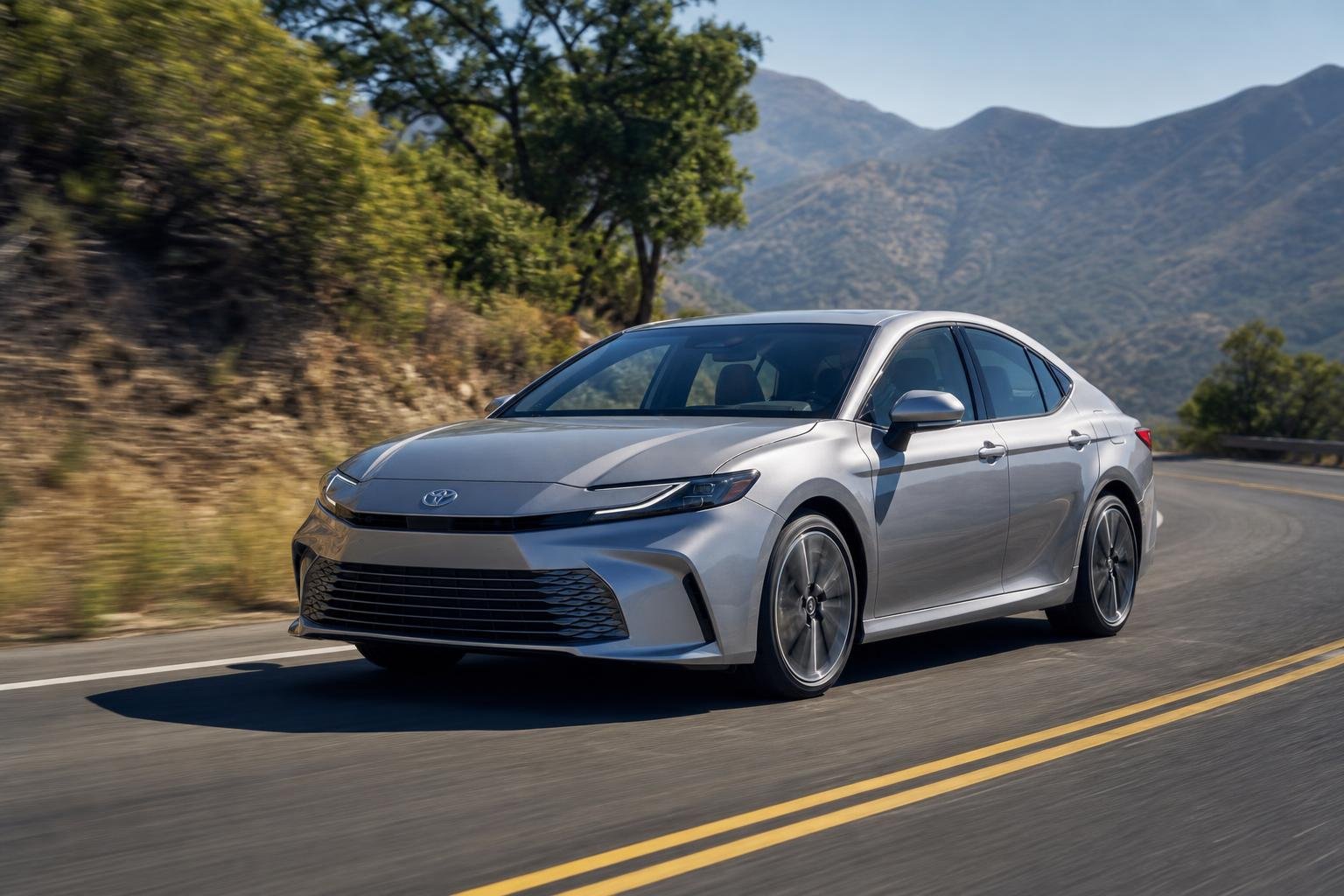

Toyota has released new details about its next-generation hybrid strategy, including a projected 15% reduction in fuel consumption compared with today’s equivalent hybrid vehicles. The automaker says the improvements will come from a new 1.5-liter inline-four engine, lighter electric motors, reduced friction and improved thermal management.
New 1.5-liter engine leads the efficiency push
The naturally aspirated 1.5-liter inline-four is designed specifically for electrified powertrains and will be used in both conventional hybrid and plug-in hybrid configurations. Toyota says it will eventually replace the current 1.5-liter three-cylinder and 1.8-liter four-cylinder engines used in its hybrid lineup.
Toyota has discussed the engine since 2004, but the 15% fuel-consumption claim is the first indication of its expected efficiency. The company attributes the gains primarily to lower mechanical friction, improved thermal control, reduced electrical losses and better aerodynamic performance from the vehicles using the powertrain.
More compact and lighter electric motors will also reduce powertrain weight, although Toyota identifies that as only one part of the overall efficiency improvement.
Hybrid powertrains expected in 2027
The new 1.5-liter engine and a more powerful 2.0-liter inline-four previously revealed in 2024 are expected to reach the market in 2027. Toyota also anticipates generating approximately $1.7 billion annually by supplying its next-generation hybrid powertrains to other automakers.
The identities of those potential customers have not been confirmed. Subaru and Mazda could be among them, however, following the formation of a powertrain alliance between the companies in 2024.
One platform for hybrids and EVs
Toyota presented the engine details as part of its broader “multi-pathway” strategy. Rather than developing separate platforms for its future electric vehicles and hybrids, the automaker plans to use a common architecture for both powertrain types.
The approach is intended to create financial and engineering economies of scale while allowing manufacturing plants to adjust the balance between combustion-powered, hybrid and electric vehicles as customer demand changes.
Platform sharing can create design compromises when different powertrains must fit the same vehicle architecture. Toyota says that will not happen with its next-generation vehicles. Hybrid and battery-electric versions are expected to offer the same interior space and the same overall silhouette.
A single design image showed three visually identical fastback sedans with different underfloor layouts. The EV version used a battery extending across the full length of the floor, while the plug-in hybrid placed its battery beneath the rear floor. The conventional hybrid used a smaller battery positioned under the rear seat.
Lower-profile hybrid packaging
Toyota says the smaller engines and hybrid components will enable lower hood heights and more dynamic vehicle proportions. The packaging is intended to give designers greater flexibility while keeping the hybrid models visually consistent with their battery-electric counterparts.
The company also says its next-generation hybrids are being developed to operate with renewable and carbon-neutral fuels. Toyota continues to view hybrids as an important part of its future powertrain mix, alongside battery-electric vehicles.
0 Comments