
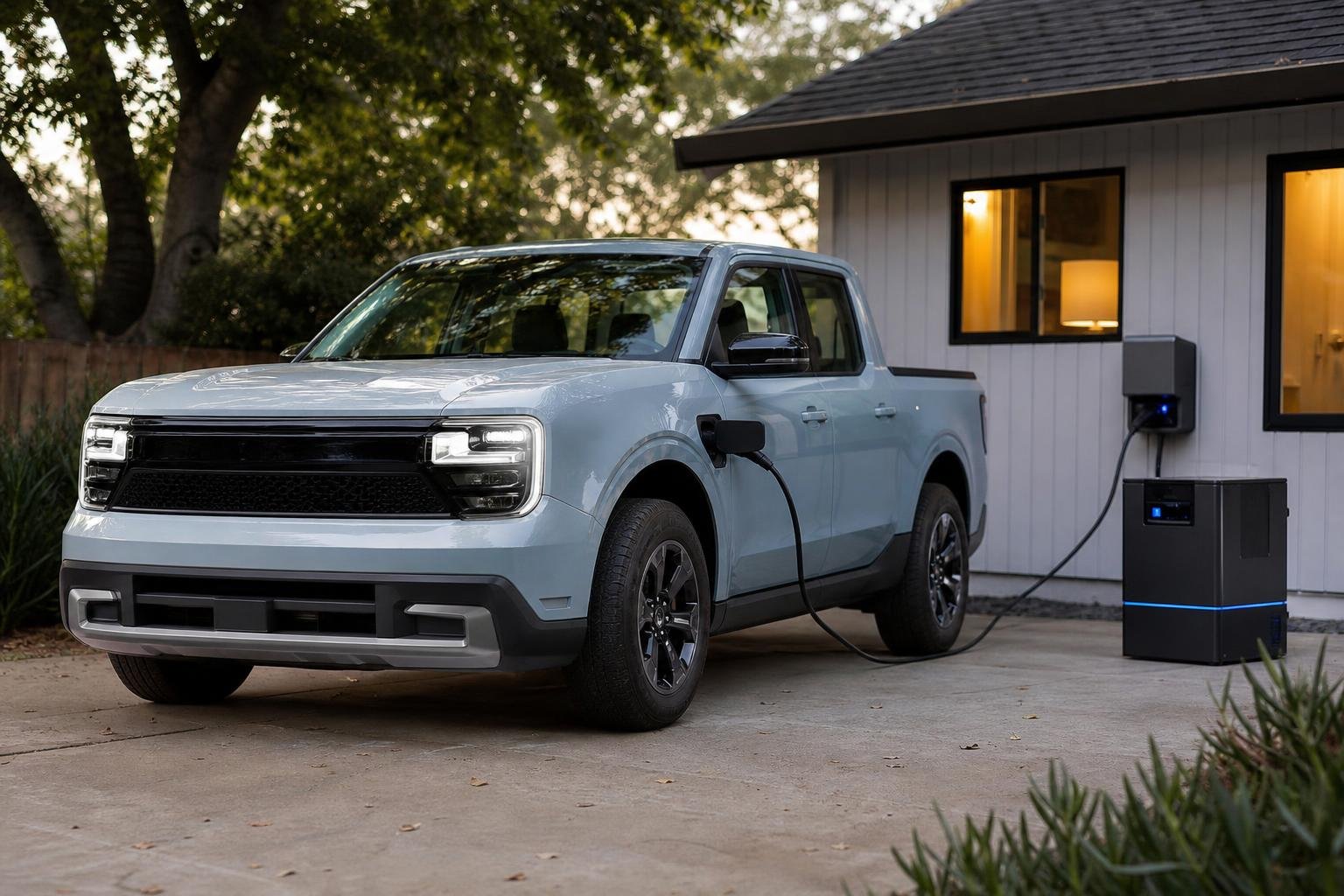

Ford is preparing to open pre-orders for the 2028 Fathom in early 2027, with the small electric pickup set to bring bidirectional charging and home backup power to a vehicle priced below $30,000.
The Fathom will be able to send electricity from its battery to a home as alternating current without relying on a separate external inverter. Ford engineers have integrated the conversion hardware into the truck, allowing it to provide more than 10 kW of AC power.
Home energy management
When connected to the next-generation Ford Home Power Station, the Fathom will work with the Home Power Management system to charge when grid electricity costs less. It can then return energy to the home when electricity prices are higher, a setup intended to help reduce monthly electricity bills.
Adding the Ford Home Backup Power Panel will enable the truck to supply the house automatically during a blackout. The arrangement is designed to provide a quieter and cleaner alternative to a conventional fuel-powered generator.
The system follows the same general energy-management approach available with the much larger F-150 Lightning, while applying it to Ford’s smaller and less expensive electric pickup.
Fathom platform and equipment
The Fathom was developed by Ford’s California-based skunkworks team and uses the company’s Universal Electric Vehicle architecture. The platform incorporates large aluminum castings and a simplified wiring harness, measures intended to reduce vehicle weight and production costs.
Ford says the truck will include BlueCruise hands-free highway driving as standard equipment, along with Apple Maps integration. Its lithium-iron-phosphate battery pack is expected to provide up to 300 miles of range, or approximately 483 kilometers.
Pricing and pre-orders
Ford has confirmed a starting price of $29,945, including a $1,595 destination charge. Pre-orders are scheduled to begin in early 2027, ahead of the Fathom’s 2028 model-year arrival.
That price places the Fathom below other U.S.-market electric vehicles with bidirectional charging capabilities, including the Chevrolet Equinox EV and Tesla Model 3, although those vehicles require external hardware for the function described in the source material.
The Hyundai Ioniq 5 and Kia EV6 offer vehicle-to-load functionality from the factory, but their standard systems do not provide the same full-home backup capability.
0 Comments