
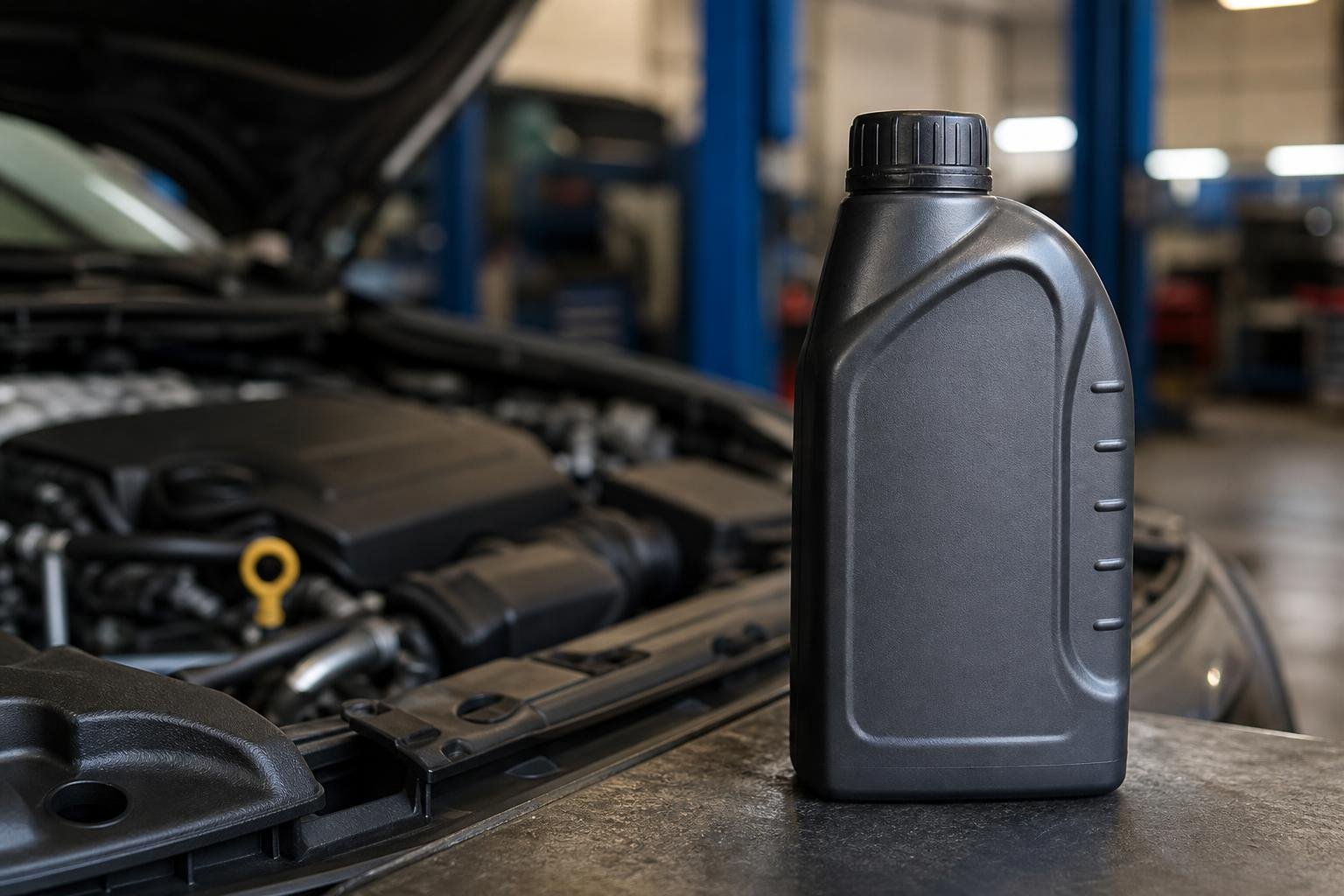

Choosing engine oil often means decoding a combination of numbers and a letter. The “W” found between those numbers stands for “winter,” while the figures describe how the oil behaves at different temperatures.
The meaning of the “W” rating
The number before the “W” indicates the oil’s winter viscosity grade, or how easily it flows in cold conditions. A lower number, such as 0 or 5, means the oil flows more readily at low temperatures than an oil rated 10W.
That cold-weather flow matters most when an engine is started. Oil that moves quickly through the engine can provide protection during the first few seconds of operation, a period associated with much of the wear caused by starting. Modern engines with tight internal tolerances generally favor oils with lower W ratings for this reason.
The ratings follow a viscosity system established by the Society of Automotive Engineers, or SAE. As a result, oils from different brands with matching grades can meet the same viscosity requirement, provided the grade also matches the automaker’s specification for the vehicle.
Why modern oils use two numbers
Early automotive oil was commonly described as light, medium, or heavy. When the SAE introduced a number-based rating system in 1926, oil containers carried a single viscosity number. Straight SAE 30 and SAE 40 oils are still available, although they are generally more suited to very old vehicles and machinery.
Single-grade oils created a seasonal compromise. Oil needs to remain fluid enough to circulate during a cold start, but it also needs to stay thick enough at operating temperature to maintain a protective layer between moving engine components. As oil warms, it becomes thinner, and an oil that becomes too thin may not provide the required protection.
Before multigrade oils became available, drivers could face the inconvenience of switching between heavier oil for warm conditions and thinner oil during winter. Multigrade oils, introduced in the 1950s, were developed to address both requirements.
In a multigrade designation such as one containing a W rating and a second number, the first number describes cold-weather performance. The number after the “W” indicates how the oil performs when hot. Polymers help these oils resist becoming excessively thin as engine temperature rises.
Synthetic oils use the same system
Engine oil technology has since expanded to include synthetic and more affordable semi-synthetic products. These formulations are designed to resist breakdown more effectively, provide additional protection, and potentially support longer intervals between oil changes.
Despite those developments, the basic viscosity system remains the same: the lower number before the “W” relates to cold-weather flow, while the second number describes the oil’s hot-weather viscosity. The appropriate grade is ultimately the one specified for the vehicle by its automaker.


0 Comments