
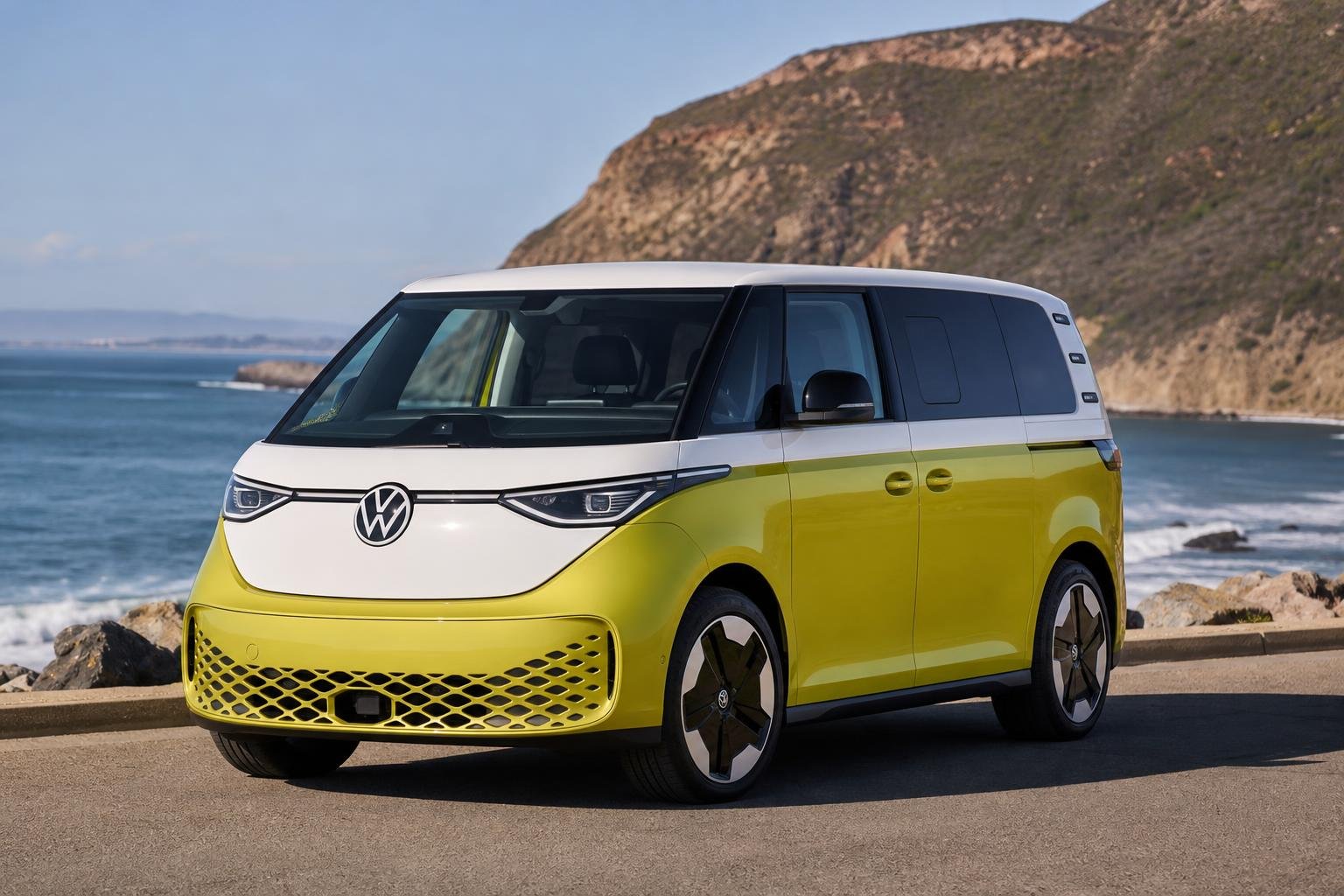

Volkswagen is developing a second-generation ID. Buzz aimed at addressing the electric minivan’s weak sales, particularly in the United States. CEO Thomas Schäfer confirmed that work is underway and said the future model will move away from the current MEB architecture in favor of Volkswagen Group’s Scalable Systems Platform, or SSP.
The current ID. Buzz entered production after its 2017 concept debut and was unveiled in final form in 2022. Although its styling draws heavily from Volkswagen’s historic Microbus, sales have not matched the company’s original expectations. Schäfer described the model as being on the wrong cost base, making it difficult to achieve higher volumes at its current price position.
A lower-cost electric minivan
Reducing the price of the next ID. Buzz will be a central objective. Schäfer said Volkswagen could use lithium-iron-phosphate battery packs and other cost-saving measures to improve the model’s accessibility.
The ID. Buzz launched in North America for the 2025 model year, but Volkswagen skipped the 2026 and 2027 model years in the region. A return is expected for 2028, with updates previously introduced on the European version and a NACS charging port.
Volkswagen announced several European-market changes in April 2026, including a revised infotainment system and vehicle-to-load capability. Physical steering-wheel buttons were also added, although the touch sliders that have attracted criticism remained.
SSP platform could improve range and charging
The next-generation model is expected to use SSP, a platform Volkswagen Group plans to introduce with the ID. Touareg before the end of the decade. The architecture is expected to deliver longer driving ranges and faster charging across the group’s electric-vehicle lineup.
Those improvements could address some of the current model’s usability limitations. The long-wheelbase ID. Buzz currently offers up to 234 miles of EPA-estimated range with its 86-kWh battery pack.
A launch for the second-generation ID. Buzz remains several years away and is likely to take place after 2030. Volkswagen has not provided a specific debut date.
Future styling may move beyond retro cues
Volkswagen’s design leadership has indicated that the next ID. Buzz will not simply repeat the current model’s retro formula. Andreas Mindt, the company’s head of design, said Volkswagen does not want to continually reproduce the same historic design, pointing to the New Beetle as an example of a concept that eventually reached a limit.
At the same time, Mindt said future Volkswagen vans should remain distinctive rather than looking like conventional commercial vehicles. His comments suggest that the next ID. Buzz could retain an individual character while adopting a fresher visual direction instead of directly evolving the existing Microbus theme.
Potential interior and lineup changes
The current ID. Buzz could receive a more substantial mid-cycle update before the second generation arrives. The source indicates that such an update could bring physical climate controls, a larger digital instrument cluster with retro-inspired dials, and improved materials. The modular seating arrangement and extensive interior storage are expected to remain part of the vehicle’s basic appeal.
Volkswagen also unveiled the ID. Buzz California in August 2026, which is expected to continue as the electric entry in the company’s expanding camper lineup. The current GTX flagship uses two electric motors producing 335 horsepower, but a future performance version could potentially adopt the GTI name instead.
The name of the next electric Microbus has not been confirmed. Volkswagen has increasingly returned to familiar names with models such as the ID. Polo, ID. Cross, ID. Tiguan, and upcoming ID. Golf. Schäfer said the brand will not reuse every historic name, but argued that its established icons help distinguish Volkswagen from newer manufacturers without the same legacy.
0 Comments