
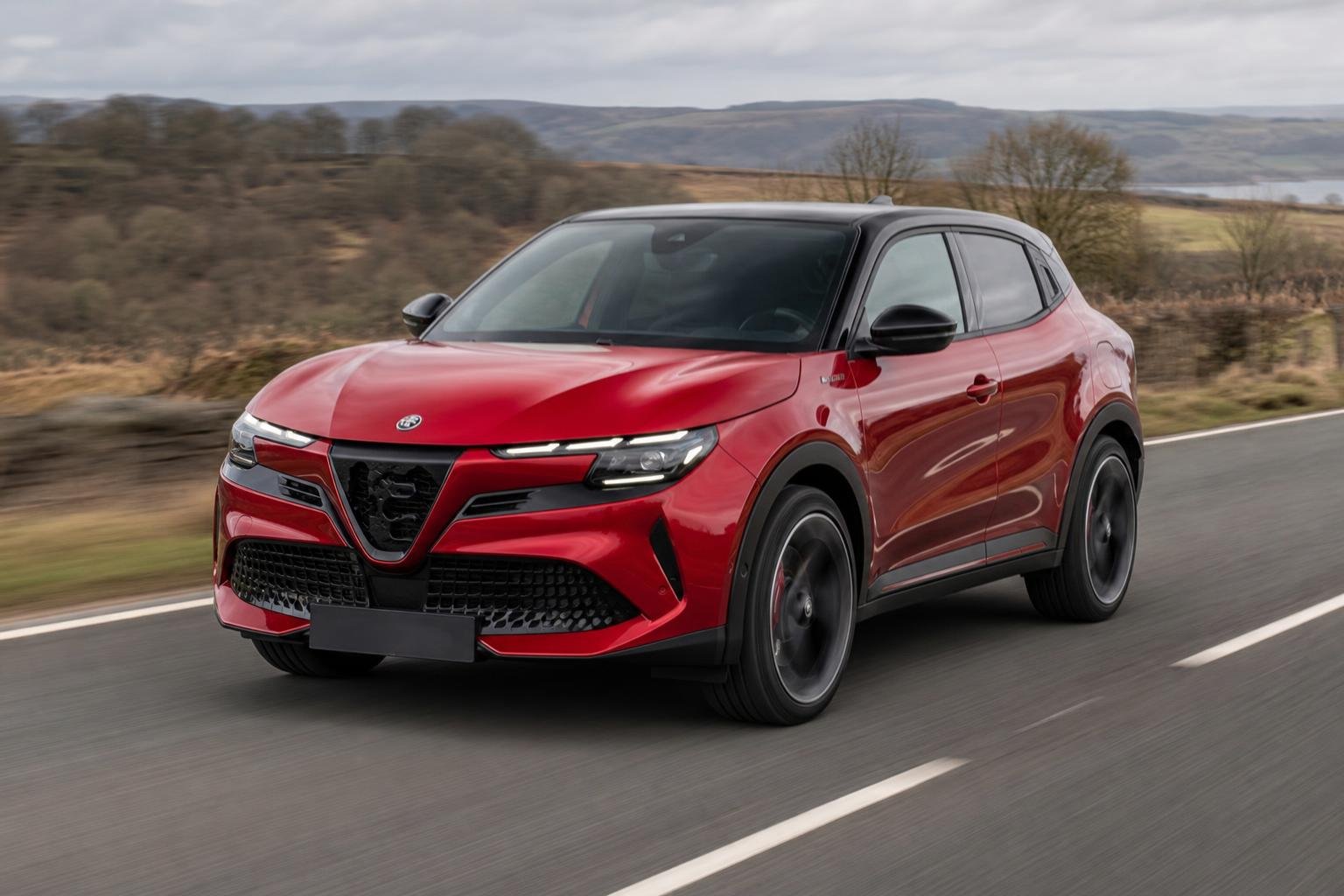

The Alfa Romeo Junior Ibrida brings distinctive styling, engaging steering, and a characterful cabin to the small-SUV market, but a rough powertrain, jerky transmission, and inconsistent technology keep it from being the most sensible choice in its class.
Tested over a week, the mild-hybrid Junior sits below the fully electric Elettrica in Alfa Romeo’s range. In Australia, the Ibrida starts at AU$45,900 before on-road costs, compared with AU$57,900 for the Elettrica. The Junior Elettrica is also notable as Alfa Romeo’s first electric vehicle.
From Milano to Junior
The model originally debuted in April 2024 as the Milano. That name was quickly challenged by the Italian government because the vehicle is built in Poland rather than Italy. Alfa Romeo renamed it Junior only a few days later.
The Ibrida uses a 1.2-liter turbocharged three-cylinder engine producing 100 kW (134 hp) and 230 Nm (170 lb-ft) of torque. A small electric motor raises combined output to 107 kW (143 hp). Power reaches the front wheels through a six-speed dual-clutch transmission.
Distinctive design, mixed cabin quality
The Junior’s interior has more visual character than many compact SUVs. Its digital instrument display sits beneath a curved shroud that gives the cockpit a slightly retro appearance, while the steering wheel is finished in soft-touch black leather. A 10.25-inch infotainment screen occupies the center of the dashboard.
However, the cabin does not feel as upscale as the interior of a Lexus LBX. The infotainment system is familiar from other Stellantis vehicles, although it was less intuitive than the system found in a Jeep. One particularly inconvenient issue involved the settings menu, which lacked a back button or shortcut to return to Apple CarPlay or Android Auto. Restarting the vehicle was the only way back to the main menu.
The test vehicle also occasionally failed to recognize the key, even when it was being held. The engine start/stop switch must be held for several seconds rather than simply pressed, adding another small but unusual quirk.
Other details were more successful, including circular tweeter speakers, illuminated round air vents, sporty seats with red accents, and a driver massage function. Physical climate controls remain beneath the central screen, and visibility from the driver’s seat is good. Rear passenger space is limited, particularly for headroom, but the cargo area holds 415 liters with the rear seats in place.
Powertrain compromises
The Junior Ibrida is agile and benefits from well-weighted steering that provides useful feedback through the front wheels. Its suspension is moderately firm without becoming harsh, helping control body roll and giving the SUV a secure feel through corners.
The powertrain is less convincing. The three-cylinder engine can feel strained and rough under acceleration, while the hybrid system does not always make the transition between electric and combustion power smooth. The dual-clutch transmission is particularly awkward at low speeds, where its shifts can feel jerky.
Acceleration to 100 km/h takes 8.9 seconds, which is adequate for everyday driving but not especially impressive. The Junior’s stronger dynamic qualities are therefore found in its steering and handling rather than outright performance.
Driver-assistance equipment includes active lane centering with traffic-jam assist and radar cruise control. The system generally worked well, although it occasionally lost track of clearly marked lane lines. A speed-limit warning also sounds when the vehicle exceeds the limit by a small margin, though its tone was relatively restrained.
Verdict
The Alfa Romeo Junior Ibrida preserves some of the brand’s distinctive character in a compact SUV, particularly through its styling, steering, and cabin details. Nevertheless, its engine and transmission lack refinement, while some technology-related issues undermine the ownership experience.
For buyers focused strictly on practicality and day-to-day dependability, the Junior may not be the strongest option for its price. Those prepared to prioritize individuality over sophistication may find its unusual character more compelling than the alternatives.
0 Comments