
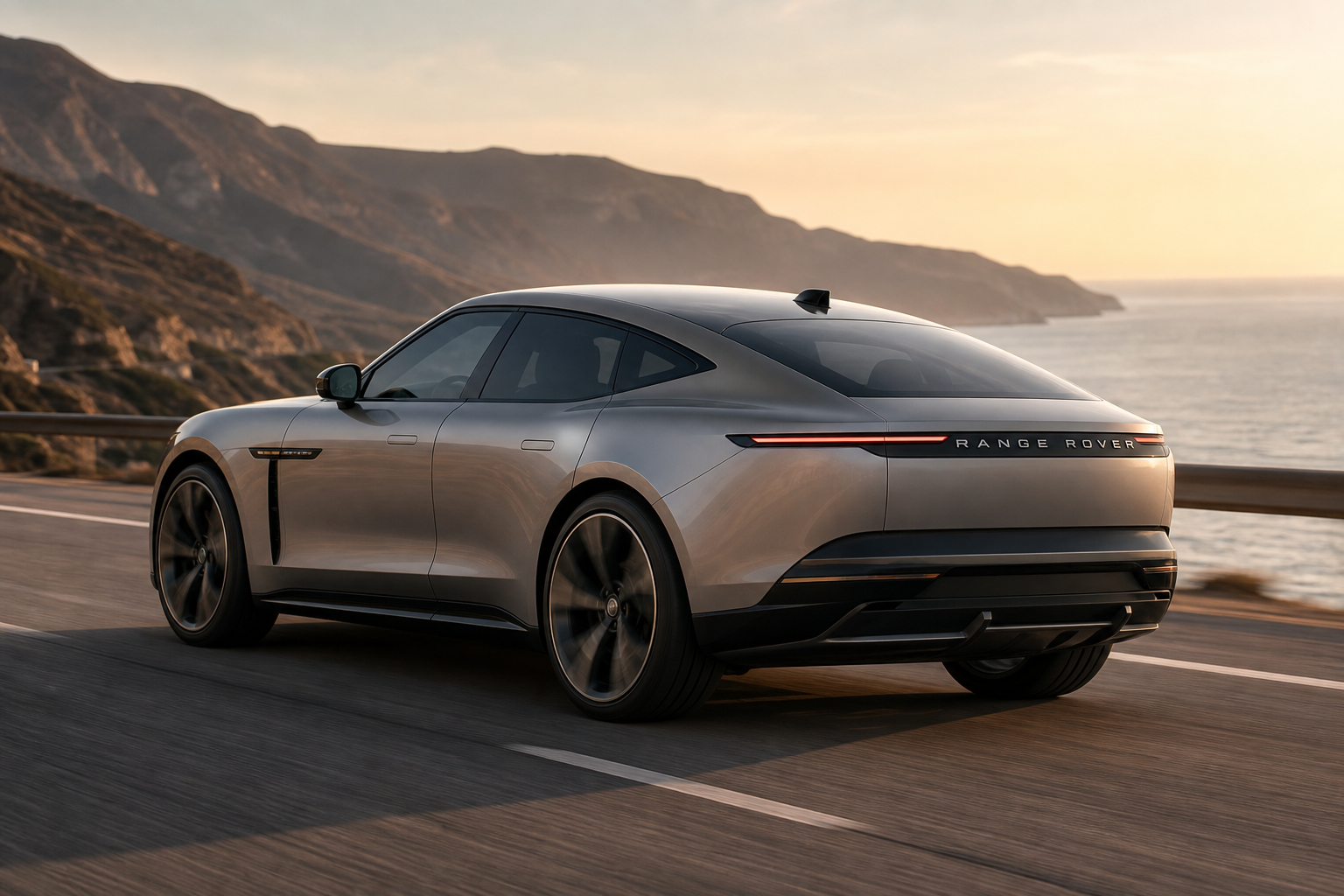

Range Rover is preparing to do something rather unusual: build a vehicle that carries the Range Rover GT name while stepping away from the tall, upright SUV silhouette that has defined the brand for decades. The upcoming electric grand tourer will use a sleek fastback body instead.
That may sound like a small styling decision. It isn’t. The shape of a Range Rover has always been part of the product’s identity, from its bluff original form to the enormous luxury SUVs that now glide around cities looking as though they could tow a palace. A low-slung GT asks a different question: how much Range Rover character can survive when the vehicle no longer looks like a conventional Range Rover?
A Range Rover With a Different Job
The important distinction is in the name. This is being positioned as a grand tourer, not another SUV wearing a sportier body kit and a pair of overexcited marketing adjectives. A GT traditionally prioritizes long-distance pace, quietness, comfort, and a sense of occasion. It is meant to cover ground with less fuss than a sports car and more style than an ordinary highway appliance.
That mission suits an electric vehicle rather neatly. Electric propulsion can deliver smooth, immediate acceleration without the mechanical commotion associated with a large gasoline engine. It also gives designers more freedom to rethink the proportions of the vehicle, although the source information confirms only the broad direction: a sleek fastback body and electric power. Range, output, charging performance, dimensions, interior capacity, and pricing have not been provided.
That lack of detail is worth keeping in mind. The silhouette is the headline for now, but the engineering will determine whether the GT feels like a genuine new chapter or merely a luxury crossover that has been asked to slouch.
Why the Fastback Shape Matters
A fastback changes more than the view in a parking lot. Compared with a traditional SUV, a lower roofline can create a more streamlined profile and a stronger visual connection between the roof and rear bodywork. It can also make the vehicle appear longer, lower, and more purposeful. That is useful territory for a grand tourer, where the design should suggest effortless speed rather than climbing equipment.
There is a trade-off, naturally. The tall SUV format gives designers generous cabin height, an elevated driving position, and the sort of upright packaging buyers have come to expect from the Range Rover name. A sleek fastback may provide a more dramatic shape, but it could also reduce rear headroom or make access less convenient. Whether that compromise exists in practice will depend on the final design, which has not yet been detailed.
This is the slightly awkward bit of the modern luxury car business. Buyers say they want style, efficiency, comfort, space, visibility, technology, and effortless performance. They would also like the vehicle to fit in a normal parking space, preferably without requiring a small council committee to reverse it. Engineers then attempt to satisfy all of these demands at once.
Electric Power Without the Usual SUV Costume
Many electric vehicles have arrived dressed as SUVs because the format provides useful room for a large battery pack, a commanding driving position, and plenty of cabin volume. It has also become the safest commercial choice. A low electric GT, by contrast, would give Range Rover a chance to make electric propulsion feel less like a packaging exercise and more like a deliberate luxury product.
That distinction could matter to the vehicle’s character. A grand tourer does not need to pretend it is ready to conquer a muddy trail every weekend. Its appeal comes from covering long distances in calm, polished fashion, with enough performance to make passing traffic feel like an administrative task. The Range Rover GT’s fastback profile should at least make that intention obvious.
There is an amusing contradiction here. Range Rover has spent years perfecting the art of making large, upright vehicles look desirable and expensive. Now it appears ready to prove that the same badge can work on something far sleeker. That is a considerable stylistic departure, even if the eventual vehicle remains unmistakably connected to the brand.
A Risky Move, Which Is Precisely Why It Is Interesting
The decision to call it a Range Rover GT carries expectations. The name suggests luxury, refinement, presence, and the ability to travel quickly without turning every journey into an endurance event. It also invites comparison with other high-end grand tourers, even though the available information does not yet reveal the GT’s performance, cabin layout, technology, or market position.
What is clear is that this will not be business as usual for the brand. The Range Rover GT is being presented as an electric grand tourer that rejects the traditional SUV shape in favor of a fastback silhouette. That gives it a distinct role before anyone knows how much power it makes or how far it can travel on a charge.
The final test will be whether the design feels like a confident evolution or an identity crisis in expensive shoes. A Range Rover does not need to be boxy to be convincing, but it does need to feel properly considered. The GT has the chance to show that an electric Range Rover can be lower, sleeker, and more road-focused without becoming just another anonymous luxury EV.
For now, the most revealing fact is also the simplest: Range Rover is willing to let its next electric flagship look different. In a market crowded with tall electric crossovers, that is already a pleasantly bold decision.


0 Comments