
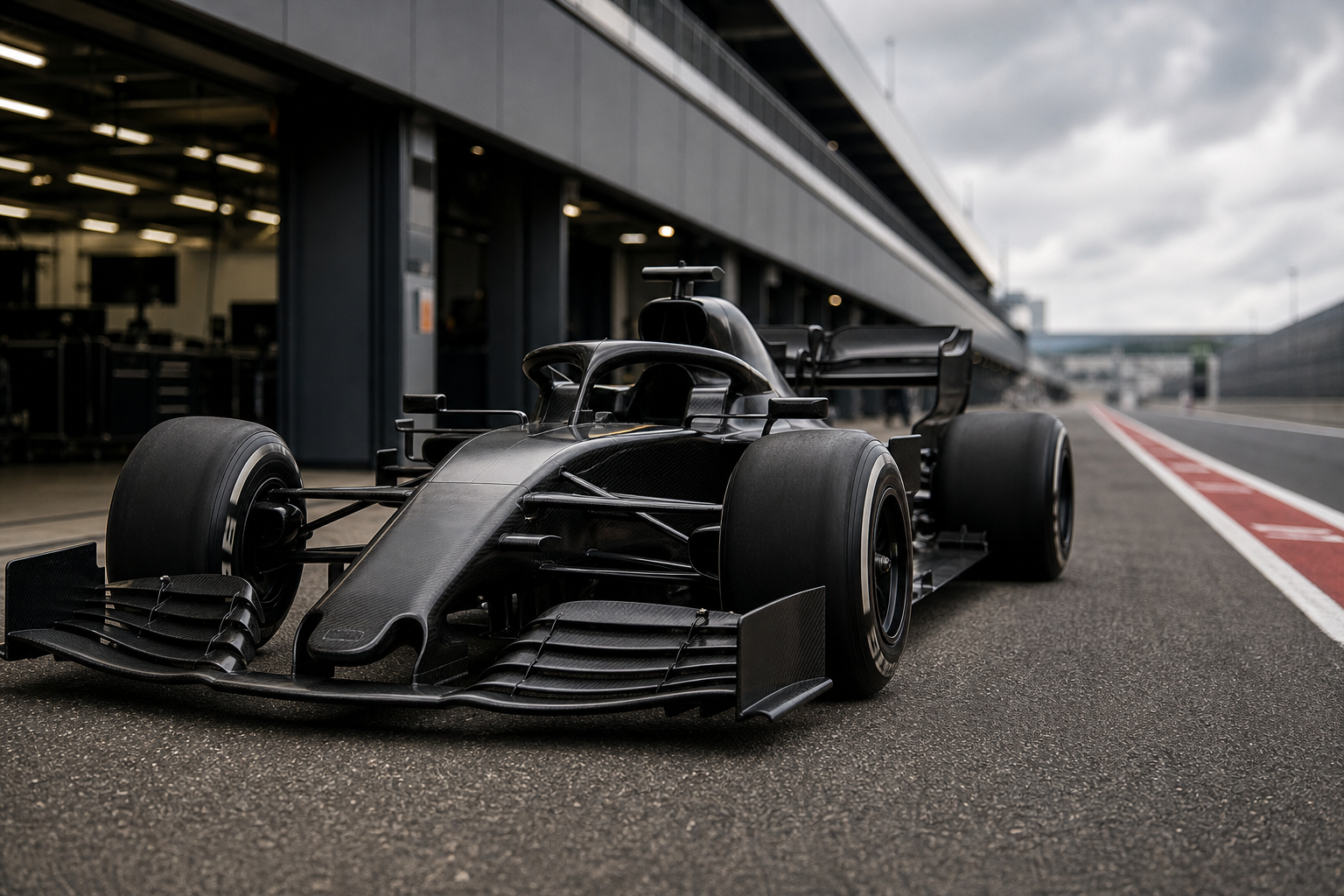

Cadillac’s Formula 1 project has hired three senior engineers as it prepares for its arrival on the grid, and the names suggest a team trying to avoid the usual new-entry fumbling around in the dark. Craig Skinner, Eric Blandin, and Tim Lean will join the organization in key development and aerodynamics roles.
Skinner arrives as Cadillac’s chief development engineer after serving as Red Bull Racing’s chief designer. Blandin becomes head of aerodynamics after working as Aston Martin’s deputy technical chief, while Lean joins as chief engineer for aerodynamics.
That is a substantial injection of experience for a team still assembling its technical identity. Formula 1 newcomers usually have to build everything at once: a car, a design process, a race operation, a supply chain, a simulation structure, and the institutional knowledge required to make sensible decisions before the stopwatch starts shouting. Cadillac has now added three people who have already spent years inside that pressure cooker.
Cadillac Is Building the Team Before It Builds the Car
The appointments are especially important because Cadillac will enter Formula 1 as the championship’s 11th team in 2026. The project is being developed by General Motors and TWG Motorsports, with the Cadillac name providing the visible badge and the organization having to establish itself as a proper constructor rather than merely a marketing exercise with a shiny logo.
That distinction matters. Formula 1 is not kind to organizations that arrive with a grand announcement and discover later that a racing team requires rather more than a logo, a hospitality suite, and a very optimistic PowerPoint presentation. The technical department has to create a repeatable method for designing, testing, manufacturing, and improving a car. Every part of that chain affects performance.
Senior hires can speed up that process, although they cannot magically erase the disadvantages of being new. Skinner, Blandin, and Lean bring knowledge of how established teams organize aerodynamic development, how design decisions move from concept to hardware, and how a car’s performance must be managed across the entire weekend rather than merely admired in a wind-tunnel report.
Craig Skinner Brings Red Bull Design Experience
Skinner’s appointment as chief development engineer gives Cadillac a senior figure responsible for turning the team’s technical ambition into an organized development program. His background as Red Bull’s chief designer places him close to one of the most successful design operations in modern Formula 1.
The job title is revealing. Cadillac does not merely need people who can draw fast-looking components or produce clever aerodynamic surfaces. It needs engineers who can determine which ideas deserve resources, how quickly they can be developed, and whether they will deliver useful performance on the track.
A new team can easily burn time chasing attractive but unproductive concepts. Established organizations learn, often expensively, to prioritize correlation between simulation tools and the real car, to protect manufacturing capacity for worthwhile upgrades, and to understand when a development path has stopped paying back. That kind of judgment is difficult to purchase in a showroom, but it is precisely what experienced technical leadership is meant to provide.
Skinner’s Red Bull background should therefore be valuable beyond the individual parts of the first Cadillac. The more important contribution may be the development culture: how engineers challenge assumptions, how departments communicate, and how the team keeps a long-term program moving when the first version of the car inevitably exposes several less-than-brilliant ideas.
Eric Blandin and Tim Lean Strengthen the Aerodynamics Group
Aerodynamics will be central to Cadillac’s early competitiveness, as it is for every modern Formula 1 team. Blandin joins as head of aerodynamics after serving as Aston Martin’s deputy technical chief, giving Cadillac another senior engineer with experience of operating near the top of a contemporary F1 technical organization.
Lean, meanwhile, joins as chief engineer for aerodynamics. The two appointments indicate that Cadillac is not treating aerodynamic development as one department to be filled later. It is establishing leadership and engineering depth at the same time.
That is a sensible approach. The head of an aerodynamics department sets direction and priorities, but the chief engineers are often the people who turn that direction into a functioning development machine. They deal with the practical questions: which areas of the car need attention, how the computational and wind-tunnel work should be interpreted, and how the aerodynamic package interacts with suspension, tires, cooling, packaging, and race setup.
Formula 1 aerodynamics is also an exercise in compromise disguised as wizardry. A car may produce excellent downforce in one cornering condition and become awkward elsewhere. It may be fast in qualifying but difficult to drive over a stint. A new floor concept may look marvelous in the simulation and then sulk on the actual circuit like a cat that has been denied access to a favorite chair.
Cadillac will need its aerodynamic department to make those tradeoffs intelligently. Adding Blandin and Lean suggests the team understands that hiring one famous technical name is not enough. The surrounding structure matters just as much.
The Timing Is Important Ahead of the 2026 Entry
Cadillac’s first season will arrive under a major set of technical changes, including revised aerodynamic regulations and a new generation of power-unit rules. That gives every team a fresh starting point in theory, but the advantage is not distributed evenly. The established teams already possess mature factories, experienced processes, historical data, and staff who know how to respond when development work goes wrong.
A new entrant has to build those advantages while also creating its debut car. The 2026 regulations may prevent Cadillac from simply copying an existing competitive formula, but they will not make the learning curve disappear. If anything, a new rules cycle increases the value of engineering leadership because early decisions can shape several seasons of development.
The three hires should help Cadillac prepare for that period before the team has to race for points. The objective is not just to produce a car that passes inspection and reaches the grid. It is to create a technical foundation capable of absorbing feedback quickly once real lap times, tire behavior, reliability problems, and race-weekend compromises begin arriving in unpleasant quantities.
Experience Helps, but It Does Not Guarantee Speed
There is an understandable temptation to judge a new Formula 1 project by the résumés of its recruits. That is useful, up to a point. The presence of people from Red Bull and Aston Martin demonstrates that Cadillac is attracting staff with serious experience, and the roles assigned to Skinner, Blandin, and Lean give the appointments genuine technical weight.
Still, a collection of capable engineers does not automatically become a capable team. The organization must give them the tools, authority, manufacturing support, simulation capacity, and time needed to do their jobs. It must also avoid the classic new-team trap of trying to make up for lost time by changing direction every few months.
Cadillac’s management will have to decide how aggressively to pursue immediate performance against how much effort should go into building a durable structure. A debut car that surprises people is pleasant. A team that understands why it was quick—and knows how to make the next car quicker—is considerably more valuable.
That is why these hires matter. Skinner strengthens the wider development operation, while Blandin and Lean give the aerodynamic program experienced leadership and engineering depth. None of them can promise Cadillac an easy first season. Formula 1 has a robust tradition of making promises look foolish.
They can, however, improve the odds that Cadillac’s first car will be the product of a coherent technical plan rather than a frantic collection of clever parts. For a team entering one of the most demanding engineering competitions on Earth, that is a rather good place to start.

0 Comments