
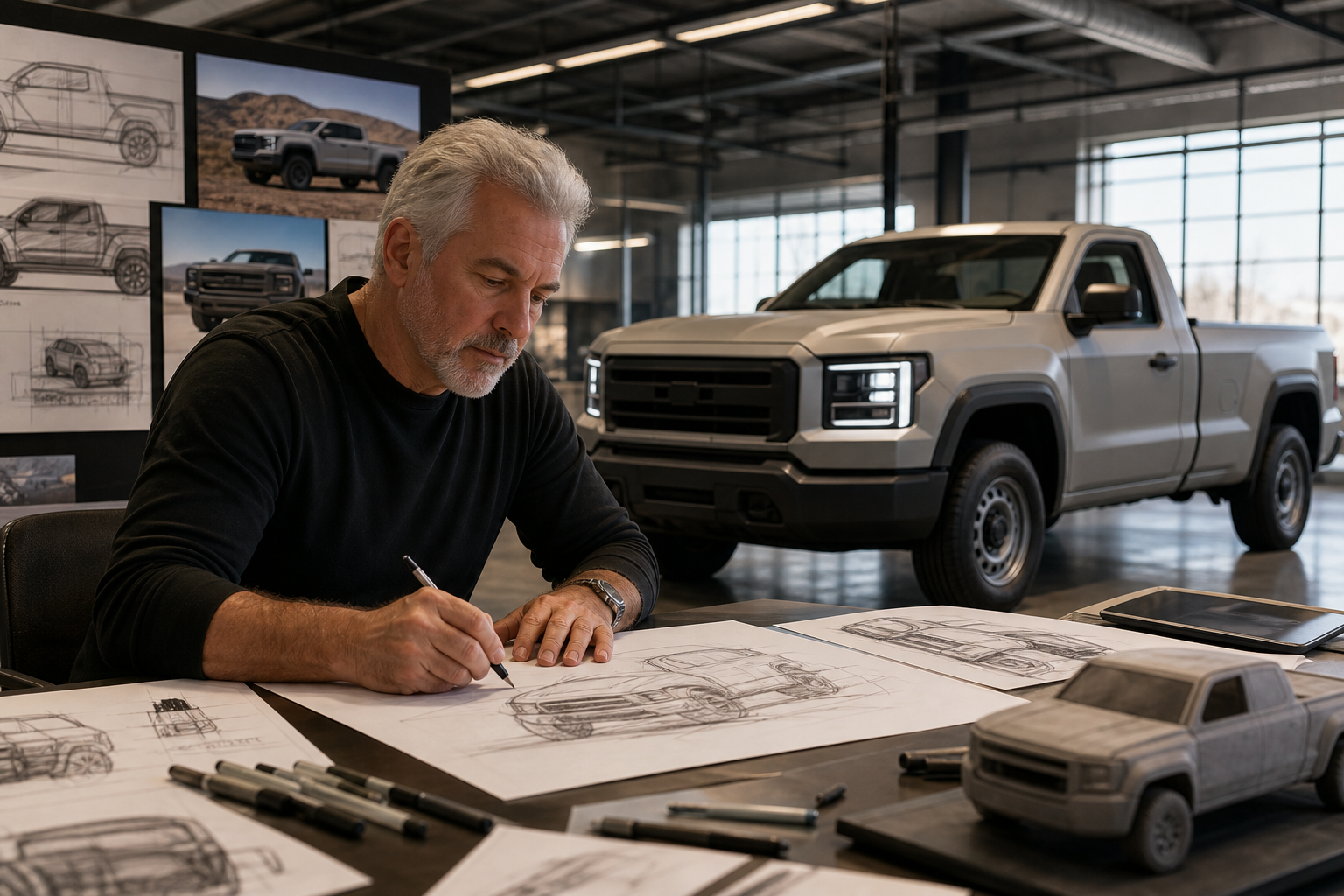

Frank Stephenson has spent much of his career shaping cars that make ordinary transportation look faintly inadequate. Now the designer associated with the McLaren P1 is turning his attention to something rather less exotic: affordable trucks for Texas-based REO.
It is an intriguing change of direction. The McLaren P1 was a million-dollar-plus hybrid hypercar built around extreme performance, aerodynamic drama, and engineering excess. REO’s trucks, by contrast, are intended to be accessible work vehicles. One project is the sort of machine that occupies a warm, guarded garage. The other presumably has to earn its keep.
From Hypercar Theater to Working Trucks
Stephenson’s appointment gives REO a recognizable design name at a time when appearance has become a serious part of the truck business. Buyers may choose a truck for payload, durability, operating cost, or ease of repair, but they still have to look at it every morning. A vehicle can be practical without appearing as though it was assembled from leftover warehouse shelving.
That distinction matters particularly in the affordable end of the market. Expensive trucks can hide questionable styling beneath chrome, large screens, and increasingly theatrical lighting signatures. Less expensive vehicles have fewer decorative tricks available. Their proportions, visibility, access, bed arrangement, and basic cab design have to do the heavy lifting.
Stephenson’s experience could be useful precisely because his work has covered very different types of vehicle. He has been involved with compact cars, performance machines, luxury products, and high-profile supercars. The common thread is not one particular shape. It is the ability to give a vehicle a clear identity without losing sight of what the machine is supposed to do.
Why REO Needs More Than a Pretty Face
Hiring a famous designer does not automatically make a truck better. A handsome cab cannot compensate for weak capability, poor ergonomics, expensive repairs, or a powertrain that spends more time complaining than working. Commercial and utility vehicles are judged harshly because their owners tend to notice every irritating detail.
That makes the REO project more interesting than a simple styling exercise. Affordable trucks have to survive a long list of competing demands. They need to be inexpensive to manufacture, straightforward to service, comfortable enough for daily use, and visually distinctive enough to avoid disappearing among established competitors. Those goals do not always get along. Cost reduction is a ruthless editor.
A designer working at this level must decide where visual effort produces the greatest return. A strong front-end identity can make a basic truck look deliberate rather than anonymous. Better proportions can improve the impression of quality without adding costly equipment. Sensible glass areas can help visibility while making the cab feel less like a bunker. Even details such as the shape of the fenders, the relationship between the cab and bed, and the placement of lighting can affect whether a truck looks robust or merely cheap.
The McLaren P1 Connection Is Useful—but Limited
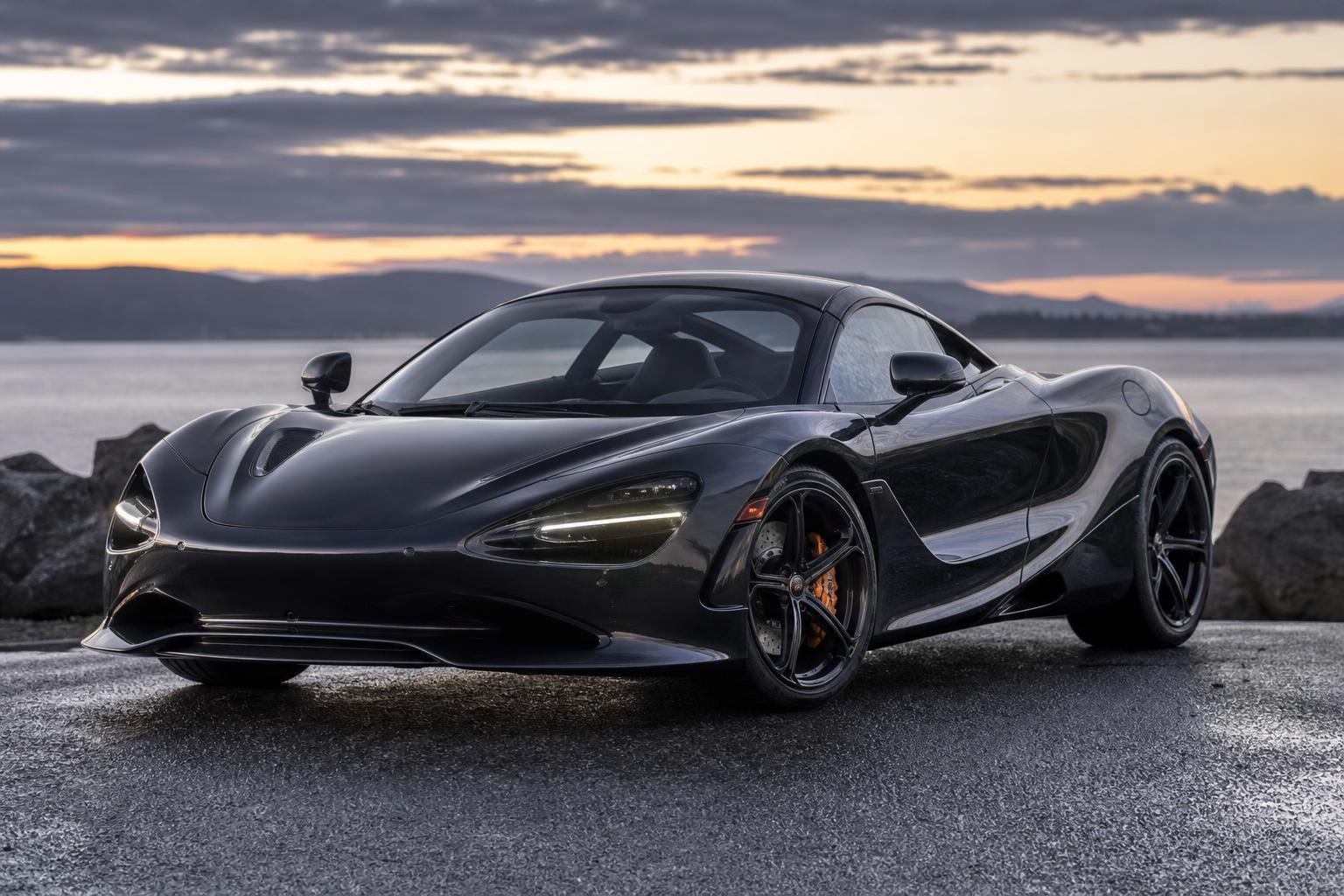
The McLaren P1 connection will naturally dominate the headlines. It is an irresistible contrast: the designer of one of the most visually dramatic modern hypercars now working on affordable trucks. But the P1 should not be treated as a blueprint for REO’s products. A truck does not need wings, exotic carbon-fiber construction, or a silhouette shaped by the pursuit of lap time. Fortunately, neither does good design require those things.
The useful lesson from a car such as the P1 is the discipline of making form serve purpose. On a hypercar, that purpose may involve cooling, downforce, airflow management, and high-speed stability. On a truck, it may involve approach angles, bed access, cabin space, durability, and clear sightlines. The engineering priorities are different, but the design process still depends on knowing which features are functional and which are merely decoration wearing a serious expression.
There is also a marketing advantage. REO is not yet a household name in the way the major truck manufacturers are, so a designer with an instantly recognizable résumé can help attract attention. That attention will only be valuable if the finished vehicles look coherent and credible, though. No buyer wants a work truck that appears to be trying to win a design award while neglecting the actual work.
Affordable Does Not Have to Mean Anonymous
The lower-cost vehicle market is full of sensible products that are difficult to remember. They meet the brief, carry the load, and vanish into the background. That is perfectly acceptable for a fleet spreadsheet, but it makes it harder for a young manufacturer to build recognition.
REO’s decision suggests that the company wants its trucks to stand apart without abandoning affordability. That is a difficult trick. Design studios can produce almost anything if given enough money, time, and tolerance for expensive tooling. The interesting question is what Stephenson can create when those luxuries are missing.
Good affordable design is rarely about adding more. It is about removing the awkwardness. A cleaner surface, a better stance, and a front end with a recognizable shape may do more for a truck than a pile of visual gimmicks. The best result would be a vehicle that looks purposeful on a job site, comfortable in town, and honest about its price. Frankly, that is a more useful achievement than another oversized grille pretending to be a personality.
What Comes Next for REO
The appointment is an early signal rather than a finished product reveal. The available information does not establish which truck models Stephenson will style, when they will appear, or what technical specifications they will carry. Those details will determine whether the project becomes a meaningful new chapter for REO or simply an interesting name attached to a press release.
Still, the contrast between Stephenson’s previous work and REO’s affordable-truck mission gives the story genuine appeal. Designing a hypercar is an exercise in maximizing possibility. Designing a low-cost truck is an exercise in choosing carefully. If Stephenson can bring the same clarity to a machine built for everyday labor, REO may end up with something more valuable than an expensive-looking grille: a truck people can recognize for the right reasons.
0 Comments