
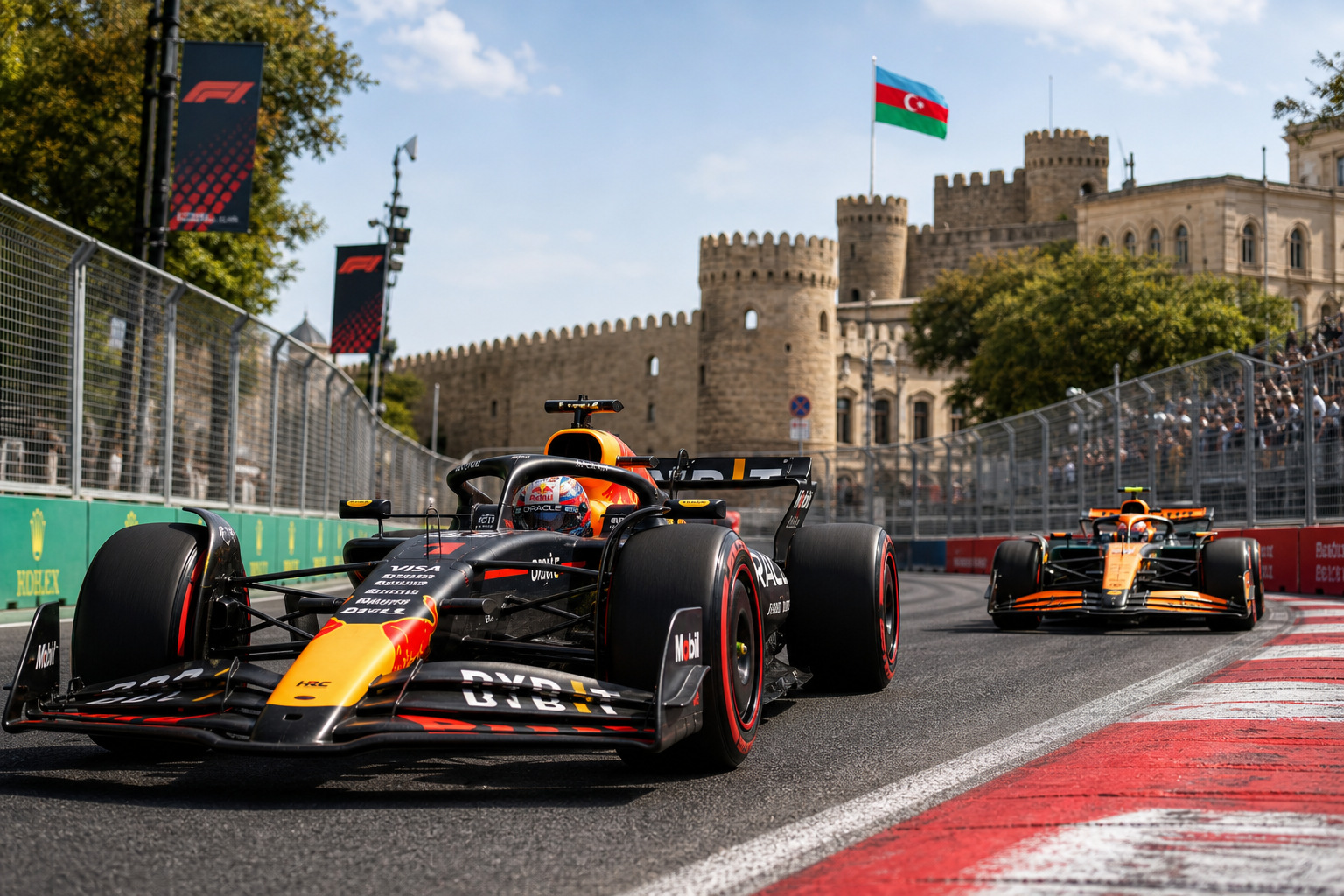

Baku’s Formula 1 weekend is arriving a day early, and that means the Azerbaijan Grand Prix will be run on a Saturday rather than its usual Sunday slot. Free practice begins Thursday, qualifying follows on Friday, and the race takes place Saturday, creating one of the more unusual schedules on the modern calendar.
The change is not a quirky attempt to make the championship even more confusing. Azerbaijan’s race-weekend timetable has been moved to accommodate Remembrance Day, which falls on Sunday, September 27. The result is a compact three-day event that will require teams, drivers and viewers to adjust their usual Formula 1 routines.
A Three-Day Baku Weekend
The essential schedule is straightforward:
- Thursday: free practice begins
- Friday: qualifying takes place
- Saturday: the Azerbaijan Grand Prix is held
That might sound like a small administrative shuffle, but it changes the rhythm of the entire weekend. On a conventional Formula 1 schedule, Friday practice gives teams time to gather data, Saturday provides the final practice session and qualifying, and Sunday leaves a full day for the race. Baku compresses the competitive portion of the event into three consecutive days.
For the teams, that means less room to recover from a poor setup decision or a damaged car. A driver who struggles during Thursday practice cannot simply wait overnight for another day of preparation. Every session carries a little more weight because the weekend is moving at considerable speed, rather like a rental car being driven by someone who has just discovered the brakes are optional.
Why Baku Makes Timing Particularly Important
The Baku City Circuit is not a venue where teams can casually stumble into form. It combines long, flat-out sections with tight corners around the old city, creating a setup puzzle that has always demanded compromise.
Cars need enough aerodynamic efficiency to remain competitive on the long run toward the finish line, but they also need confidence and traction through the slower sections. Too much downforce costs speed where the circuit opens up. Too little can leave a driver wrestling with an unwilling car through the technical portions. There is no magical setup that makes every part of Baku happy, because circuits, like certain relatives, are rarely satisfied at the same time.
The narrow sections around the historic center also leave little margin for error. A driver can lose significant time by locking a tire, running wide or catching a wall, while a crash can bring an entire session to a halt. That makes the first practice outings especially valuable. Teams will be looking for tire behavior, braking confidence, ride-height tolerance and the right compromise between straight-line speed and cornering stability.
With qualifying arriving on Friday, teams must process that information quickly. There is no spare Saturday practice session before the grid is set. A car that looks promising in the opening runs still needs to be refined at remarkable speed, and any damage sustained on Thursday could create a frantic overnight repair job.
Qualifying Comes Before the Usual Saturday Build-Up
Friday qualifying will determine the starting order for Saturday’s race, but its importance is amplified by the unusual timetable. Baku has traditionally offered opportunities for overtaking, particularly along its longest acceleration zones, yet starting position remains crucial because the circuit also punishes mistakes and poor track position.
Drivers will need to find a clean lap without overcommitting in the tightest corners. That sounds obvious, but Baku’s layout encourages a peculiar combination of bravery and restraint. The fastest lap requires commitment on the high-speed sections, followed by precision when the walls suddenly seem to move several feet closer.
Track evolution could also make qualifying especially difficult to read. As more rubber is laid down, the circuit may improve, leaving the final runs important. But a red flag, traffic or a badly timed yellow flag can disrupt the order in an instant. On a street circuit, qualifying is never entirely a laboratory exercise. There is always a little chaos waiting just beyond the apex.
Weather Could Add Another Variable
The available schedule information does not provide a confirmed detailed forecast for each session, so viewers should check the latest local updates before making plans. That matters more than usual because Baku’s open, exposed layout can react quickly to changes in wind and temperature.
Wind direction can affect braking stability and the car’s behavior through the fast sections, while changing track temperatures influence tire preparation and degradation. A setup that works in a cooler practice session may behave differently when qualifying conditions arrive later, particularly if the surface temperature moves significantly.
Those variables become harder to manage when the weekend is compressed. Teams have fewer opportunities to compare conditions across different days, and engineers must make decisions with a smaller pool of clean, representative data. The weather does not need to be dramatic to matter. A modest shift in wind can be enough to turn a confident car into an irritable one.
How to Watch the Azerbaijan Grand Prix
Because this is not a standard Sunday race weekend, viewers should check their local Formula 1 broadcast listings carefully. Practice begins Thursday, qualifying is on Friday and the grand prix runs Saturday. Exact session times and broadcast platforms can vary by country, so the official Formula 1 schedule and regional broadcaster listings are the safest places to confirm the details.
The early race date also creates an easy trap for casual viewers. Anyone expecting the usual Sunday afternoon event could quite reasonably miss the main race altogether, discovering the result later through a phone notification while standing in a grocery store. It would be a very modern way to lose a Formula 1 race.
Streaming subscribers should also confirm whether their service carries every practice and qualifying session or only the race and major coverage windows. The unusual calendar arrangement makes it worth checking the full timetable rather than relying on a familiar weekend routine.
A Different Test for Drivers and Teams
For the drivers, the three-day format rewards immediate accuracy. There is less time to build confidence gradually, less opportunity to reset after a poor session and less margin for mechanical or strategic setbacks. A driver who adapts quickly to Baku’s mixture of speed, low-grip corners and close walls can gain an advantage before the race even begins.
For the teams, preparation becomes more important than theatrics. Simulator work, component planning and damage-control procedures all matter when the schedule leaves no comfortable buffer. A car that requires a major setup change may not be impossible to rescue, but there is less time to perform the rescue and considerably less room for the mechanics to enjoy their coffee.
The Saturday race should still provide the familiar Baku ingredients: long straights, heavy braking, tight walls and the possibility of a strategic split between tire life and outright pace. But the unusual timetable gives the whole event a sharper edge. Every mistake arrives earlier, every repair matters more and every session feeds directly into the next.
Formula 1 has become accustomed to sprint weekends, night races and calendars that wander across time zones with the confidence of a lost sat-nav. Even so, Azerbaijan’s Thursday-to-Saturday schedule stands out. The key point for viewers is simple: Baku’s grand prix is not waiting for Sunday. The race is on Saturday, and the weekend starts Thursday.


0 Comments