
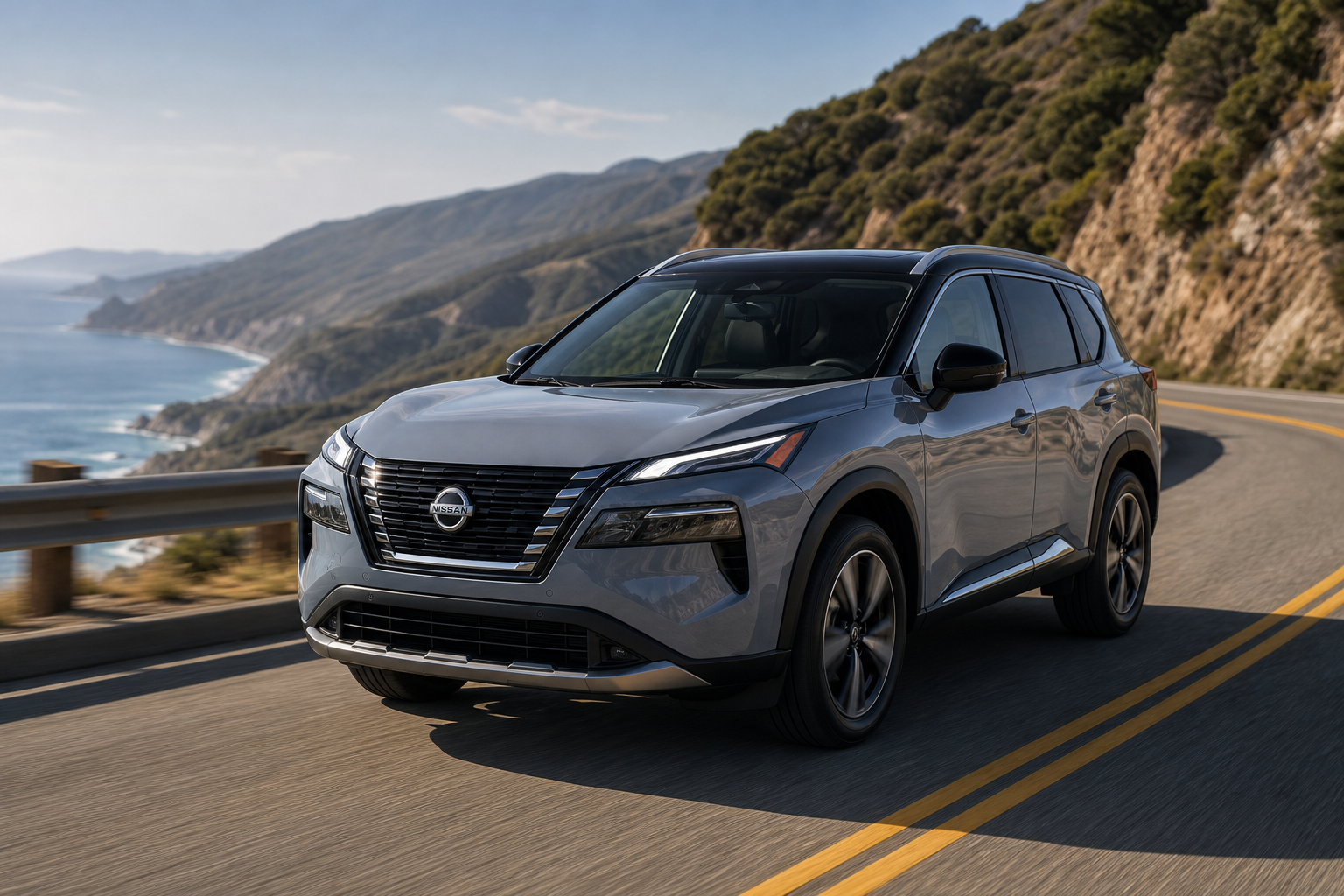

Nissan is finally bringing its e-POWER hybrid system to the United States, and the first American application will be the 2027 Rogue. The new hybrid SUV is expected to start at roughly $37,000 and return up to 38 mpg combined.
That headline figure is useful, but the more interesting detail sits in the engineering. The Rogue Hybrid will use a series-hybrid layout, meaning the gasoline engine is not primarily responsible for driving the wheels. Instead, it generates electricity, while an electric motor provides the propulsion.
In a market already crowded with conventional hybrids, plug-in hybrids, and increasingly enormous electric SUVs, that makes the Rogue a slightly odd duck. Happily, odd ducks are often more interesting than another vehicle designed by committee.
What Makes Nissan’s e-POWER System Different?
Most familiar hybrids, including Toyota’s long-running hybrid systems, can use the gasoline engine and electric motor together to drive the wheels. The engine may power the vehicle directly through a mechanical connection, with the electric motor assisting when needed.
Nissan’s e-POWER approach works differently. The gasoline engine acts as an onboard generator. It produces electricity for the battery and electric drive motor, but the electric motor handles the vehicle’s actual movement. The driver therefore gets an electric-drive response without needing to plug the vehicle into a charger.
That arrangement gives Nissan a way to chase some of the smoothness and immediate response associated with an EV while retaining the long-distance convenience of a gasoline engine. There is no need to plan a charging stop, wait for a battery to fill, or explain to a mildly skeptical relative why a road trip now requires a spreadsheet.
It is not the same thing as a battery-electric vehicle. The Rogue Hybrid still depends on gasoline, and the engine must run whenever the system needs to replenish electrical energy. But because the engine can operate in a narrower range of conditions, Nissan can tune it for generator duty rather than asking it to respond directly to every change in throttle position.
The 2027 Rogue Hybrid’s Main Promise
Nissan says the 2027 Rogue Hybrid should achieve up to 38 mpg combined. That is the official economy target supplied for the model, although the final EPA rating and the exact figures for individual configurations will determine how the vehicle compares with other compact hybrid SUVs.
The expected starting price is around $37,000. That places the Rogue Hybrid above the ordinary entry point for a compact SUV, but hybrid hardware has never been a charitable donation from the manufacturer. Buyers will need to decide whether the anticipated fuel savings, quieter electric operation, and different driving character justify the premium.
“Up to” is doing some work in that fuel-economy claim, as it always does. The number may apply to a particular configuration, and larger wheels, all-wheel drive, extra equipment, or different trim levels can affect the final rating. Until Nissan publishes full specifications and EPA figures, 38 mpg should be treated as the ceiling rather than a promise that every Rogue Hybrid will achieve it.
Why Use a Series Hybrid in an SUV?
The compact SUV buyer is often looking for a vehicle that can handle the mundane properly: commuting, school runs, weekend luggage, bad weather, and the occasional highway journey long enough to make everyone question the decision to bring the children. A series hybrid can suit that use case because electric motors deliver their torque immediately and operate smoothly at low speeds.
That could give the Rogue Hybrid a more natural urban driving character than a conventional gasoline SUV. Pulling away from a stop, creeping through traffic, and maneuvering in parking lots are the situations in which electric drive feels most convincing. There is no need for a traditional transmission to shuffle through ratios every time the traffic moves six feet.
The complication arrives at higher speeds and under sustained load. The gasoline engine must generate enough electricity to keep the drive motor supplied, and the system’s efficiency depends on how effectively it manages that energy conversion. A series hybrid can be clever, but it is not magic. Energy still has to travel from fuel to engine, from engine to generator, from generator to battery or inverter, and finally to the motor.
Nissan’s challenge will be making that process feel seamless. If the engine remains quiet and unobtrusive, the system may deliver the polished, electric-like behavior the concept promises. If it revs loudly under hard acceleration while the vehicle’s speed rises more slowly than the noise suggests, drivers may wonder why the SUV sounds as though it is auditioning for a small generator convention.
e-POWER Gives the Rogue a Distinct Identity
The Rogue is already an important name in Nissan’s U.S. lineup, occupying the crowded compact SUV class. That segment contains nearly every flavor of family transportation: conventional gasoline models, established hybrids, plug-in hybrids, and fully electric alternatives. Simply adding another hybrid badge would not give the Rogue much personality.
e-POWER does. It provides Nissan with a technical story that buyers can understand without requiring the vehicle to become a full EV. The engine is there for range, while the motor provides the driving force. That is a straightforward pitch, even if the hardware behind it is considerably more complicated than the slogan.
It also allows Nissan to introduce its electrified technology to drivers who are not ready to make the leap to a plug-in vehicle. Some customers want better efficiency but do not have reliable home charging, do not want to depend on public charging networks, or simply prefer the convenience of gasoline on a long trip. The Rogue Hybrid is aimed directly at that middle ground.
The Price Question Will Matter
At approximately $37,000, the 2027 Rogue Hybrid will face a particularly practical test. Fuel economy alone may not repay the extra purchase cost quickly, especially for drivers who cover modest annual mileage or who buy based on monthly payments rather than lifetime fuel expense.
The calculation becomes more favorable for high-mileage commuters, particularly if the hybrid system spends much of its time in low-speed traffic where electric drive can do useful work. But buyers will also need to consider insurance, financing, available equipment, and the final price gap between the hybrid and gasoline Rogue models. The brochure’s mpg figure is only one line in the ownership ledger.
Nissan has not yet supplied the complete equipment list, detailed performance figures, battery information, cargo specifications, or final pricing structure in the supplied announcement. Those details will determine whether the Rogue Hybrid looks like a compelling value or merely an intriguing drivetrain attached to a familiar SUV.
A Sensible Bridge, Not a Halfway House
There is a tendency to view every electrified vehicle as a stepping stone toward a fully electric future. That may be useful for corporate strategy presentations, but customers tend to be less philosophical. They want a vehicle that works with their parking situation, driving habits, budget, and tolerance for technological faff.
The 2027 Nissan Rogue Hybrid could appeal precisely because it avoids making the buyer choose between two extremes. It should offer electric-motor propulsion and an expected 38 mpg combined without asking owners to rearrange their lives around charging.
Whether it succeeds will depend on the execution. The system must feel quiet, responsive, and natural. The price must make sense beside both the conventional Rogue and rival hybrid SUVs. Most importantly, Nissan will need to explain the e-POWER concept clearly without drowning customers in diagrams that look like the wiring plan for a small airport.
For now, the headline is simple: Nissan is bringing its unusual series-hybrid technology to America in the Rogue, with a projected starting price around $37,000 and fuel economy of up to 38 mpg combined. That is not a full technical verdict, but it is enough to make the 2027 Rogue Hybrid one of the more distinctive new entries in the compact SUV class.
0 Comments